
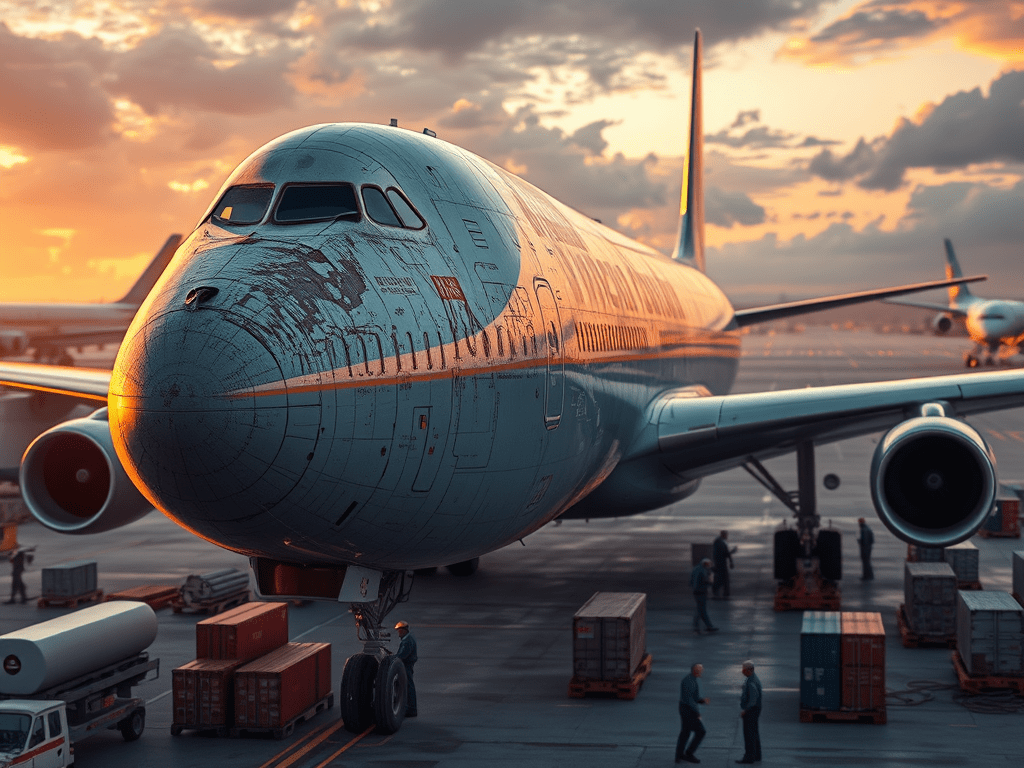
The global air cargo industry is facing a critical period of supply constraints, rising costs, and an ageing freighter fleet. With demand outpacing available capacity and slow deliveries of new aircraft, airlines and logistics providers must explore innovative solutions to mitigate challenges. This article provides a comprehensive analysis of the current state of the industry and potential strategies for overcoming these capacity issues.
Current State of Air Cargo
| Factor | Key Data & Trends | Impact on the Industry |
|---|---|---|
| Capacity Challenges | Demand for air cargo is exceeding supply, with limited availability of freighters. | Increased freight rates and shipment delays. |
| Ageing Freighter Fleet | – 31% of freighters are 30+ years old. – By 2030, nearly 50% of freighters will reach retirement age. | Rising maintenance costs and reduced operational efficiency. |
| Slow New Deliveries | Only 12% of new freighters expected by 2030; high risk of production delays. | Insufficient replacement for retiring aircraft. |
| Production Priorities | Aircraft manufacturers prioritizing narrowbody passenger jets over freighters. | Freighter production lags behind market demand. |
| Rising Costs | Freight rates saw a 33% drop in 2023 but are now rebounding. | Market uncertainty and higher transportation costs. |
| Market Fluctuations | After 2023’s rate drop, early 2025 shows signs of price recovery due to supply constraints. | Volatile pricing affecting logistics planning. |
Future Outlook
- Persistent Freighter Shortages: Fleet retirement rates will outpace new aircraft deliveries, extending supply constraints.
- Rising Cargo Rates: Freight costs are expected to rise due to increased demand and limited capacity.
- Industry Adaptation: Airlines will need to explore alternative solutions to expand cargo capacity efficiently.
Proposed Solutions for Air Cargo Capacity Issues
| Strategy | Implementation Methods | Expected Benefits |
|---|---|---|
| Fleet Modernization | – Invest in fuel-efficient freighters. – Lease younger aircraft instead of purchasing. | Reduces maintenance costs and increases operational efficiency. |
| Manufacturer Collaboration | – Work with OEMs to prioritize freighter production. – Co-develop production strategies. | Improves access to new freighters and minimizes supply chain disruptions. |
| Utilizing Passenger Aircraft | – Deploy passenger aircraft for cargo-only flights. – Maximize belly space for freight. | Adds temporary capacity while waiting for new freighters. |
| Tech-Driven Efficiency | – Implement automated cargo handling systems. – Use AI for real-time cargo tracking. | Enhances logistics efficiency and minimizes idle capacity. |
| Infrastructure Investments | – Expand airport cargo facilities. – Upgrade ground handling and turnaround processes. | Increases throughput and reduces shipment delays. |
| Strategic Partnerships | – Form capacity-sharing alliances with airlines. – Collaborate with 3PL logistics providers. | Enhances flexibility and optimizes cargo flow during peak demand. |
| Regulatory & Policy Advocacy | – Engage with governments for favorable policies. – Secure tax benefits for fleet expansion. | Encourages investment in new freighters and sustainable operations. |
| Sustainability Initiatives | – Invest in green aviation technology. – Develop sustainable aviation fuel (SAF) programs. | Aligns with global environmental goals and may unlock funding incentives. |
Conclusion
The air cargo industry faces a crucial challenge as ageing fleets, capacity constraints, and rising costs impact global trade. Addressing these challenges requires a combination of fleet modernization, operational efficiency, strategic partnerships, and technological advancements. By adopting proactive strategies, airlines and logistics providers can ensure sustainable growth and resilience in the evolving air cargo landscape.




 Glottis Limited
Leave a comment