
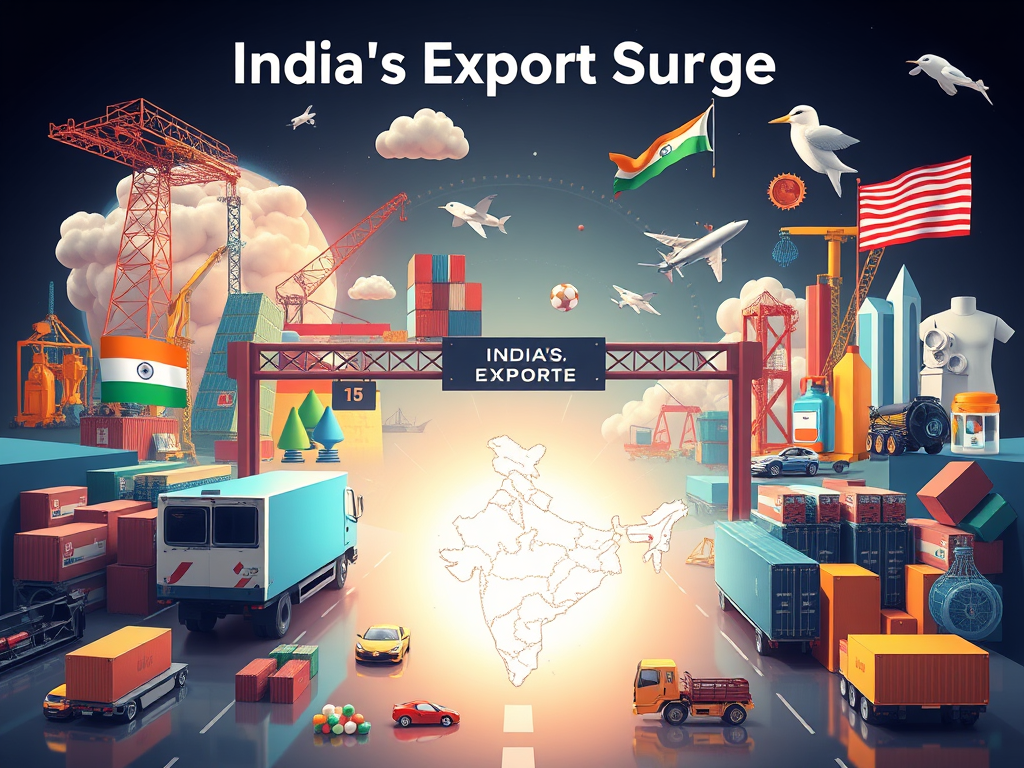
The recent imposition of U.S. tariffs on imports from China, Canada, and Mexico has opened new avenues for India’s export sector. Coupled with the Indian government’s export-friendly policies in the 2025 Budget, India is strategically positioning itself to capitalize on these opportunities.
U.S. Tariffs and Trade Diversion Effect
The U.S. has imposed the following customs duties:
| Country | Tariff Rate |
|---|---|
| China | 10% |
| Mexico | 25% |
| Canada | 25% |
These tariffs are expected to divert trade flows, prompting U.S. buyers to seek alternative suppliers, with India emerging as a strong contender due to its competitive production capabilities.
Key Sectors Benefiting from Export Opportunities
India stands to benefit significantly in sectors where it holds competitive advantages:
| Sector | Key Products |
| Electrical Machinery | Transformers, circuit boards, and switchgear |
| Auto Components | Engine parts, brake systems, and transmission parts |
| Pharmaceuticals | Generic drugs, active pharmaceutical ingredients (APIs) |
| Chemicals | Organic chemicals, dyes, and industrial chemicals |
| Apparel and Fabrics | Ready-made garments, textiles, and yarn |
| Mobile Devices | Smartphones, accessories, and electronic components |
Competitiveness and Production Capacity
While these sectors offer substantial opportunities, India’s ability to maximize gains will hinge on:
- Enhancing production capacity
- Streamlining supply chains
- Investing in technology and innovation
- Strengthening quality standards to meet U.S. regulations
Trade Statistics: India-U.S. Bilateral Trade (April – November 2024-25)
| Trade Metric | Value (USD Billion) |
| Total Bilateral Trade | 82.52 |
| Exports to U.S. | 52.89 |
| Imports from U.S. | 29.63 |
The U.S. remains India’s second-largest trading partner, underscoring the significance of strategic trade policies to boost exports further.
Indian Budget 2025: Promoting Exports
The 2025 Indian Budget has introduced several measures to bolster exports:
- Incentives for Export-Oriented Units (EOUs): Tax benefits and subsidies for companies expanding their export operations.
- Infrastructure Development: Investments in ports, logistics parks, and trade facilitation centers to reduce export costs.
- Trade Agreements: Fast-tracking free trade agreements (FTAs) with key markets to improve market access.
- Credit Support: Enhanced credit facilities for MSMEs engaged in export activities.
Conclusion
The combination of U.S. tariffs on key trading partners and India’s proactive export strategies under the 2025 Budget creates a conducive environment for India’s export growth. By leveraging its strengths in key sectors, improving production capacity, and capitalizing on favorable trade policies, India is poised to expand its footprint in the global market, particularly in the U.S.



 Glottis Limited
Leave a comment