

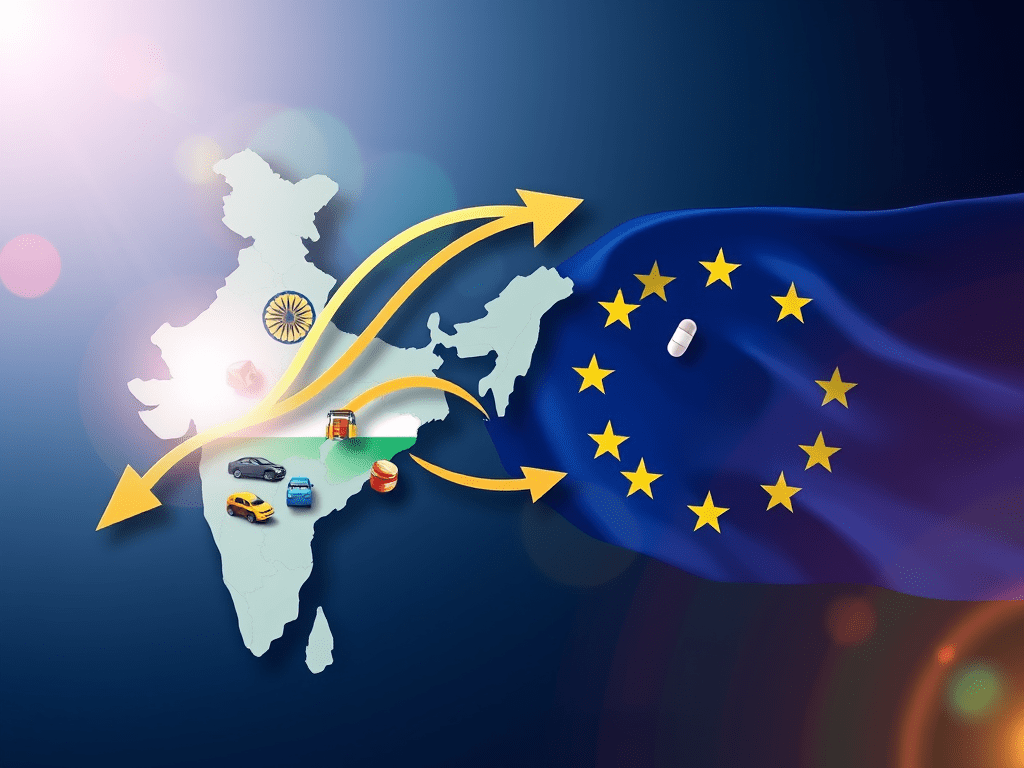
The European Union (EU) and India’s Ministry of Textiles have announced a strategic collaboration aimed at strengthening India’s textile and handicraft industry. This initiative involves the launch of seven projects designed to enhance production, sustainability, and economic empowerment across the sector.
Key Highlights of the Collaboration
- Launch of Projects: Seven projects have been initiated to develop and modernize India’s textile and handicraft sector.
- Funding: The EU has allocated a grant of EUR 9.5 million (approximately INR 85.5 crores) to finance these projects.
- Implementation Areas: The projects will be executed across nine Indian states—Assam, Andhra Pradesh, Telangana, Uttarakhand, Uttar Pradesh, Odisha, Jharkhand, Bihar, and Haryana.
- Beneficiaries: Approximately 35,000 individuals, including 15,000 MSMEs, 5,000 artisans, and 15,000 farmer-producers, will directly benefit from these initiatives.
- Women Empowerment: The initiative aims to economically empower around 200,000 women through sustainable practices and business opportunities.
- Cultural Heritage and Self-sufficiency: These projects focus on preserving India’s cultural heritage in textiles and promoting economic self-sufficiency.
- Timeline: Execution is planned over a period of 3 to 5 years.
- Partnership: The projects will be implemented in collaboration with government agencies and private sector partners.
- Sustainability Focus: A key aspect is the integration of sustainable practices, reducing environmental impact while modernizing production.
- Additional Tools: A “Textiles’ Toolkit” was introduced to support the circular economy and enhance resource efficiency.
Project Details and Objectives
| Project | Objective |
|---|---|
| Production and Promotion of Natural Dyes | Encourage the use of eco-friendly natural dyes in textiles |
| Bamboo Craft Initiative | Support the development and promotion of sustainable bamboo crafts |
| Handloom Promotion | Enhance production, branding, and market access for handloom products |
| Shawl Production | Strengthen the production and marketing of traditional shawls |
| Traditional Handicrafts Development | Promote and preserve various Indian handicrafts |
| Textiles Value Chain Strengthening | Improve market linkage, sustainability, and competitiveness |
| Market Access Improvements | Expand market opportunities for MSMEs and artisans |
Conclusion
This collaboration between the EU and India represents a significant step toward sustainable growth in the textile and handicraft industry. By focusing on innovation, market access, and cultural preservation, these projects will empower local communities and contribute to a more sustainable and globally competitive Indian textile sector.

 Glottis Limited
Leave a comment