
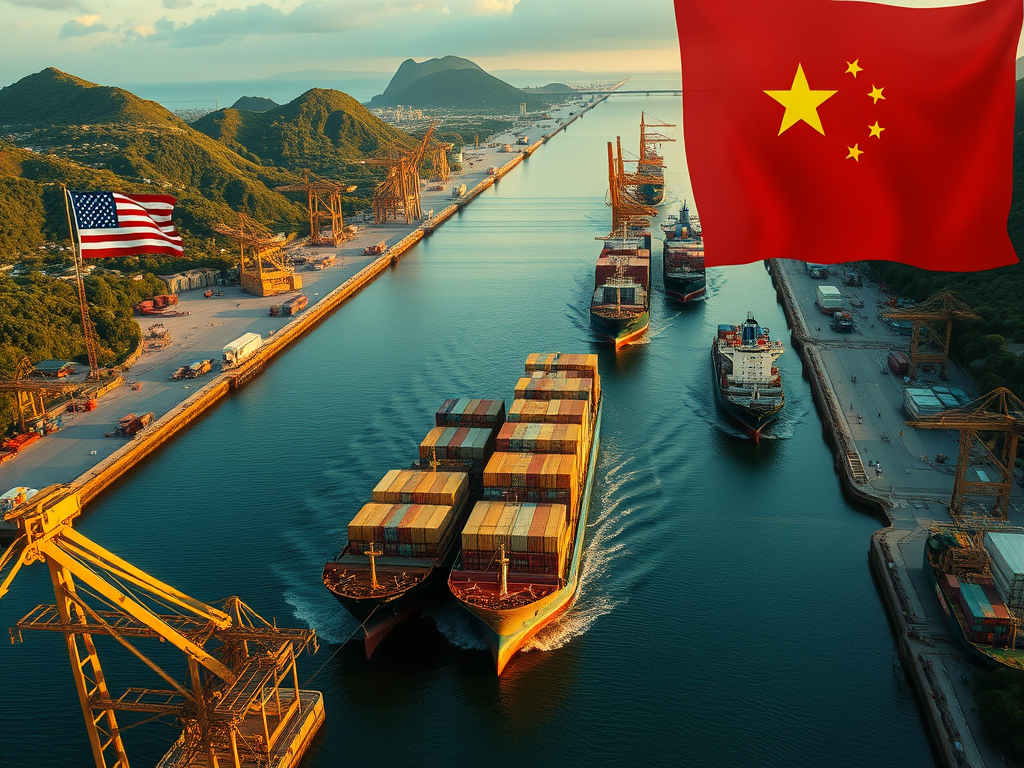
The Panama Canal, a vital artery for global trade, has become a focal point in the ongoing power struggle between the United States and China. The strategic significance of this waterway has led to growing geopolitical tensions, with both superpowers vying for influence.
Key Developments in the Panama Canal Dispute
| Factor | Details |
|---|---|
| Strategic Importance | The canal serves as a key route for global trade, connecting the Atlantic and Pacific Oceans. |
| Chinese Influence | In 2017, China included the Panama Canal in its Belt and Road Initiative, aiming to expand economic influence. |
| US Concerns | The US has raised concerns over a Hong Kong-based company managing the canal’s entrance ports. |
| Panama’s Government Response | Under US pressure, Panama has attempted to distance itself from China’s Belt and Road Initiative. |
| Power Struggle | The canal has become a flashpoint in the US-China rivalry for global trade dominance. |
| Recent Developments | US diplomats have urged Panama to curb Chinese business interests in the region. |
Implications for Global Shipping
| Impact | Consequences |
| Disruption of Shipping Routes | Political instability could lead to delays and rerouting of vessels. |
| Increased Shipping Costs | Potential policy shifts may result in higher tolls and fees for global shipping companies. |
| Supply Chain Reconfiguration | Companies may explore alternative trade routes to mitigate risks. |
| Impact on Trade Volumes | Uncertainty over canal control could shift global trade patterns. |
| Shipping Logistics and Planning | Businesses must reassess logistics strategies to ensure smooth operations. |
| Environmental Considerations | Changes in management may affect sustainability initiatives within the canal. |
| Strategic Military Implications | A military presence in the region could raise security concerns for maritime trade. |
| Global Economic Ripple Effects | Any disruption could lead to global supply chain vulnerabilities and market instability. |
Conclusion
The Panama Canal remains a critical maritime corridor, and its geopolitical significance continues to shape global shipping and trade policies. With mounting tensions between the US and China, stakeholders in the shipping industry must stay prepared for potential disruptions and evolving trade dynamics. Careful monitoring and strategic adjustments will be necessary to navigate these uncertain waters.



 Glottis Limited
Leave a comment