
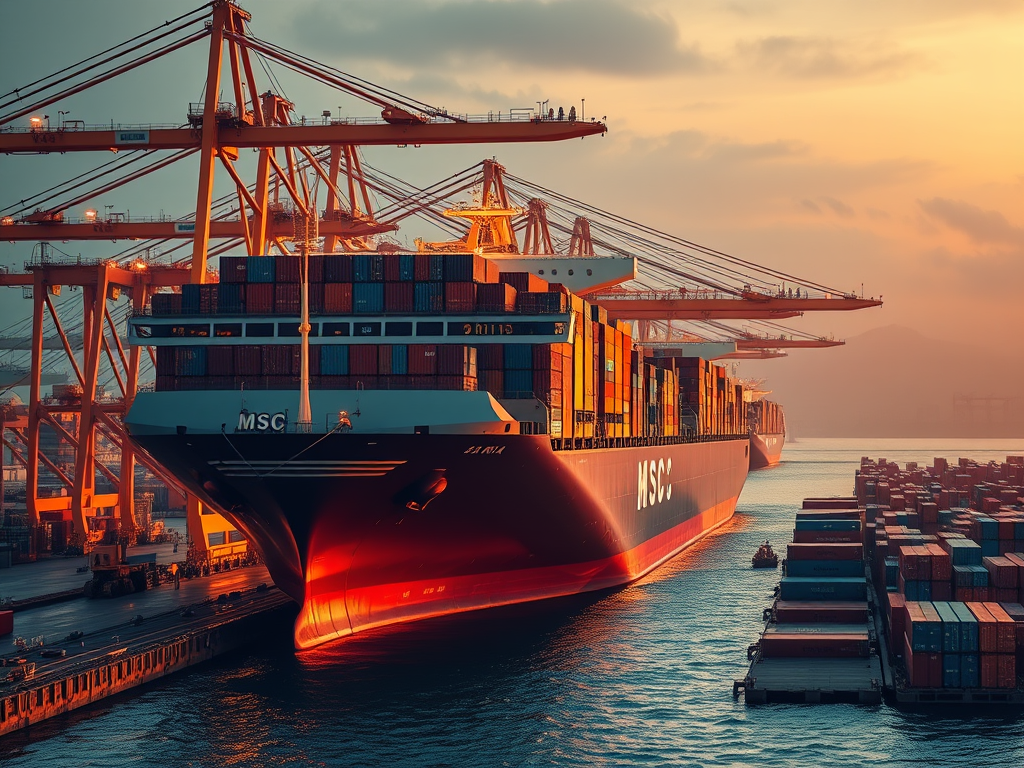
Vizhinjam International Seaport has emerged as a strategic player in global shipping, surpassing initial projections and solidifying its role as a critical transshipment hub. With significant cargo volume, increased ship traffic, and promising future developments, the port is poised to become a key junction linking Asia and Europe. Below are the key statistics that highlight its rapid growth and operational performance.
Performance Overview
| Key Point | Details |
|---|---|
| Cargo Volume | The port handled a total of 300,000 TEUs (Twenty-foot Equivalent Units) of cargo in six months, three times more than the initial estimate of 100,000 TEUs. |
| Ship Traffic | The port received 150 ships, including five of the world’s largest container vessels. |
| Primary Operators | MSC (Mediterranean Shipping Company) vessels are the main drivers behind the port’s growth. |
| Increase in Ship Calls | Ship calls from MSC increased from 35 per month (October to December) to 100 in January, with a forecast of 60 per month ahead. |
| Upcoming Schedule | 17 vessels are scheduled to dock in the next week. |
| Future Expectations | The CEO of Adani Ports SEZ expects ship calls to reach 250 soon. |
| Strategic Role | The seaport is positioned to become a key hub linking Asia and Europe, with MSC making it a regular stop by the end of February. |
| Upcoming Vessel | The MSC Mia, a 400-meter vessel with a capacity of 22,000 TEUs, is expected to arrive by March 1. Ships from Africa are also anticipated in March. |
These figures underscore Vizhinjam’s growing importance in global maritime trade and its ability to attract major shipping players.
Challenges and Considerations
Despite its impressive performance, Vizhinjam International Seaport, like all major ports, faces certain challenges that require strategic planning and mitigation. Below is an overview of the key challenges:
| Challenge | Description |
| Infrastructure Development | Delays in construction or upgrades of port facilities can hinder operational efficiency. |
| Logistical Bottlenecks | Congestion can occur if the land access routes are not adequately developed to handle increased cargo volume. |
| Regulatory and Compliance Issues | Navigating complex regulatory environments can create delays and increase operational costs. |
| Environmental Concerns | Ports may face scrutiny over their environmental impact, including pollution and habitat destruction. |
| Labor Shortages | Difficulty in staffing can lead to operational slowdowns and increased costs. |
| Supply Chain Disruptions | Global supply chain issues, such as those seen during the COVID-19 pandemic, can create delays in cargo handling. |
| Technological Integration | Adopting new technologies for cargo handling and logistics management can be challenging and expensive. |
| Natural Disasters | Seaports can be vulnerable to hurricanes, floods, and other natural disasters which can disrupt operations. |
| Competition from Other Ports | Competition with neighboring ports for shipping lines and cargo can impact business viability. |
| Economic Fluctuations | Changing global economic conditions can affect shipping volumes and operational sustainability. |
Future Outlook
With MSC strengthening its presence at Vizhinjam and the port’s growing reputation as a strategic maritime hub, future expansion and investments are expected. The anticipated increase in ship calls and the arrival of ultra-large vessels like MSC Mia reflect the port’s potential to play a pivotal role in global trade.
Close monitoring of infrastructure enhancements, technological integration, and supply chain resilience will be essential in ensuring the port’s continued success. As Vizhinjam evolves, it is set to reinforce India’s position in the global shipping network and drive economic growth through maritime excellence.


 Glottis Limited
Leave a comment