
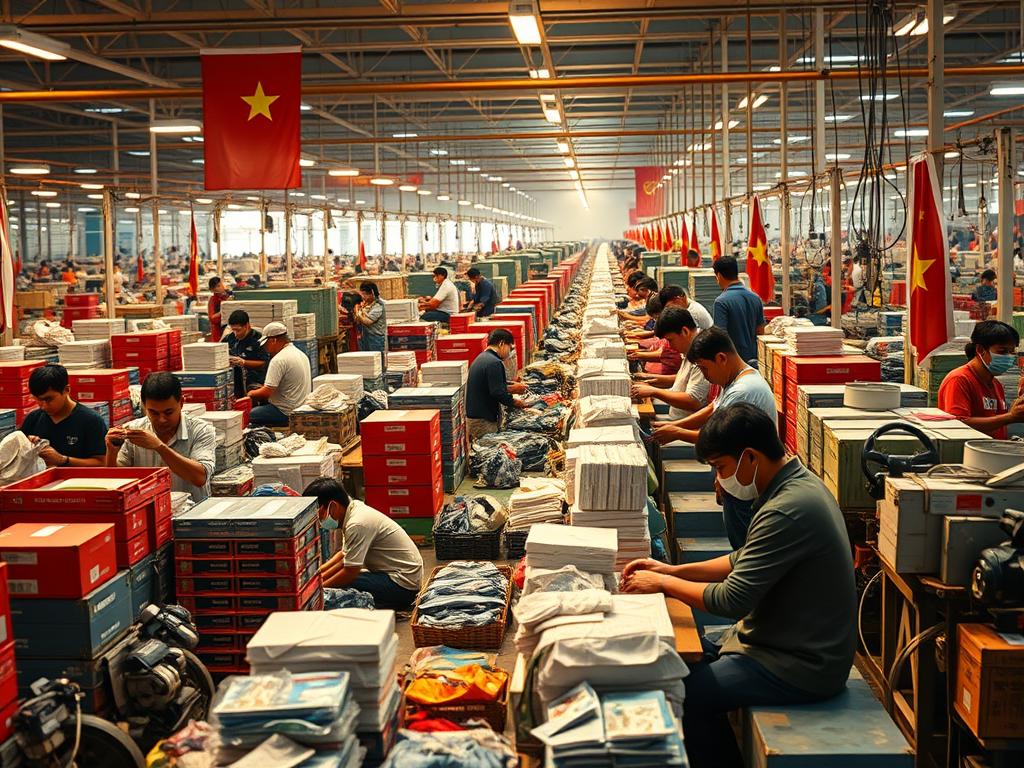
Vietnam has emerged as a key beneficiary of the ongoing U.S.-China trade tensions, with increasing exports, foreign investments, and supply chain shifts favoring its manufacturing sector. As companies seek to reduce their dependence on China, Vietnam has positioned itself as an attractive alternative in global trade.
Key Factors Driving Vietnam’s Growth
1. Surging Export Growth
Vietnam has outpaced its Southeast Asian peers in export growth, benefiting from the redirection of supply chains. This trend has been most prominent in U.S.-bound shipments, as businesses look for cost-effective and tariff-free alternatives outside of China.
| Country | Export Growth (2024) | Key Export Markets |
|---|---|---|
| Vietnam | High | U.S., EU, Japan |
| Malaysia | Moderate | China, U.S., ASEAN |
| Thailand | Moderate | China, Japan, U.S. |
| Indonesia | Low | China, U.S., ASEAN |
| Philippines | Moderate | U.S., China, EU |
2. Vietnam as a Winner of the U.S.-China Trade War
- The trade tensions between the U.S. and China have redirected a significant portion of U.S. imports from China to Vietnam.
- Vietnam’s exports to the U.S. have risen as companies relocate production to avoid tariffs and trade restrictions on Chinese goods.
- The country has become a major hub for electronics, textiles, and furniture manufacturing, key sectors affected by the U.S.-China conflict.
3. Rising Foreign Direct Investment (FDI)
- Vietnam has witnessed increasing foreign investment, particularly from multinational corporations (MNCs) seeking to diversify risk and reduce dependency on China.
- Key investors include Apple suppliers, Samsung, Intel, and Nike, which have expanded their production bases in Vietnam.
- FDI inflows to Vietnam in 2024 are expected to exceed $20 billion, reinforcing its role as a regional manufacturing hub.
4. Supply Chain Diversification & Manufacturing Growth
Vietnam has become a critical part of global supply chains, with companies adopting “China Plus One” strategies to ensure production continuity.
- Top Industries Expanding in Vietnam:
- Electronics: Apple suppliers, Samsung, LG
- Textiles & Apparel: Nike, Adidas
- Furniture: IKEA, Ashley Furniture
- Automotive Parts: VinFast, Toyota
5. Economic Expansion & Job Creation
Vietnam’s GDP growth has been fueled by rising exports and investments, leading to:
- Job creation in manufacturing and logistics.
- Infrastructure development to support increasing trade flows.
- Enhanced global trade positioning within ASEAN and beyond.
| Sector | Impact on Vietnam’s Economy |
|---|---|
| Manufacturing | Strong job creation, industrial expansion |
| Technology | Increased foreign investment in R&D |
| Logistics | Growth in shipping and transportation services |
6. Strengthening U.S.-Vietnam Ties
- Vietnam’s growing economic and trade relationship with the U.S. is becoming strategically important.
- The U.S. has increased diplomatic engagement with Vietnam to counterbalance China’s regional influence.
- Potential Trade Agreements: Vietnam may negotiate preferential trade deals with the U.S. to solidify economic ties further.
7. Challenges and Competitive Pressures
Despite its advantages, Vietnam faces several challenges in maintaining its competitive edge:
- Infrastructure bottlenecks: Vietnam needs to upgrade ports, roads, and energy supply to support growing trade.
- Workforce constraints: The demand for skilled labor is rising as high-tech industries expand.
- Rising competition: Other ASEAN nations like Indonesia, Malaysia, and the Philippines are also attracting manufacturing investments.
Conclusion
Vietnam has successfully positioned itself as a key player in the shifting global supply chain, benefiting from the U.S.-China rivalry. While export growth, FDI inflows, and industrial expansion are on the rise, Vietnam must continue to invest in infrastructure and workforce development to sustain its competitive advantage in the long term.



 Glottis Limited
Leave a comment