
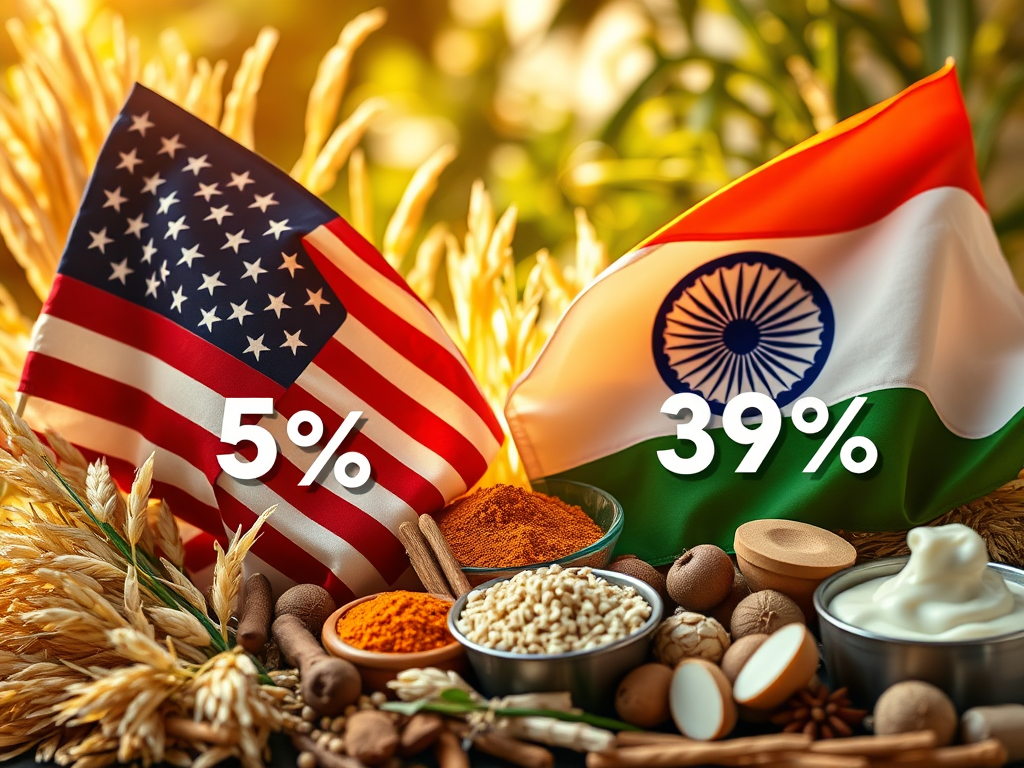
The United States is intensifying pressure on India to lower its high tariffs on agricultural products as part of ongoing trade negotiations. The discussions highlight the stark contrast between the tariff structures of both countries and the potential implications for bilateral trade.
India’s Agricultural Tariffs vs. US Tariffs
India maintains significantly higher tariffs on agricultural products compared to the US. The following table illustrates the average Most Favoured Nation (MFN) tariff rates for agricultural goods:
| Country | Average MFN Tariff on Agricultural Products |
|---|---|
| United States | 5% |
| India | 39% |
This substantial difference has been a point of contention, with the US advocating for lower tariffs to facilitate greater market access for its agricultural exports.
Current Agricultural Trade Between India and the US
India exports approximately $4 million worth of agricultural products to the US annually. The major commodities include:
| Product Category | Key Exports from India to US |
| Grains | Basmati rice, cereals |
| Spices | Cardamom, turmeric, cumin |
| Dairy | Milk, cheese, butter |
| Poultry | Chicken and eggs |
Lower tariffs could potentially enhance these exports and provide Indian farmers with a larger market share in the US.
Historical Context and Reciprocal Tariffs
The US has a history of prioritizing agricultural market access in its trade agreements. For instance, the United States–Mexico–Canada Agreement (USMCA) facilitated better access for US dairy producers to the Canadian market. A similar approach is being pursued in negotiations with India.
In response to India’s high tariffs, the US is considering reciprocal tariffs that could affect Indian agricultural exports. The most vulnerable sectors include:
| Affected Sector | Potential Impact of US Tariffs |
| Fish & Meat | Increased export costs |
| Processed Seafood | Reduced market access |
| Edible Oils | Higher duties on imports |
| Alcohol | Potential decline in exports |
Political and Trade Implications
The Trump administration’s stance on trade is significantly influenced by American farmers, a key voter base. Increasing US agricultural exports remains a priority, prompting pressure on India to adjust its trade policies.
Despite these tensions, both nations are actively exploring ways to expand agricultural trade while addressing the protectionist policies in India. The outcome of these negotiations will have lasting effects on bilateral trade dynamics and market access for agricultural producers in both countries.
Conclusion
The US-India trade talks underscore the challenges and opportunities in agricultural trade. While the US seeks to reduce barriers for its agricultural exports, India is cautious about protecting its domestic farming sector. The resolution of these negotiations will be crucial in shaping the future of agricultural trade between the two nations.




 Glottis Limited
Leave a comment