
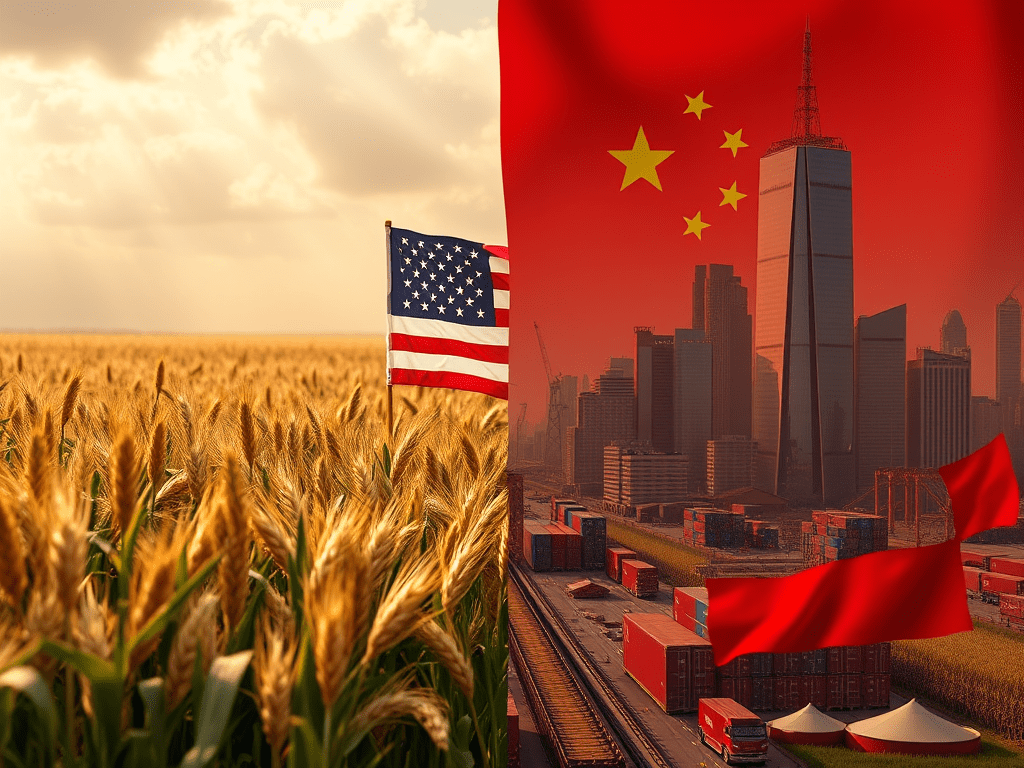
In a significant move escalating trade tensions between China and the United States, China has announced new tariffs on a range of US imports. These tariffs, which take effect immediately, target key agricultural and food products, further straining the already tense economic relations between the two global powers.
New Chinese Tariffs on US Imports
China has imposed tariffs of up to 15% on various US food imports. Additionally, certain commodities will face a 10% tariff increase. Below is a breakdown of the newly implemented tariffs:
| Category | Tariff Rate | Affected Goods |
|---|---|---|
| 15% Tariff | 15% | Chicken, wheat, corn, cotton |
| 10% Tariff | 10% | Sorghum, soybeans, pork, beef, aquatic products, fruits, vegetables, dairy |
China’s Response to US Tariffs
The latest Chinese tariffs come in direct response to new US trade restrictions. The US government has imposed an additional 10% tariff on all imports from China, effective March 4. This move further exacerbates the ongoing economic dispute, as both nations continue to counter each other’s trade measures.
China Expands ‘Unreliable Entity’ List
In a parallel action, China has added 15 US companies to its “unreliable entity list.” This includes Skydio, a drone manufacturer, and several other firms facing restricted business operations in China. This list serves as a strategic tool by Beijing to limit the influence and activities of US companies within its market.
China’s Official Response
China’s Ministry of Commerce has strongly condemned the US tariffs, labeling them as unilateral and an act of economic bullying. The ministry has urged diplomatic consultations to resolve the trade impasse, emphasizing the need for cooperative economic engagement rather than retaliatory actions.
Impact of the Tariffs
The imposition of these tariffs is expected to have widespread consequences on multiple sectors, potentially leading to higher prices and supply chain disruptions. The escalation of trade restrictions could also affect global markets, influencing investment strategies and international trade policies.
| Key Impact Areas | Expected Consequences |
| Agricultural Trade | Reduced US exports to China, affecting American farmers |
| Supply Chain | Increased costs for businesses relying on affected goods |
| Global Markets | Increased volatility and trade uncertainty |
As the trade dispute intensifies, businesses and policymakers on both sides are closely monitoring the situation, seeking possible avenues to mitigate its adverse effects. Whether diplomatic negotiations can de-escalate the tensions remains uncertain, but the economic impact is already beginning to unfold.



 Glottis Limited
Leave a comment