
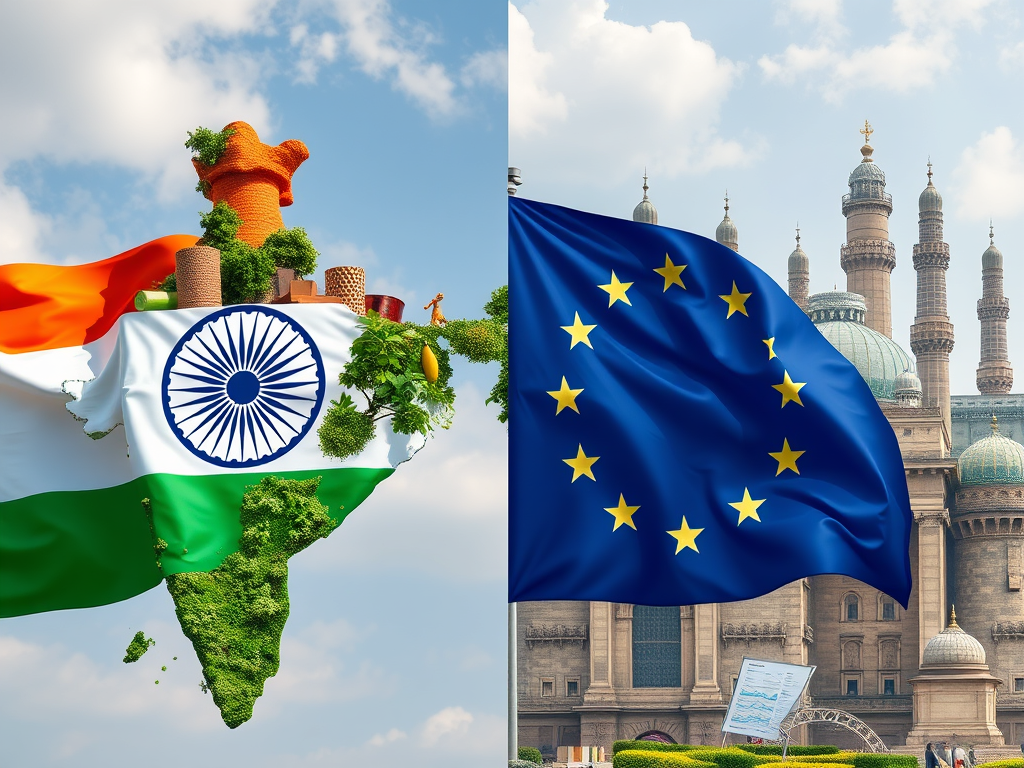
India’s ongoing Free Trade Agreement (FTA) negotiations with the European Union (EU) face significant challenges due to strict environmental regulations, trade asymmetry, and compliance barriers. The EU’s Carbon Border Adjustment Mechanism (CBAM), labor and sustainability clauses, and intellectual property disputes pose major hurdles for Indian exporters.
Key Challenges in India-EU Trade Negotiations
| Key Issue | Impact on India |
|---|---|
| Carbon Border Adjustment Mechanism (CBAM) | Tariffs of 20-35% on Indian steel, aluminum, and cement exports to the EU. |
| Asymmetrical Trade Impact | EU goods may enter India duty-free, while Indian exports face indirect barriers. |
| Environmental Regulations | Higher costs for Indian manufacturers to comply with EU sustainability norms. |
| Data Protection Concerns | Lack of “Data Secure Country” status under GDPR increases compliance costs for IT firms. |
| Services Sector Restrictions | Indian IT and financial service firms face high salary thresholds and local office requirements. |
| Investment and Procurement Issues | India opposes EU demands for access to government procurement and investment liberalization. |
| Intellectual Property (IP) Disputes | EU demands TRIPS-plus standards, threatening India’s generic pharmaceutical exports. |
| Geographical Indications (GIs) Disputes | The EU seeks automatic GI recognition, bypassing India’s registration process. |
| Financial Market Access | EU wants easier entry for European banks and financial services in India. |
Implications of EU Trade Regulations on Indian Exports
1. Increased Tariffs Due to CBAM
- The EU’s Carbon Border Adjustment Mechanism (CBAM) will impose tariffs of 20-35% on Indian steel, aluminum, and cement exports.
- This makes Indian products less competitive compared to local EU goods.
- Indian companies must invest in greener technologies to remain viable in the EU market.
2. Higher Compliance Costs for Exporters
- EU’s strict environmental and labor laws require Indian firms to adopt sustainable manufacturing practices.
- Cost of compliance with EU’s carbon emission norms will increase production costs.
- Small and medium exporters may struggle with costly regulatory certifications.
3. Trade Asymmetry & Market Access Challenges
- The EU demands duty-free access for its goods, while Indian exports face non-tariff barriers.
- Indian exporters might face quality certification hurdles, making market entry more complex.
- India’s pharma and agricultural exports could face challenges due to stricter EU food and drug safety standards.
4. Impact on IT and Digital Services Exports
- The EU has not granted India “Data Secure Country” status under GDPR.
- This creates legal barriers for Indian IT and outsourcing firms, increasing data transfer costs.
- EU salary thresholds and local office requirements make it harder for Indian IT firms to operate remotely.
5. Effect on Financial and Banking Services
- EU is pushing for greater access to India’s banking and financial sector.
- Indian banks might face restrictions when expanding services in Europe due to licensing and capital requirements.
6. Threat to India’s Generic Pharma Industry
- The EU’s demand for TRIPS-plus intellectual property rights could impact India’s $20 billion pharma exports.
- Stricter patent laws may delay the production of affordable generic medicines, affecting global healthcare access.
7. Agricultural & Geographical Indications (GIs) Disputes
- The EU wants automatic recognition of European GIs (e.g., Champagne, Parmesan cheese) in India.
- India insists on following its own GI registration process, which protects Indian products like Darjeeling Tea and Basmati Rice.
India-EU Trade Snapshot
| Metric | India | EU |
|---|---|---|
| GDP (2024) | $3.9 trillion | $18.4 trillion |
| Trade Volume (2023-24) | $122 billion (EU is India’s 2nd largest trade partner) | |
| Exports to EU (2023) | $65 billion (Mainly textiles, IT, pharma, engineering goods) | |
| Imports from EU (2023) | $57 billion (Automobiles, machinery, chemicals, aircraft) | |
| CBAM-Affected Exports | Steel, aluminum, cement | Tariff increase by 20-35% |
| Pharma Exports to EU | $6.5 billion (2023) | May be impacted by TRIPS-plus |
Potential Solutions for India
- CBAM Mitigation:
- Invest in cleaner technologies to reduce carbon emissions.
- Negotiate exemptions or lower tariffs for developing countries.
- Strengthening Services Exports:
- Seek recognition as a “Data Secure Country” to ease IT operations.
- Push for easier work permits and reduced local hiring requirements.
- Protecting Pharma Exports:
- Negotiate waivers on TRIPS-plus provisions to safeguard generic drug exports.
- Highlight India’s role as a global supplier of affordable medicines.
- Addressing Trade Asymmetry:
- Secure lower tariffs for Indian exports under the FTA.
- Ensure equal market access for Indian goods in Europe.
- Defending India’s Geographical Indications:
- Maintain strict GI registration requirements to protect Indian agricultural and handicraft products.
Conclusion
India’s negotiations with the EU highlight critical trade-offs between economic gains and regulatory challenges. The CBAM, environmental laws, and intellectual property regulations pose hurdles for Indian exports, particularly in steel, pharmaceuticals, and IT services.
However, by leveraging diplomatic negotiations, improving sustainability standards, and protecting domestic industries, India can secure a fairer trade deal while enhancing its global trade footprint.


 Glottis Limited
Leave a comment