
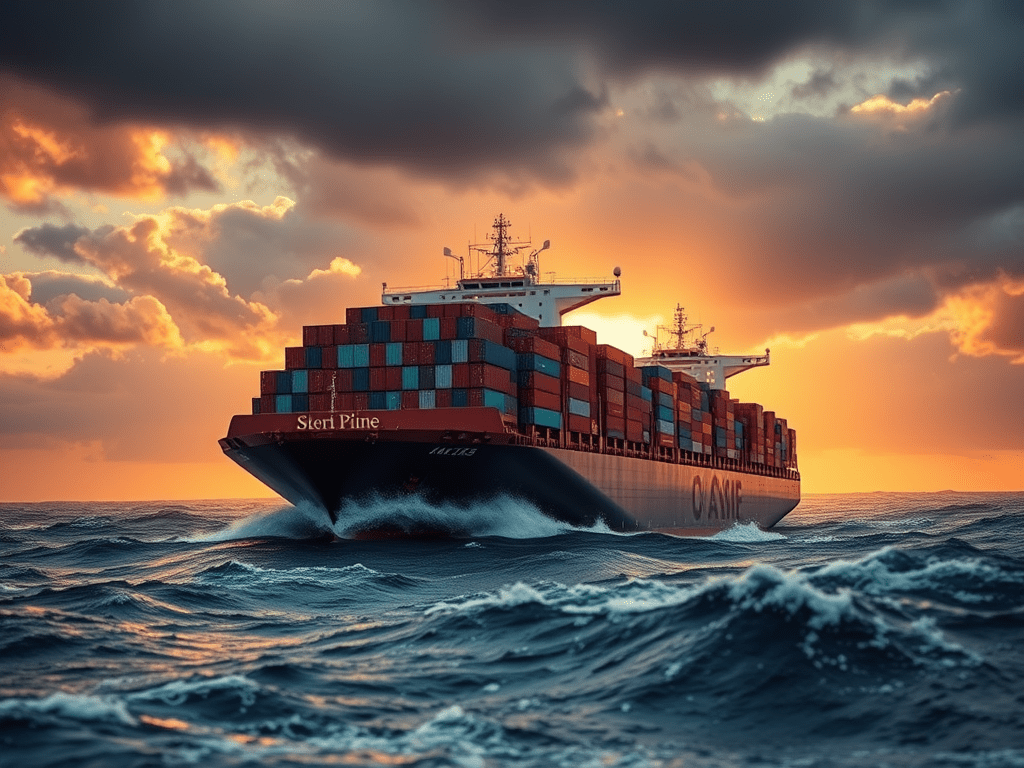
The container shipping industry is experiencing a dramatic shift in 2025, characterized by declining profits, volatile market conditions, and geopolitical uncertainties. Major players such as MSC and Maersk are facing significant financial challenges due to fluctuating demand, restructuring of alliances, and external economic pressures. Below is an overview of the key developments shaping the industry this year.
Key Trends and Developments
| Aspect | Details |
|---|---|
| Profit Forecast | MSC’s liner shipping profits are projected to drop by over 80% in 2025, falling below $10 billion compared to $60 billion in the previous year. |
| Pricing Trends | Container spot rates have been consistently decreasing, with the Shanghai Containerized Freight Index down 47% since the beginning of 2025. |
| Market Volatility | Weaker post-Lunar New Year volumes, increased competition, alliance restructuring, and uncertainty from U.S. tariff announcements have contributed to declining rates. |
| Regional Comparisons | Despite the current decline, rates remain above the lows of December 2023 for major routes such as Asia to North Europe and Asia to the Mediterranean. |
| Impact of Tariffs | Potential U.S. tariffs could lead to negative demand and supply shocks, affecting global trade and potentially causing inflationary pressures. |
| Profit Margins | While Maersk saw strong financial performance in 2024, its 2025 profits are highly dependent on geopolitical stability, especially concerning the Red Sea route. |
| Future Outlook | Maersk’s EBIT forecast for 2025 ranges from zero to $3 billion, indicating high levels of uncertainty driven by external geopolitical factors. |
Challenges and Uncertainties Ahead
The outlook for 2025 remains uncertain due to various economic and geopolitical risks. The instability in the Middle East, particularly concerning the Red Sea, is a major concern for global supply chains. Additionally, shifting trade policies and potential tariff changes could further disrupt freight demand.
While container spot rates are trending downward, they are still above historical lows, suggesting some resilience in the industry. However, the competitive landscape is shifting, with liner companies adapting to new market realities through alliance restructuring and strategic pricing adjustments.
Conclusion
The container shipping industry in 2025 is facing a period of transition. Companies must navigate declining profits, evolving market dynamics, and global uncertainties. With geopolitical tensions and economic fluctuations playing a key role, the industry’s future will depend on strategic adaptation and resilience in the face of an unpredictable global market.



 Glottis Limited
Leave a comment