
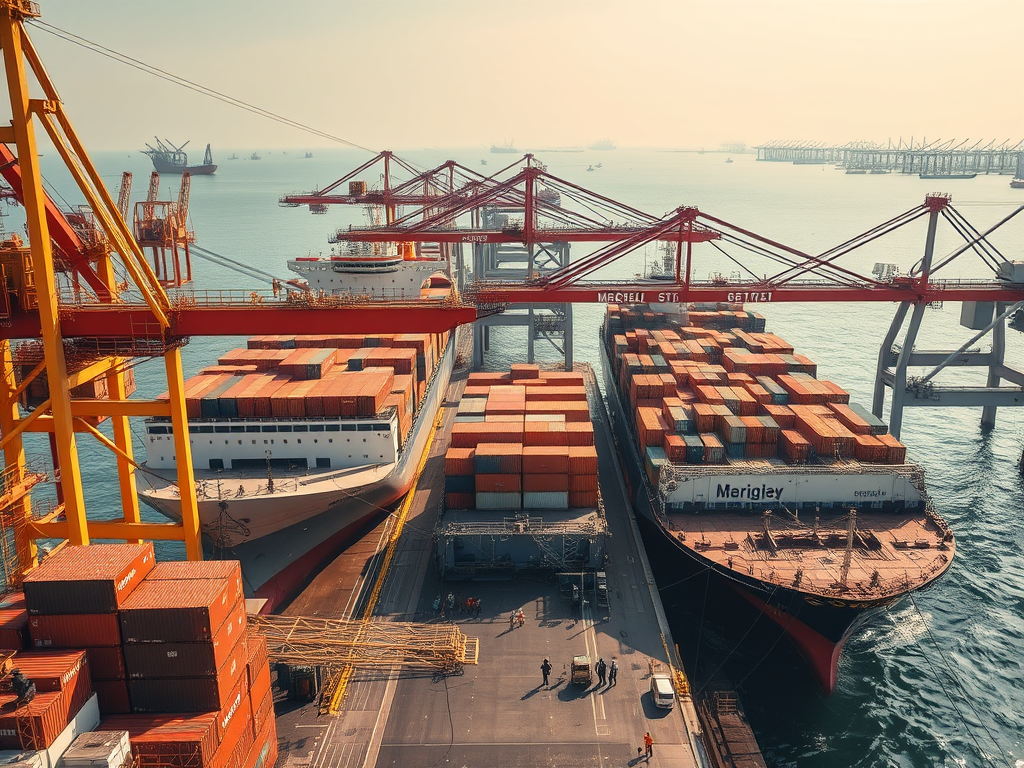
India’s port industry is set for steady growth over the next five years, driven by rising imports, declining freight costs, and global supply chain normalization. This article explores the major trends shaping the sector and its long-term impact on trade and infrastructure.
Growth Projections
The Indian port industry is projected to grow at an annual rate of 4-7% over the next five years. Cargo traffic is expected to increase by 3-6% annually, stabilizing utilization rates around 55%.
Key Drivers of Growth
- Increasing Imports – India’s rising demand for goods is pushing import volumes higher.
- Falling Freight Costs – Lower transportation costs are encouraging more trade.
- Supply Chain Normalization – Post-pandemic recovery is improving global logistics.
Strategic Importance of Indian Ports
Indian ports play a vital role in international trade, handling 95% of export volumes and 70% of export values. Their strategic location along 7,500 km of coastline and 20,275 km of national waterways aligns India with 80% of global maritime oil trade.
Port Capacity Expansion
Between FY 2023 and FY 2028, India’s ports will add 500-550 MTPA (Million Tonnes Per Annum) in capacity annually. This expansion will focus on key sectors such as:
- Petroleum
- Coal
- Containerized Cargo
Transshipment and Container Trade
Transshipment currently accounts for 25% of India’s container throughput, with ports like Chennai expected to play a major role in increasing efficiency and reducing dependency on foreign hubs.
Major vs. Non-Major Ports Performance
| Category | Managed By | Growth & Performance |
|---|---|---|
| Major Ports | Central Government | Located near industrial hubs, growing steadily. |
| Non-Major Ports | State & Private Sector | Outperformed major ports, with a 7.6% increase in cargo traffic. |
Future Outlook
Improvements in infrastructure, technology, and operations will further boost India’s trade potential. With major and non-major ports expanding capacity, India’s maritime sector is poised to become a global trade powerhouse in the coming years.




 Glottis Limited
Leave a comment