
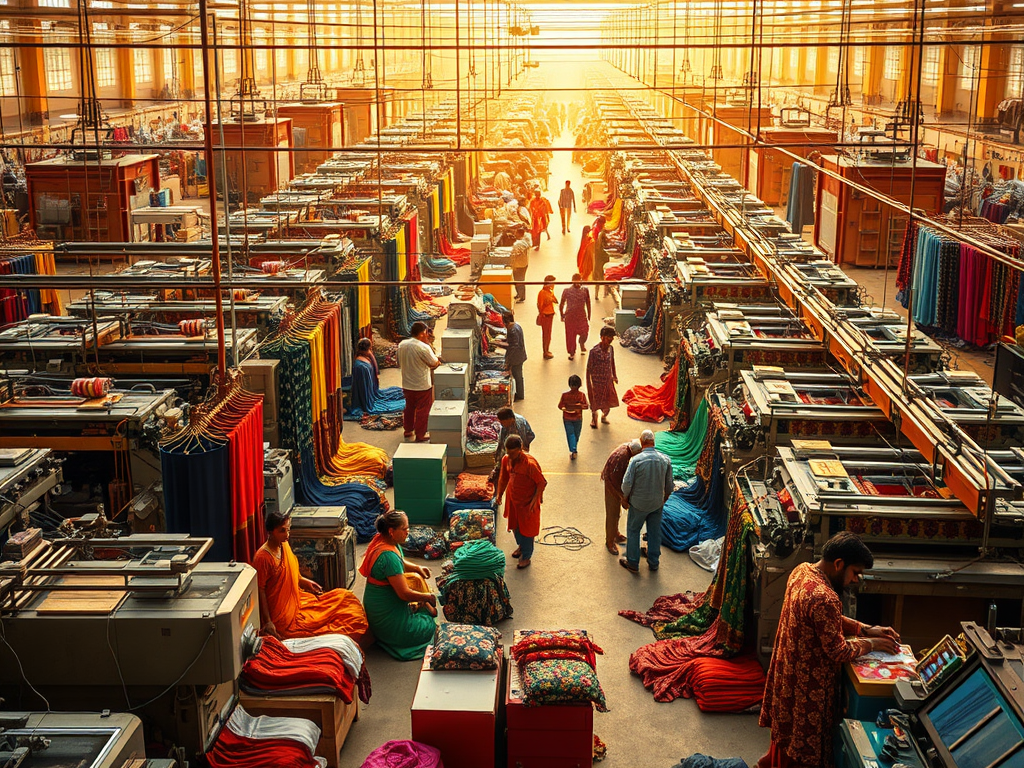
India, with its vast population and rich textile heritage, has immense potential to emerge as a global leader in the readymade garment sector. However, as Uttar Pradesh Chief Minister Yogi Adityanath pointed out, the country still lags behind Bangladesh in garment exports despite having a much larger population. To bridge this gap, the government is focusing on strategic initiatives, including textile parks, workforce utilization, and global market mapping.
India vs. Bangladesh: A Textile Export Comparison
| Factor | India | Bangladesh |
|---|---|---|
| Population | 1.4 billion | 160 million |
| Textile & Apparel Exports (2023) | $44 billion | $47 billion |
| Share in Global Textile Exports | ~4% | ~6% |
| Major Textile Hubs | Surat, Tiruppur, Ludhiana | Dhaka, Chittagong |
| Government Initiatives | PM MITRA Scheme, PLI Scheme | Export-friendly policies, low labor costs |
Key Strategies for Strengthening India’s Textile Sector
1. PM MITRA Scheme: Establishment of Textile Parks
The PM Mega Integrated Textile Regions and Apparel (PM MITRA) scheme is designed to create state-of-the-art textile parks across India. These parks will serve as integrated textile hubs, enhancing production, efficiency, and export capabilities.
- Key Features:
- Centralized operations for textile processing, manufacturing, and exports.
- Infrastructure support for MSMEs and large industries.
- Reduction in logistics costs and lead times.
2. Creating a Globally Recognized Textile Brand
India aims to position itself as a leading name in global textile exports by leveraging:
- Quality-driven manufacturing
- Innovation in fabric design and sustainability
- Competitive pricing through cost optimization
3. Mapping Global Market Needs
Understanding consumer trends and market demands is crucial for aligning India’s textile industry with international requirements. This includes:
- Identifying high-demand apparel categories in key markets like the US, EU, and Middle East.
- Adapting production to sustainable and organic textiles, as per global preferences.
4. Comprehensive Facilities in Textile Parks
For India to compete globally, textile parks must incorporate:
| Facility Type | Function |
|---|---|
| Sewing Units | Assembly of garments |
| Dyeing & Printing | Enhancing fabric aesthetics |
| Packaging & Logistics | Efficient supply chain management |
| Design & Innovation Centers | Creating globally competitive products |
5. Workforce Utilization
India’s textile sector is labor-intensive. Adityanath emphasized the need for skilling and employing India’s massive workforce to drive industrial growth. Key initiatives include:
- Skill development programs to enhance efficiency.
- Job creation in rural areas to promote inclusive growth.
6. Leveraging Local Markets
Uttar Pradesh, being a major consumer market, can drive domestic production and stimulate exports. The state caters to demand from:
- Neighboring regions (Bihar, Jharkhand, Madhya Pradesh, Rajasthan, Uttarakhand).
- International buyers from Nepal and Bhutan.
7. Government Support & Policies
To boost the textile industry, policy incentives and government support are crucial. Initiatives such as:
- Production Linked Incentive (PLI) Scheme to encourage large-scale manufacturing.
- Ease of doing business reforms to attract investments.
- Financial support for MSMEs engaged in textile production.
Conclusion
India’s textile sector holds tremendous potential, but strategic interventions are necessary to enhance global competitiveness. By leveraging workforce potential, improving infrastructure, and aligning with international market needs, India can significantly boost its textile exports and establish itself as a leading global hub.




 Glottis Limited
Leave a comment