
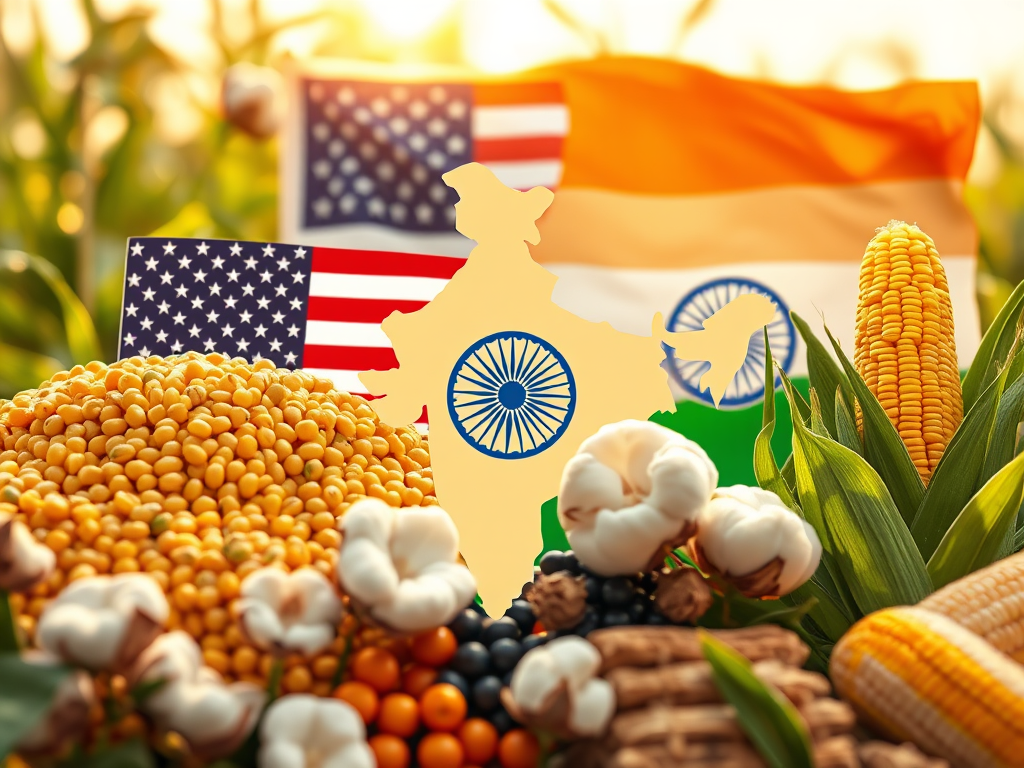
U.S. Agricultural Exports to India
The United States has identified India as a key market for its agricultural exports, particularly focusing on three main crops: soyabean, corn, and cotton. The rising demand for these commodities in India presents significant trade opportunities and challenges.
Key Market Data
| Factor | Details |
|---|---|
| Crops of Interest | Soyabean, Corn, Cotton |
| Export Value (2022) | $62 billion (combined for soyabean, corn, and cotton) |
| India’s Tariffs | 45% on soyabean, 50% on corn |
| Projected Corn Imports (2040) | 46 million tonnes (under rapid income growth scenario) |
| Projected Soyabean Meal Imports (2040) | 19 million tonnes |
| India’s Cotton Import Projection (2024-25) | 3 million bales |
| U.S.-India Trade Relations | Bilateral discussions on tariffs, trade barriers, and market access |
Market Dynamics
- Rising Demand in India: With increasing consumption of milk, eggs, fish, and meat, India requires more feed ingredients like corn and soyabean.
- Shift in Cotton Trade: India, once a net exporter, is projected to become a net importer of cotton, opening avenues for U.S. cotton exports.
- China’s Role: As China reduces its agricultural imports from the U.S., India emerges as an alternative destination for U.S. soyabean and corn.
Trade Barriers and Policy Challenges
- High Import Tariffs: India’s import duties on soyabean (45%) and corn (50%) make U.S. products less competitive.
- GMO Restrictions: India’s stringent regulations on genetically modified (GM) products limit U.S. exports.
- Domestic Production Priority: India prioritizes local agriculture, impacting import policies.
Future Trade Projections
- India’s Growing Import Needs: Due to rising domestic demand, India may need to import more agricultural commodities, creating long-term opportunities for the U.S.
- Bilateral Trade Discussions: Negotiations between the two nations aim to address tariff and regulatory concerns to facilitate trade growth.
Conclusion
The U.S. views India as a critical future market for its agricultural exports. However, high tariffs, GMO restrictions, and India’s focus on domestic production present challenges. While India cautiously approaches imports, rising demand for feed ingredients and cotton could drive policy changes in favor of U.S. agricultural trade. The ongoing trade negotiations will play a decisive role in shaping future trade flows between the two nations.



 Glottis Limited
Leave a comment