
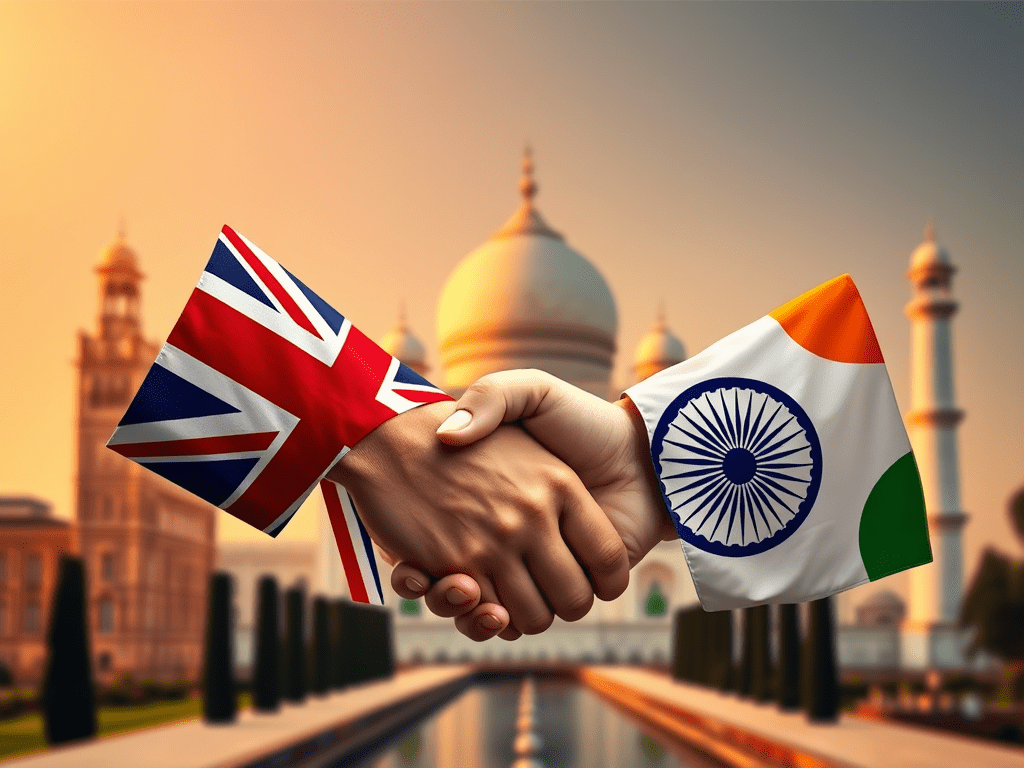
After years of back-and-forth, the United Kingdom and India are now within striking distance of finalizing a historic Free Trade Agreement (FTA)—a deal that could reshape economic ties between the two countries. Negotiations, which began in January 2022, have now covered over 90% of the deal’s framework, with leaders from both nations expressing strong optimism for a final agreement in 2025.
But as the finishing touches are debated, several sensitive issues—including tariffs on whisky, automobiles, pharmaceuticals, and agricultural exports—remain unresolved.
🧩 Summary of Negotiation Status
| Aspect | Status | Details |
|---|---|---|
| Overall Agreement | 90% Agreed | Most trade and regulatory terms have been finalized. |
| Worker Mobility (Visas) | Largely Resolved | Major breakthrough on visa access for Indian professionals. |
| Outstanding Tariff Issues | Under Negotiation | Includes scotch whisky, cars, pharma, and some agricultural goods. |
| Carbon Border Tax (CBAM) | Under Discussion | India seeks exemption from UK’s incoming carbon tax rules. |
| Bilateral Investment Treaty | Concurrent Talks | Aims to safeguard foreign investments with legal protections. |
⚙️ Key Sticking Points: What’s Left to Finalize?
- Tariffs on Key Goods
- Whisky: The UK is pushing for reduced tariffs on scotch whisky, which currently faces up to 150% duties in India.
- Automobiles: UK-made cars are facing steep duties in India; negotiators are seeking tariff relaxations.
- Pharmaceuticals: Both sides are working through regulatory and pricing barriers.
- Agricultural Trade
- Some UK-origin agricultural exports still face non-tariff barriers and tariff disagreements in India.
- Carbon Border Adjustment Mechanism (CBAM)
- The UK plans to implement a carbon tax on imports from countries without equivalent climate regulations.
- India is lobbying for an exemption, arguing the tax could unfairly penalize Indian manufacturers.
📈 Strategic and Economic Impacts
| Area | Impact if Deal is Finalized |
|---|---|
| UK Financial Services | Gains security via investment treaty and broader Indian market access. |
| UK Exports (Whisky, Auto, Pharma) | Potential tariff reductions will enhance competitiveness in India. |
| India’s IT & Skilled Workers | Eased visa access would benefit professionals and service exporters. |
| Foreign Investment | Bilateral investment treaty could catalyze more UK investment into India. |
| Carbon Tax | Exemption could protect India’s exports from becoming costlier in the UK. |
💬 Voices from Both Sides
- Nirmala Sitharaman, Indian Finance Minister:
“There is a great sense of positivity surrounding the deal. Most of the hurdles have been cleared.” - Rachel Reeves, UK Chancellor:
“Trade agreements are not just diplomatic wins—they’re vital for reviving the UK economy.”
🔄 Context: Why This Deal Matters Now
- Post-Brexit Strategy: The UK sees India as a priority trade partner as it repositions itself post-EU.
- Geopolitical Shifts: India is actively pursuing bilateral deals amid a changing global trade environment.
- Economic Boost Needed: Both economies are aiming for higher growth through exports and investment inflows.
📍 Conclusion: A Game-Changer in the Making
With political will aligning and most of the technicalities settled, the UK–India FTA is inching closer to reality. While tariffs on whisky, cars, and pharmaceuticals remain unresolved, both nations are working toward compromises that balance market access with domestic sensitivities. If signed, this deal could unlock new opportunities for manufacturers, exporters, investors, and professionals on both sides—marking a significant step forward in UK–India economic relations.




 Glottis Limited
Leave a comment