
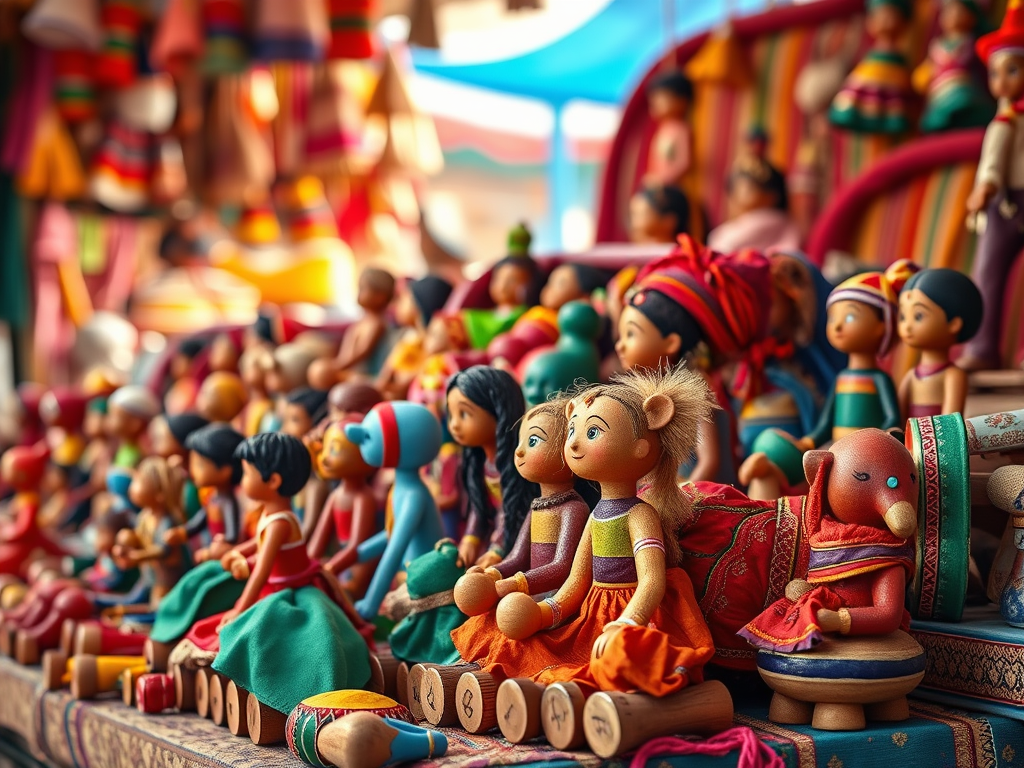
Amid shifting global trade dynamics and strategic policy reforms, India is poised to emerge as a major player in the global toy industry. With falling reliance on Chinese imports and a sharp rise in domestic manufacturing and exports, India is gaining traction as a viable alternative in global toy supply chains.
Key Developments in India’s Toy Industry
The toy industry in India is undergoing a transformation backed by policy support, changing global trade relationships, and a conscious shift towards self-reliance.
Key Highlights at a Glance
| Key Factor | Details |
|---|---|
| Drop in Chinese Imports | Imports from China fell from USD 235 million (FY20) to USD 41 million (FY24) due to stricter import norms and growing domestic sourcing. |
| Growth in Indian Exports | Exports increased from USD 40 million (2014-15) to an estimated USD 152 million (2023-24). |
| Impact of US-China Tariff War | The U.S. imposed 145% tariffs on Chinese toy imports, creating a supply gap India can fill. |
| Opportunity for India | India is strategically positioning itself as a reliable alternative supplier, especially to the U.S. market. |
| Industry Viewpoint | Akshay Binjrajka, President of the Toy Association of India, calls this a “golden opportunity” for India’s toy sector. |
Changing Global Trade Landscape: A Boon for India
The global toy supply chain is being reshaped by geopolitics—particularly the ongoing U.S.-China tariff war, which has led to increased duties on Chinese goods. The U.S., once heavily reliant on Chinese toys, is actively seeking alternative sourcing destinations. India, with its growing manufacturing capabilities and favorable policy environment, is emerging as a strong candidate to meet this demand.
Data Snapshot: India’s Toy Trade (Past and Present)
| Indicator | FY2014-15 | FY2019-20 | FY2023-24 (Est.) |
|---|---|---|---|
| Toy Imports from China | Not available | USD 235 million | USD 41 million |
| Total Toy Exports (India) | USD 40 million | ~USD 100 million* | USD 152 million |
*Note: Approximate export value based on trends prior to FY24.
Why India? Key Competitive Advantages
- Policy Push: Government initiatives such as Production-Linked Incentive (PLI) schemes, quality control orders, and increased customs duties on imported toys.
- Skilled Craftsmanship: Strong base of traditional toy-making communities, particularly in states like Karnataka, Tamil Nadu, and Uttar Pradesh.
- Cost Competitiveness: Lower labor costs compared to developed economies.
- Rising Compliance Standards: Improved adherence to global quality and safety standards, making Indian toys export-ready.
Looking Ahead
With global brands and retailers increasingly looking to diversify away from China, India is uniquely positioned to seize this moment and scale up its toy exports substantially. Industry experts emphasize the need for sustained investment in innovation, design, and global marketing to realize India’s full potential as a global toy hub.


 Glottis Limited
Leave a comment