

Trumponomics represents a bold and controversial rethinking of America’s economic approach. Spearheaded by former President Donald Trump and potentially reshaping future U.S. economic policy, the doctrine combines protectionism, economic nationalism, and strategic deregulation to revitalize domestic industry and reduce reliance on global trade. The strategy is both hailed as a corrective to decades of globalization and criticized as a regression to outdated economic policies.
Key Components of Trumponomics
| Focus Area | Key Data/Insights | Implications |
|---|---|---|
| Objective | Restructure U.S. economy by emphasizing national production and security | Aims to decouple U.S. dependency on adversarial trade partners |
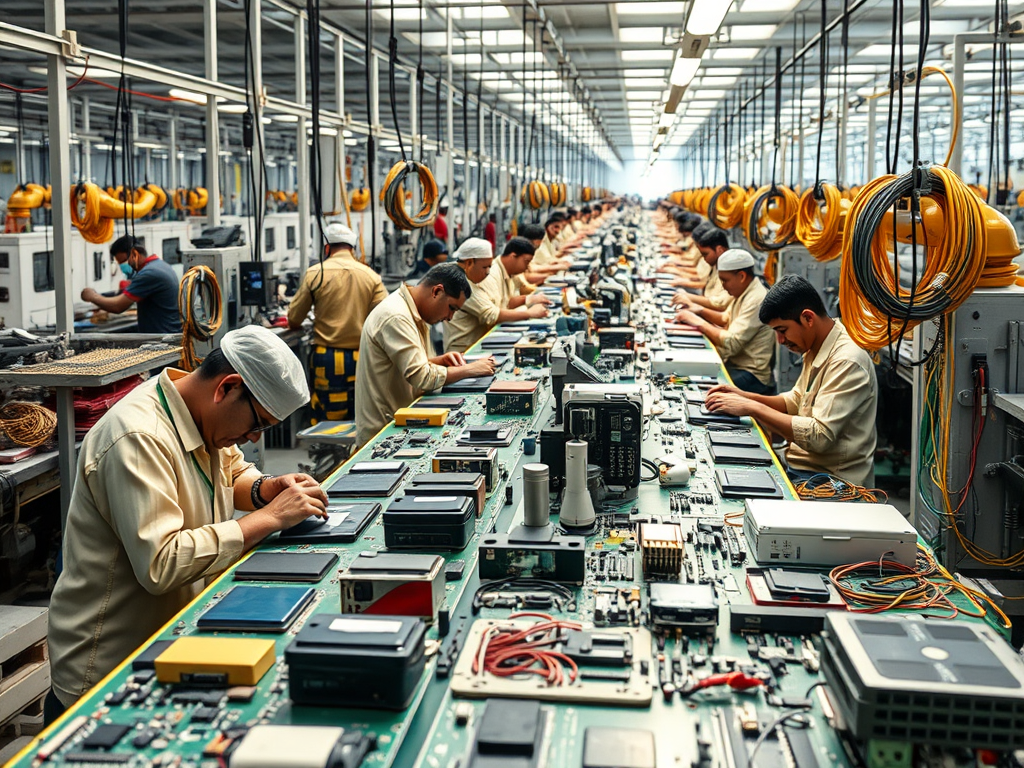
| Manufacturing Revival | U.S. lost ~2-5 million manufacturing jobs (2000–2009), mostly to China | Job re-shoring and incentives for domestic production |
| National Security | Dependence on imports for steel, chips seen as a military vulnerability | Push for critical material independence, reshoring supply chains |
| Fair Trade vs Free Trade | Focus on “fair” trade—highlighting foreign subsidies and low-wage competition | Justifies protective tariffs and bilateral trade renegotiations |
| Trade Deficit | U.S. trade deficit: ~$500 billion to $1 trillion/year | Overvalued dollar from reserve currency status seen as cause of chronic deficits |
| Tariffs | Proposed tariffs across sectors (steel, aluminum, electronics) | Encourages local production, reduces imports |
| Economic Tools | Tax cuts, deregulation, increased drilling to offset cost hikes from tariffs | Boosts investment and lowers domestic production costs |
| Global Response | Widespread concern and retaliation from allies and competitors | Risk of global trade wars and diplomatic strains |
Broader Strategy of Trumponomics
- Tariffs and Protectionism: Trumponomics seeks to shield U.S. industry through targeted tariffs, particularly on countries like China.
- Economic Sovereignty: Sees economic self-sufficiency as a national security imperative.
- Industrial Renaissance: Envisions a modern American manufacturing base independent of Chinese supply chains.
- Energy Independence: Expands oil drilling and fossil fuel production as a deflationary countermeasure and geopolitical tool.
Criticisms and Concerns: A Closer Look
| Criticism | Explanation | Potential Consequences |
|---|---|---|
| Higher Consumer Costs | Tariffs raise prices on imported goods, especially in electronics and automotive | Disproportionate burden on low- and middle-income consumers |
| Inflation Risk | Import restrictions and domestic cost structures could push up prices across sectors | Inflationary pressures, particularly in early implementation phases |
| Trade Disruptions | Retaliatory tariffs and frayed global relations could harm U.S. exports | Shrinking access to foreign markets and strained global trade relations |
| Manufacturing Inefficiency | Protection may breed inefficiency and reduce competitiveness in domestic industries | Innovation stagnation and lower productivity growth |
| Limited Job Return | Automation offsets job gains; fewer jobs return than expected | Manufacturing revival doesn’t translate into proportional employment growth |
| Reduced Growth Potential | Overemphasis on protectionism could restrict U.S. firms from accessing global opportunities | Slower long-term GDP growth and diminished international competitiveness |
| National Security Questioned | Critics argue security threats are overstated and can be addressed via diversified trade networks | Economic isolation could make U.S. less resilient in global supply shocks |
| Short-termism | Policies may favor immediate results over sustainable economic transformation | Vulnerable to reversals with administration changes |
| Environmental Backlash | Increased drilling and manufacturing could reverse climate progress | Risk of long-term environmental degradation |
| Recession Risk | Escalated trade wars and uncertainty may stall business investment | Potential trigger for economic downturns |
Key Takeaways
- Trumponomics challenges the status quo of global trade and free-market liberalism, arguing for strategic decoupling and national resilience.
- While proponents see it as a patriotic revival of the American dream, critics warn of economic isolation, inefficiencies, and rising consumer burdens.
- The policy leans heavily on short-term stimulus (tax cuts, deregulation) with long-term strategic shifts (tariffs, reshoring).
- Its success depends on balancing economic nationalism with pragmatic engagement in global trade.
Conclusion
Trumponomics marks a significant ideological shift in U.S. economic policy. It favors protectionist tools, national self-reliance, and domestic manufacturing, often at the expense of global economic norms. Its ambitious goals resonate with voters concerned about job losses and foreign dependency, but the real test lies in long-term sustainability and its ability to adapt to global economic realities.


 Glottis Limited
Leave a comment