
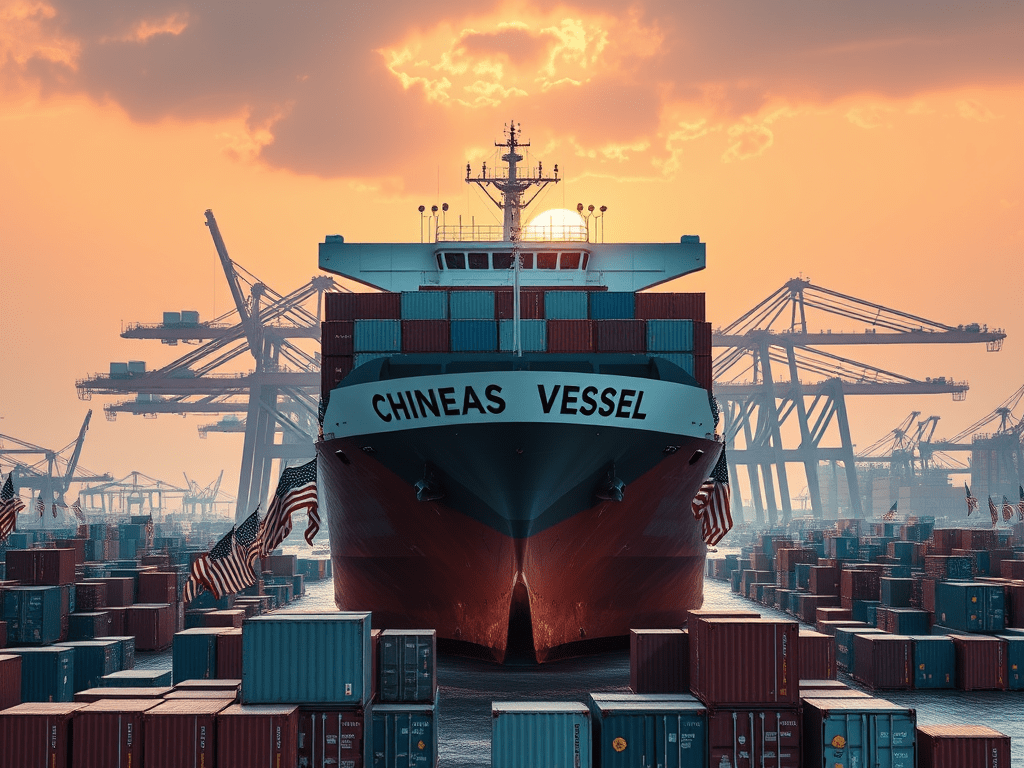
In a bold regulatory move signaling a shift in maritime trade policy, the United States has introduced a multi-phase port fee scheme aimed at Chinese-owned or built shipping vessels. This initiative, which took effect on April 17, 2025, is being positioned as part of a broader effort to safeguard U.S. national and economic security while incentivizing the development of a domestic shipbuilding industry.
📊 Fee Structure Highlights
The phased fee approach is structured to escalate over time, targeting both Chinese vessel owners/operators and Chinese-built vessels, while allowing exemptions and incentives for U.S.-built alternatives.
1. Fee Schedule Overview
| Category | Initial Fee (First 180 Days) | Fee After 180 Days (2025) | Fee by April 17, 2028 | Max Charges per Vessel per Year |
|---|---|---|---|---|
| Chinese-Owned/Operated Ships | $0 | $50 per net ton | $140 per net ton | 5 times/year |
| Chinese-Built Ships | $0 | $18 per net ton | $33 per net ton | 5 times/year |
| Foreign-Built Car Carriers | $0 | $150 per CEU unit | TBD | Based on CEU volume |
Note: “CEU” refers to Car Equivalent Unit—a metric used to calculate vehicle-carrying capacity.
⚖️ Exemptions and Relief Measures
Some vessels will be exempt from the port fees under the following conditions:
- Vessels carrying U.S. government cargo
- Empty vessel arrivals
- Specific cases based on vessel capacity and voyage distance
Additionally, vessel operators can apply for fee remission for up to three years if they order and take delivery of a U.S.-built vessel of equivalent size. This measure is intended to promote American shipbuilding.
🚗 Car Carrier Fees
Starting six months from implementation, foreign-built car carriers will be subject to new charges of $150 per CEU unit. This could have implications for global automotive logistics and import pricing in the U.S.
🔋 LNG Vessel Strategy
As part of a long-term vision, the plan proposes gradually restricting LNG transport using foreign-built vessels over a 22-year period, effectively incentivizing investment in U.S.-built LNG tankers.
📢 Tariff Proposals and Industry Input
In a related move, the U.S. Trade Representative (USTR) has opened a public consultation process on new proposed tariffs on:
- Chinese-made ship-to-shore cranes
- Intermodal containers
A public hearing is scheduled for May 19, offering stakeholders an opportunity to voice concerns or support for the measures.
🌐 Industry Reactions & Economic Concerns
While the U.S. government frames this policy as a national security enhancement and industrial revival strategy, the response from maritime stakeholders has been mixed:
- Shipping companies warn of increased operating costs.
- Exporters and regional ports fear reduced competitiveness and potential job losses.
- Consumer advocates argue the fees could lead to price increases across goods due to higher freight costs.
🧭 Looking Ahead
This port fee scheme marks a significant pivot in the U.S.’s maritime regulatory landscape. As geopolitical tensions and trade balances evolve, the implications for global shipping routes, logistics pricing, and supply chain planning could be profound. How shipping alliances and foreign governments respond to this phased approach will be critical in shaping the next era of U.S.-Asia maritime commerce.




 Glottis Limited
Leave a comment