
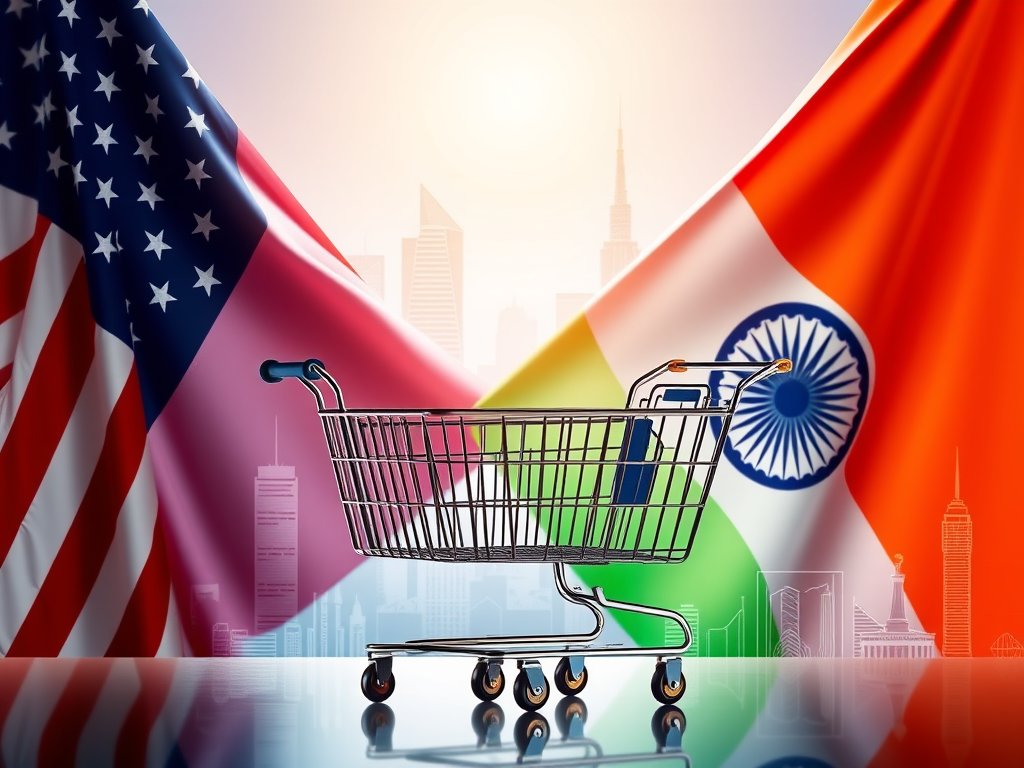
As the global digital economy accelerates, the United States and India are engaged in critical trade negotiations aimed at unlocking the full potential of India’s $125 billion e-commerce sector. At the heart of these discussions is the U.S. push to secure unrestricted market access for American e-commerce giants like Amazon and Walmart, and to eliminate what it terms as non-tariff barriers currently hindering foreign investment.
Context & Strategic Importance
The talks come at a time when both countries are aiming to more than double bilateral trade in goods and services to $500 billion. With rapid digital adoption and a growing middle class, India’s e-commerce market is a high-stakes frontier. However, regulatory restrictions and competition from Indian giants like Reliance have complicated U.S. companies’ ambitions.
Key Data Summary
| Aspect | Details |
|---|---|
| India’s E-Commerce Value | ~$125 billion |
| Target Bilateral Trade | $500 billion (currently ~$200 billion) |
| U.S. Retailers Involved | Amazon, Walmart |
| Current Restrictions | U.S. firms can only operate marketplaces; cannot sell/manufacture directly |
| Non-Tariff Barriers | Product inspections, platform restrictions |
| Tariff Threat | Up to 26% on Indian exports (currently suspended) |
| U.S. Demands | Full market access, regulatory parity, reduced inspections |
| Indian Competition | Reliance (Mukesh Ambani) – full retail and e-commerce integration |
| First U.S. Push for Market Entry | Began in 2006 |
| Recent Diplomatic Engagements | U.S. VP JD Vance met Indian PM Modi to advance discussions |
The U.S. Demands in Detail
The American trade delegation, backed by private sector executives, is demanding:
- Full Market Access: Permission for U.S. e-commerce firms to sell and manufacture their own brands directly in India.
- Elimination of Non-Tariff Barriers: These include limits on business models and excessive regulatory scrutiny, especially from the Bureau of Indian Standards.
- Fair Competitive Environment: U.S. companies seek level playing fields with Indian conglomerates like Reliance, which operate with fewer limitations.
- Tariff Reforms: Ensuring that Indian exports do not face future high tariffs, even after current suspensions lapse.
What’s at Stake
For India, this negotiation is a balancing act: attracting foreign capital and expertise without undermining domestic champions or small businesses. For the U.S., it’s about gaining a stronger foothold in one of the world’s fastest-growing consumer markets.
Conclusion
As discussions advance, the outcome of these trade talks could reshape the future of digital commerce in India, impacting global supply chains, retail investment, and consumer access. With a shared vision to deepen economic ties, both nations have much to gain from a restructured e-commerce partnership—if the balance can be struck between sovereign regulatory control and free market access.




 Glottis Limited
Leave a comment