
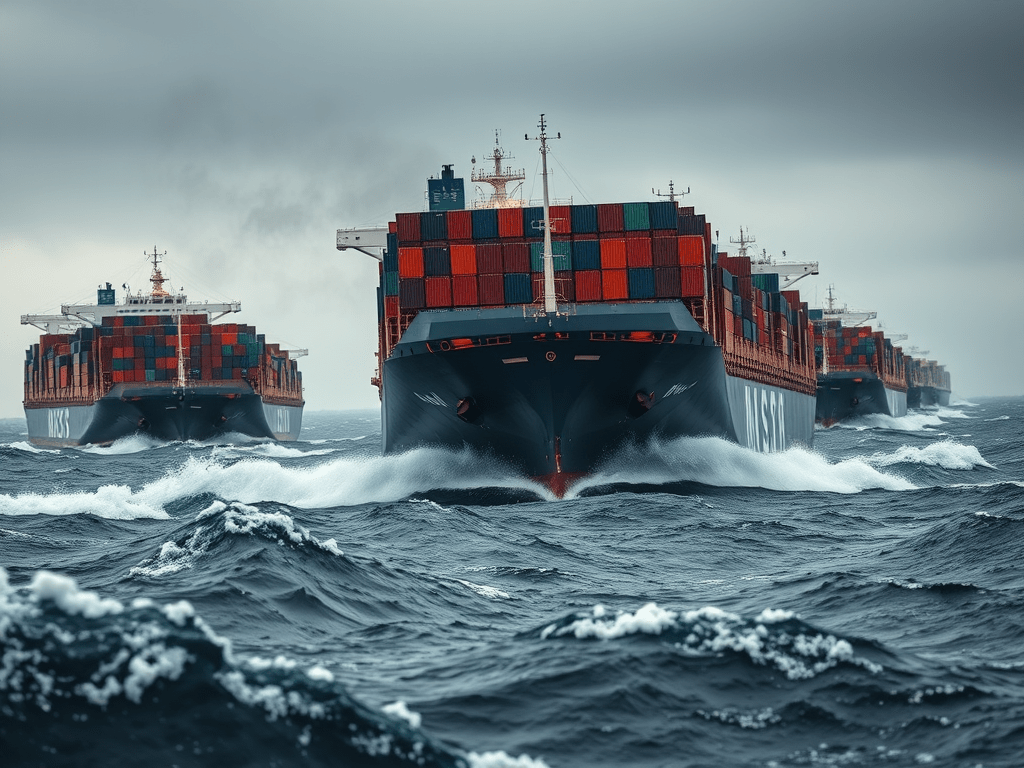
As global political tensions escalate, the maritime trade industry is facing unprecedented challenges. Frequent tariff impositions and suspensions are forcing both shipping lines and cargo owners to rethink their logistics strategies on the fly. The result? Volatile shipping rates, sudden capacity shifts, and a strategic pivot toward short-term planning.
Tariffs and the Shifting Shipping Landscape
The impact of tariffs goes far beyond trade balances—it is reshaping shipping patterns and freight capacity. Amid the political tug-of-war, shipping lines are reducing deployments, canceling voyages, and recalibrating their operations.
Key Impacts of Tariffs on Shipping Capacity and Trade Routes
| Metric | Pre-Tariff Level | Post-Tariff Level | Change |
|---|---|---|---|
| Asia–North America West Coast Capacity | 1.43 million TEUs | 1.29 million TEUs | ↓ 12% |
| Asia–North America East Coast Capacity | 1.01 million TEUs | 867,000 TEUs | ↓ 14% |
| Blank Sailings (Weeks 16–19) | 60,000 TEUs | 367,800 TEUs | ↑ 513% |
1. Political Volatility Creates Strategic Chaos
The international trade landscape is in flux. With tariffs being frequently imposed and rolled back—sometimes within weeks—businesses are hesitant to lock in long-term contracts. This political volatility forces shipping companies to react quickly, resulting in unstable supply chains and unpredictable rate movements.
2. Capacity Cuts on Transpacific Routes
Significant reductions in scheduled shipping capacity on Transpacific routes have been observed:
- Asia–North America West Coast: A 12% capacity drop in just six weeks.
- Asia–North America East Coast: A sharper 14% decline over the same period.
These cuts signal weakened demand due to higher tariffs and shifting sourcing decisions by major importers.
3. Surge in Blank Sailings to Manage Overcapacity
Blank sailings—or the cancellation of scheduled vessel departures—are a direct consequence of falling demand. The number of blanked TEUs soared from 60,000 to 367,800 over a few weeks, illustrating how dramatically tariffs can alter shipping schedules. This tactic helps stabilize freight rates by aligning capacity with reduced cargo volumes.
4. Transatlantic Trade Holds Steady
While Transpacific routes are reeling from uncertainty, the Transatlantic trade remains relatively stable. A 90-day suspension of tariffs between the U.S. and the European Union has offered temporary relief, providing a contrast to the turbulence in Asia-U.S. corridors.
5. How Tariffs Impact Shipping Rates
| Tariff Impact Area | Observed Effect |
|---|---|
| Shipping Costs | Increased costs passed to consumers and businesses due to added tariff burdens. |
| Capacity Adjustments | Routes see reduced capacity as carriers adjust to falling demand. |
| Blank Sailings | Reduction in available shipping space pushes up freight rates. |
| Market Dynamics | Increased competition and speculative rate hikes among shipping lines. |
| Trade Pattern Uncertainty | Logistics decisions delayed; long-term contracts avoided. |
| Route-Specific Effects | Transpacific sees turbulence; Transatlantic trade remains stable under tariff suspension. |
Conclusion: A Fragile Balance
Tariffs are proving to be more than just trade instruments—they are levers that disrupt global supply chains and reshape maritime economics. As blank sailings rise and capacity contracts, businesses are forced to stay nimble, balancing between higher freight costs and the need for reliable shipping.
In this environment, flexibility is key. Shipping companies and cargo owners must stay alert, ready to pivot as policy announcements unfold. One thing is certain: in today’s trade world, uncertainty is the only constant.



 Glottis Limited
Leave a comment