
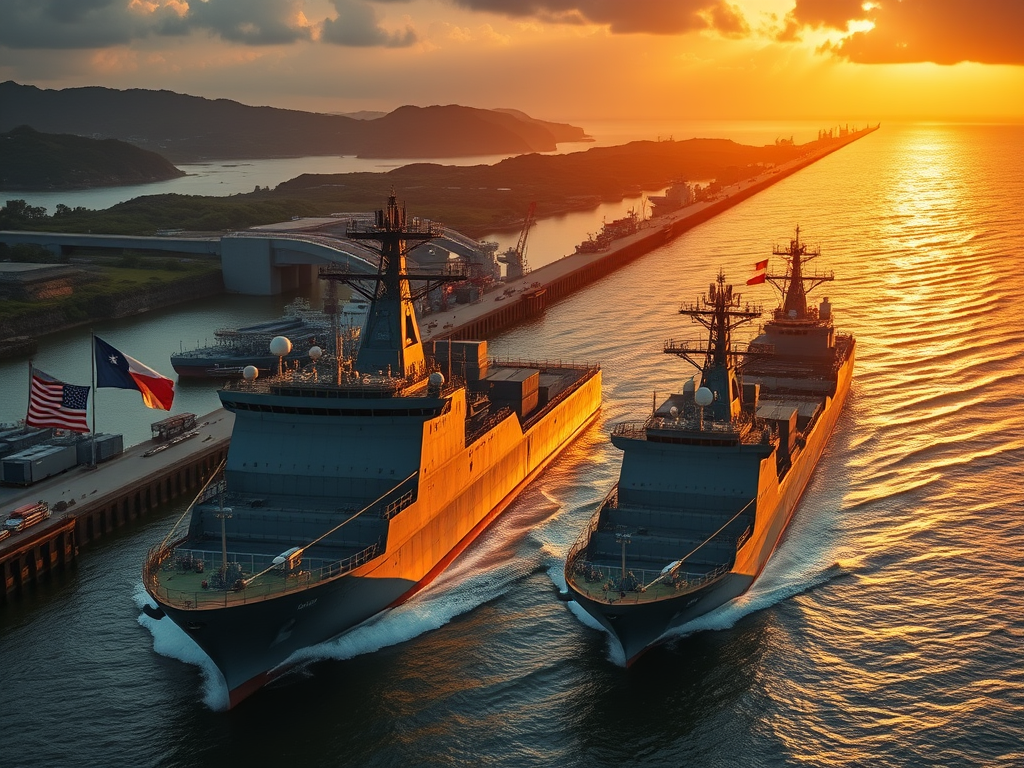
The United States has stepped up its pressure on Panama and Egypt, seeking free passage for its commercial and military vessels through two of the world’s most crucial shipping arteries — the Panama and Suez Canals. Recent statements from U.S. President Donald Trump and responses from international leaders reflect a growing debate with major geopolitical and economic consequences.
Key Developments at a Glance
| Topic | Details |
|---|---|
| Trump’s Demand | Called for free transit for U.S. commercial and military ships through Panama and Suez Canals. |
| Responsible Official | Secretary of State Marco Rubio tasked with negotiating free passage terms. |
| Criticism of Current System | Trump asserted that the U.S.’s historical involvement justifies toll-free access. |
| Panama’s Response | President Jose Raul Mulino emphasized ACP’s autonomy and regulatory adherence — no free passage agreed. |
| Military Priority Request | Defense Secretary Pete Hegseth seeks immediate, charge-free priority for U.S. warships through the Panama Canal. |
| Suez Canal Context | 60% drop in Egypt’s canal revenues due to Huthi rebel attacks — approximately $7 billion in losses. |
| U.S. Military Action | Since January 2024, intensified U.S. strikes on Huthi positions to secure Red Sea shipping lanes. |
Trump’s Position: Free Passage as a Right
President Trump argued that American vessels deserve toll-free transit through the canals, citing historical U.S. efforts that led to the construction and protection of both waterways. He characterized the existing toll system as “unfair” and assigned Secretary of State Marco Rubio the responsibility of securing favorable outcomes immediately.
Panama’s Firm Stand
Responding swiftly, Panama’s President Jose Raul Mulino stressed that the Panama Canal Authority (ACP) operates independently of political influence. He clarified that there are no treaties or agreements permitting free passage, reaffirming Panama’s sovereign control over its key economic asset.
Strategic Interests for U.S. Military
Defense Secretary Pete Hegseth highlighted operational concerns, proposing that American warships be prioritized for passage through the Panama Canal without charge. He positioned this request within the broader national security framework, aiming to maintain swift military mobility across oceans.
Trouble at the Suez: Conflict and Revenue Loss
Meanwhile, the Suez Canal — already under strain due to Yemen’s Huthi rebel attacks — has experienced massive revenue losses. Egypt reported a 60% drop in Suez Canal income, with an estimated $7 billion lost since disruptions intensified. This underscores the fragility of critical trade routes and the urgency behind Trump’s demands for protected, preferential access.
Military Actions to Secure Routes
The U.S. has increased its military operations targeting Huthi groups in Yemen. These moves align with Trump’s emphasis on maintaining safe and open maritime routes critical to global commerce.
Conclusion: Geopolitics Meets Maritime Trade
The U.S. push for free passage through the Panama and Suez Canals signals a bold shift in how it engages with global maritime infrastructure. However, sovereign rights, international law, and complex regional politics suggest that achieving toll-free transit will be an uphill battle — one with significant implications for global trade and military strategy alike.

 Glottis Limited
Leave a comment