
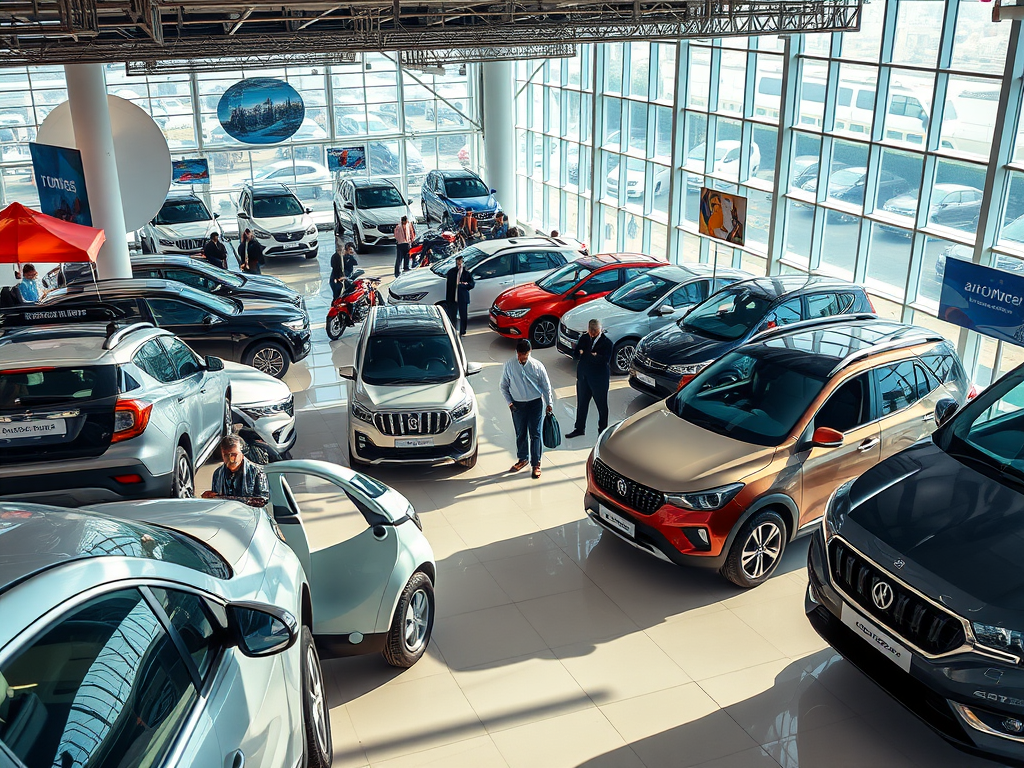
The Indian Passenger Vehicle (PV) industry continues its impressive journey, poised to achieve a fourth consecutive year of record sales by FY26. However, even as the industry scales new heights, it faces a complex landscape shaped by moderating growth rates, evolving consumer preferences, and emerging global dynamics.
Key Industry Developments
1. Record Sales Projection
The PV industry is on track to reach a cumulative domestic and export volume of 5 million units in FY26. This would mark four straight years of record sales, underlining the sector’s robust recovery and expansion after the pandemic.
2. Slowing Growth Rate
While volumes are growing, the annual growth rate is expected to moderate to 2-4%, a sharp decline from the 25% surge seen in FY23. The earlier boost was largely pandemic-driven as pent-up demand flooded the market.
3. Modest Electric Vehicle (EV) Penetration
Despite declining battery costs and a flurry of new model launches, EV penetration is projected to remain modest at 3–3.5%. Challenges include:
- High upfront vehicle costs
- Limited charging infrastructure
- Consumer range anxiety
4. Utility Vehicles Continue to Dominate
Utility Vehicles (UVs) maintain their dominance, making up 68–70% of total sales. This category is expected to grow at around 10%, buoyed by the launch of new models and increasing consumer preference for premium features.
5. Rural Demand Recovery
Entry-level car sales could benefit from:
- A likely above-normal monsoon, improving rural incomes
- Potential interest rate cuts, making vehicle loans more affordable
These factors could drive a healthy recovery in rural and semi-urban markets.
6. Export Growth to Slow
Export growth is expected to moderate to 5–7% by FY26. While global economic headwinds remain a concern, the impact of the 25% U.S. tariff (effective June 2025) is seen as minimal because the U.S. contributes only around 1% to India’s PV export volumes.
7. Entry of Global Premium EV Brands
The arrival of premium EV brands like Tesla is set to intensify competition, especially in the high-end segment, which currently represents less than 10% of the total PV market.
8. Global Supply Chain Risks
Potential risks from global geopolitical tensions could affect the supply of critical components like chips and battery cells, which remains a key area of concern.
Summary of Sales Dynamics
| Aspect | Details |
|---|---|
| Sales Volume (FY26) | 5 million units (domestic + exports) |
| Annual Growth Rate | 2–4% |
| Previous Peak Growth | 25% (FY23, post-pandemic surge) |
| UV Market Share | 68–70% of total volumes |
| UV Growth Rate | Around 10% |
| EV Market Penetration | 3–3.5% |
| Export Growth Rate | 5–7% |
| Impact of U.S. Tariff | Minimal (U.S. = ~1% of exports) |
| Rural Demand Outlook | Positive (supported by monsoon, lower interest rates) |
| Global Premium EV Competition | Premium segment competition to intensify |
| Global Supply Chain Risk | Chip and battery cell supply vulnerability |
Conclusion
India’s passenger vehicle sector is navigating a new phase — from high-growth recovery to a more mature, nuanced expansion. Utility vehicles remain the growth engines, while electric vehicles are making gradual inroads. Rural demand recovery and resilient domestic consumption provide optimism, even as global challenges and heightened competition signal a more competitive future.
The coming years will test the industry’s adaptability, innovation, and resilience as it steers through changing tides.



 Glottis Limited
Leave a comment