
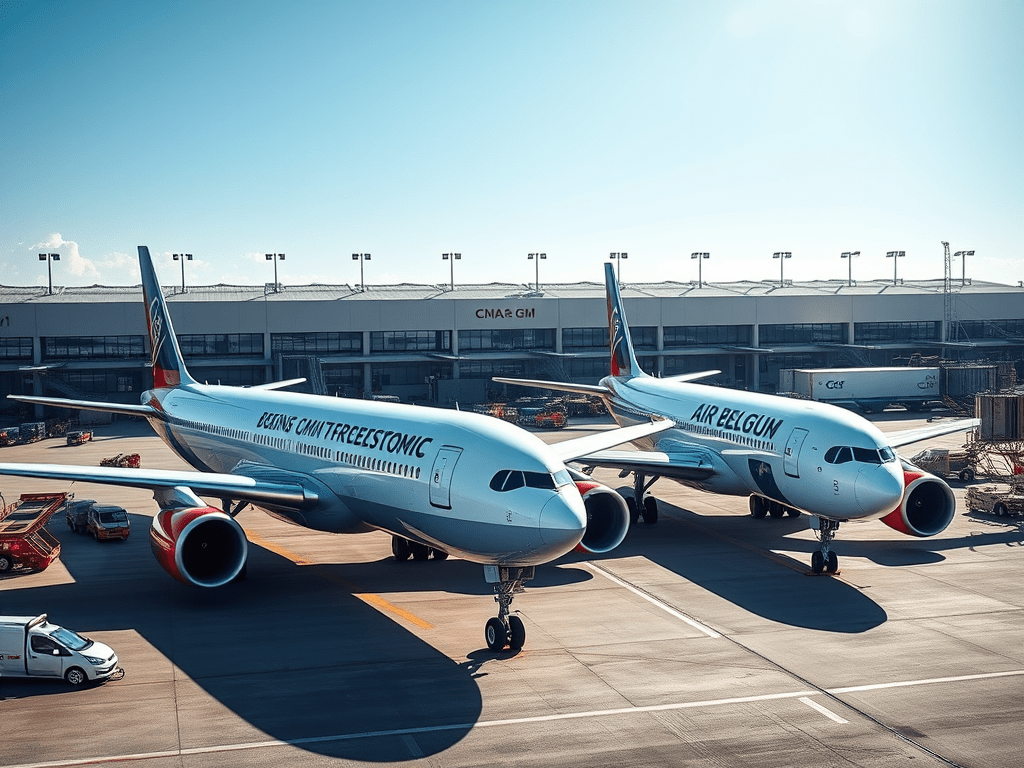
In a strategic move to enhance its position in the global logistics and air freight market, CMA CGM has acquired the operations of the financially troubled Air Belgium. Approved by Belgian courts on April 30, 2025, this acquisition marks a significant expansion of CMA CGM’s air cargo capabilities and a critical step in the company’s long-term logistics strategy.
Key Facts of the Acquisition
| Aspect | Details |
|---|---|
| Acquirer | CMA CGM Group |
| Acquired Entity | Air Belgium (Cargo operations only) |
| Court Approval Date | April 30, 2025 |
| Job Retention | 124 employees retained (72 pilots, 52 operational/support staff) |
| Operational Base | Belgium (Air Belgium’s hub) |
| Previous Partnership | CMA CGM & Air Belgium (2021–2023) |
| Fleet Size (Post-Acquisition) | 9 operational aircraft (Boeing 777Fs, Airbus A330Fs) |
| Future Fleet Plans | 1 Boeing 777F and 8 Airbus A350Fs (starting 2027) |
Strategic Drivers Behind the Acquisition
CMA CGM’s acquisition aligns with its broader vision of integrating air, sea, and land logistics into a cohesive, efficient global supply chain. The move addresses both internal growth goals and external market demands.
| Strategic Focus | Details |
|---|---|
| Logistics Diversification | Strengthening multi-modal logistics by expanding into air cargo |
| Capacity Expansion | Doubling air cargo capacity with existing and ordered aircraft |
| Geographic Reach | Enhanced presence in Europe, expanded connectivity to Asia and America |
| Synergistic Integration | Seamless alignment with CMA CGM’s maritime and land logistics networks |
| Strategic Hubs | Chicago hub and Belgian operations form backbone for U.S. and EU routes |
| Brand Continuity | Air Belgium brand retained to maintain market familiarity and regulatory ease |
| Trans-Pacific Focus | Plans to scale operations in high-demand trans-Pacific corridors |
Implications for the Air Cargo Industry
CMA CGM’s bold move reverberates across the global air freight and logistics landscape. Here are the likely implications:
1. Enhanced Competition in Air Cargo
CMA CGM joins Maersk and MSC in aggressively entering the air freight sector. This increased competition may lead to improved service levels, better integration, and more choices for shippers and forwarders.
2. Rising Importance of Multi-Modal Logistics
By combining ocean freight, air cargo, and integrated logistics services, CMA CGM can offer end-to-end solutions that attract large customers with complex supply chain needs.
3. Reallocation of Market Share
The revitalization of Air Belgium’s assets and personnel under CMA CGM’s stewardship is expected to shift regional market dynamics, especially in European and trans-Pacific sectors.
4. Workforce and Asset Preservation
CMA CGM’s decision to retain 124 employees from Air Belgium reflects its commitment to operational continuity and experienced staffing—key to quick ramp-up and service reliability.
5. Supply Chain Resilience Post-COVID
In response to pandemic-induced disruptions, logistics players like CMA CGM are diversifying transport modes. Air cargo, with its speed and flexibility, is a vital part of this resilience strategy.
Conclusion
CMA CGM’s acquisition of Air Belgium is more than a rescue—it is a strategic investment into the future of global logistics. With a growing fleet, strengthened transcontinental presence, and integrated services, CMA CGM Air Cargo is poised to become a formidable player in a rapidly evolving market. As logistics shifts toward flexible, multimodal networks, this move could redefine competitive benchmarks in the global supply chain.




 Glottis Limited
Leave a comment