
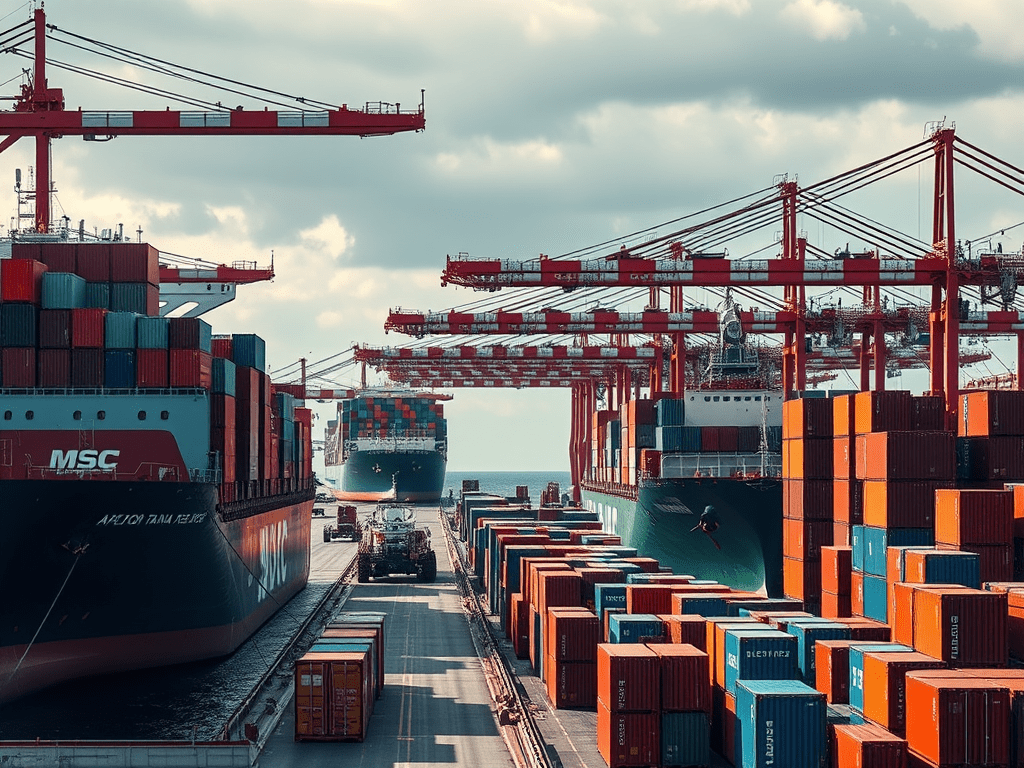
The global container shipping industry is witnessing a significant realignment as trade policies and geopolitical tensions reshape cargo flows. Mediterranean Shipping Company (MSC), the world’s largest container line by capacity, has initiated major adjustments in its China–US services following a steep drop in demand triggered by tariff hikes imposed by the US government.
🚢 Service Suspensions Amid Weak Demand
In a clear response to slowing volumes, MSC has suspended two of its China–US services, citing reduced demand for cargo originating from China. This move reflects broader industry concerns over declining exports from Asia’s manufacturing giant.
🧭 Strategic Network Adjustments
To mitigate the impact, MSC has revamped its existing East and Gulf Coast services, rerouting some vessels to non-Chinese ports such as Vietnam, South Korea, and Malaysia, allowing the carrier to maintain regional service levels and optimize vessel utilization.
💼 The Tariff Trigger
The service changes come on the heels of the Trump administration’s imposition of a 145% tariff on most Chinese imports. This trade policy shift has significantly disrupted cargo flows, with many US importers now sourcing goods from alternate Asian countries to reduce their cost burden.
📉 Volume Impact Across the Industry
The fallout from these tariffs is evident in the numbers. Ocean carriers report a dramatic one-third drop in volumes from China, prompting major players—including Hapag-Lloyd and Matson—to acknowledge reduced load factors and route adjustments.
📊 Key Data Summary
| Aspect | Details |
|---|---|
| Services Suspended by MSC | Two direct services from China to the US suspended |
| Cause of Suspension | Decline in freight demand due to US tariffs on Chinese goods |
| Tariff Imposed | 145% on most Chinese imports under Trump administration |
| Volume Drop | ~33% decline in container volumes out of China |
| Other Carriers Affected | Hapag-Lloyd, Matson report similar declines in cargo from China |
| MSC’s Network Strategy | Re-routing to Southeast Asian ports; optimizing US East & Gulf Coast calls |
| Alternative Export Locations | Vietnam, Malaysia, South Korea |
🌐 Broader Implications
These shifts underscore a changing global trade landscape, where shipping lines are forced to diversify their port calls and cargo sources to remain competitive. MSC’s move is emblematic of a wider industry adaptation—one that will likely shape routing strategies for the foreseeable future.
🚀 Looking Ahead
As tariff policies evolve and supply chains diversify, carriers like MSC are expected to increase service flexibility, deploy capacity more dynamically, and further invest in alternative Asian export hubs to stabilize their network performance.




 Glottis Limited
Leave a comment