
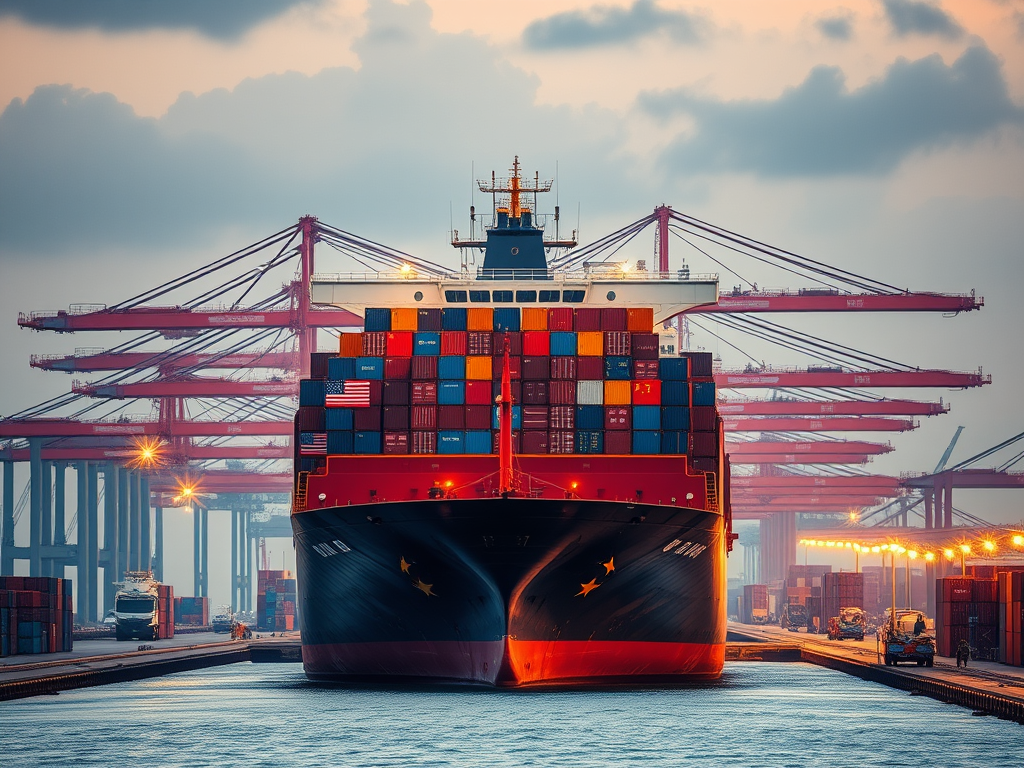
Amid escalating trade tensions, container shipping between China and the United States is undergoing a major transformation. Recent tariffs imposed by the U.S. administration have triggered route suspensions, declining volumes, and widespread economic implications for global logistics and supply chains.
Key Impacts at a Glance
The following table highlights the primary consequences of the ongoing trade disputes:
| Key Point | Details |
|---|---|
| Suspensions of Shipping Routes | Major container shipping companies have suspended at least six weekly routes between China and the U.S. to mitigate losses and rebalance services. |
| Impact of Tariffs | Tariffs imposed by the U.S. government have led to a steep drop in China-bound trade volumes, driving carriers to cut costs and reduce capacity. |
| Container Capacity Affected | The canceled services account for approximately 25,682 forty-foot containers (FEUs) per week—translating to over 1.3 million containers annually. |
| Economic Implications | Shipping volume cuts are early indicators of shrinking global trade, as maritime freight demand typically reflects broader economic trends. |
| Affected Shipping Alliances | Alliances like the Ocean Alliance (which includes COSCO) are scaling back operations, especially through U.S. West Coast ports such as Los Angeles and Long Beach. |
| Retail Response | Companies like Amazon and Walmart are pausing or reducing factory orders in reaction to rising costs, disrupting inventory cycles and procurement strategies. |
| Surge in Blank Sailings | The frequency of blank sailings (canceled voyages) has risen, as carriers attempt to maintain freight rates and utilization in a turbulent market. |
| Trade Forecast | Analysts predict U.S. container imports could drop by 25% or more in the coming months, underscoring the enduring impact of tariff policies and shifting sourcing strategies. |
Broader Implications for Global Trade
The contraction of container shipping activity between the world’s two largest economies is more than a temporary market adjustment. It signals a structural shift in supply chain patterns, logistics planning, and economic forecasting. With U.S. importers reevaluating sourcing strategies and Chinese exporters grappling with uncertainty, the ripple effects are being felt across manufacturing, retail, and port operations.
Shipping route suspensions, reduced cargo flows, and inventory disruptions are likely to persist as long as tariff uncertainties remain. Carriers are expected to continue deploying dynamic capacity management tools like blank sailings and vessel rerouting to cushion financial impacts.
Conclusion
As container shipping volumes recede in response to U.S.–China trade tensions, the industry finds itself at a critical juncture. How shippers, carriers, and manufacturers adapt to this new reality will shape the future of global trade logistics.




 Glottis Limited
Leave a comment