
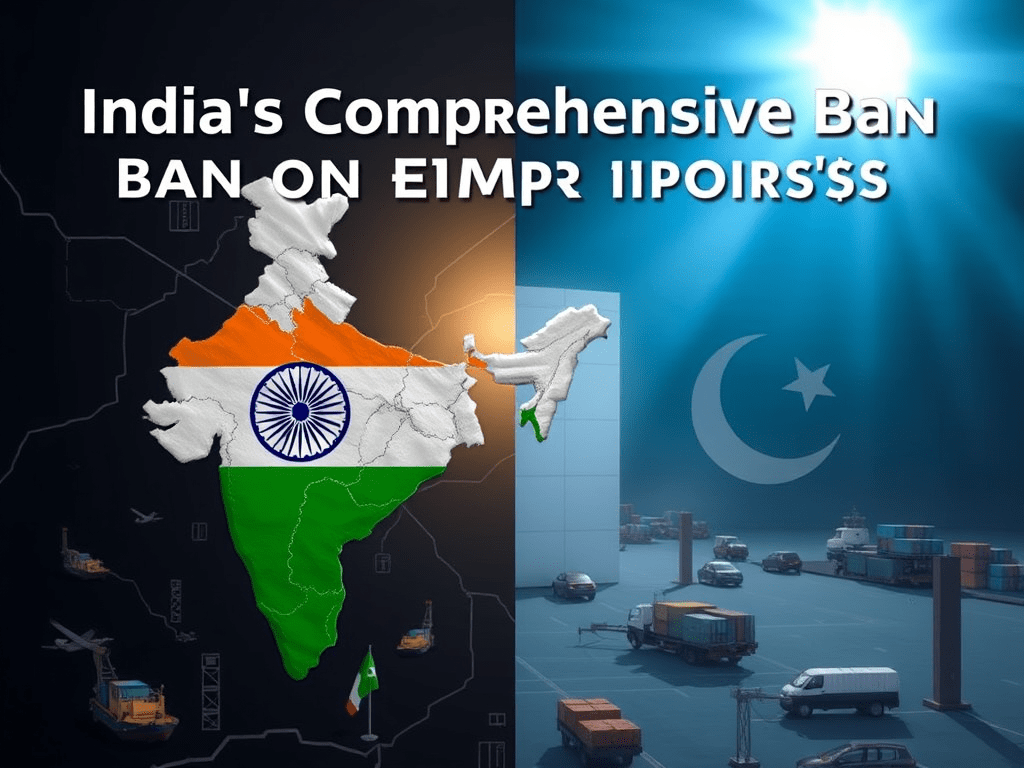
India has imposed a comprehensive ban on all imports from Pakistan following the Pahalgam terrorist attack on April 22, intensifying its economic and strategic response. The move, driven by national security considerations, also includes enhanced scrutiny of imports from Gulf countries, reflecting concerns over indirect transshipment of Pakistani-origin goods.
Full Trade Blockade with Pakistan
Citing the need to safeguard national interests, India has completely ceased accepting any goods of Pakistani origin, effectively halting even the minimal trade that existed between the two nations. According to FY25 data, Indian imports from Pakistan amounted to only $2.88 million, primarily comprising dates, figs, and malt extracts.
In retaliation, Pakistan has also suspended all trade relations with India, reinforcing the deep freeze in bilateral economic ties.
Stricter Monitoring of Gulf-Based Imports
Recognizing the risk of indirect entry of banned goods, Indian customs authorities have intensified monitoring of imports from the UAE, Iran, and other Gulf countries, which often act as transshipment hubs. The government has stepped up verification procedures, checking labels, certificates of origin, and shipping routes to detect and block any attempts to bypass the ban.
Security-Centric Policy Approach
The Indian government has clarified that these trade restrictions are not just economic measures but are firmly rooted in national security and public policy. Officials have emphasized the importance of strict enforcement and full compliance with the new protocols at all ports of entry.
Context: A Declining Trade Relationship
The India–Pakistan trade relationship has been on a steady decline since India imposed a 200% tariff on Pakistani goods in 2019, following the Pulwama terrorist attack. Prior to this, India had granted Most Favored Nation (MFN) status to Pakistan in 1996, a gesture that was never reciprocated.
Key Developments at a Glance
| Aspect | Details |
|---|---|
| Trigger Event | Pahalgam terrorist attack (April 22) |
| Action Taken by India | Full ban on Pakistani-origin imports |
| Targeted Imports | Dates, figs, malt extracts, etc. |
| FY25 Import Value from Pakistan | $2.88 million |
| Response from Pakistan | Complete suspension of trade with India |
| Additional Scrutiny Regions | UAE, Iran, and other Gulf nations |
| Verification Measures | Label checks, origin certification, route tracing |
| Policy Justification | National security and public policy |
| Previous Tariff Action (2019) | 200% tariff post-Pulwama attack |
| MFN Status History | Granted by India in 1996, not reciprocated by Pakistan |
Conclusion
India’s latest trade ban on Pakistan, coupled with heightened scrutiny of indirect imports, reinforces its strategic posture of leveraging trade policy to address security concerns. As trade relations remain frozen, both countries are expected to continue navigating their differences through diplomatic and economic signaling rather than bilateral trade engagement.


 Glottis Limited
Leave a comment