
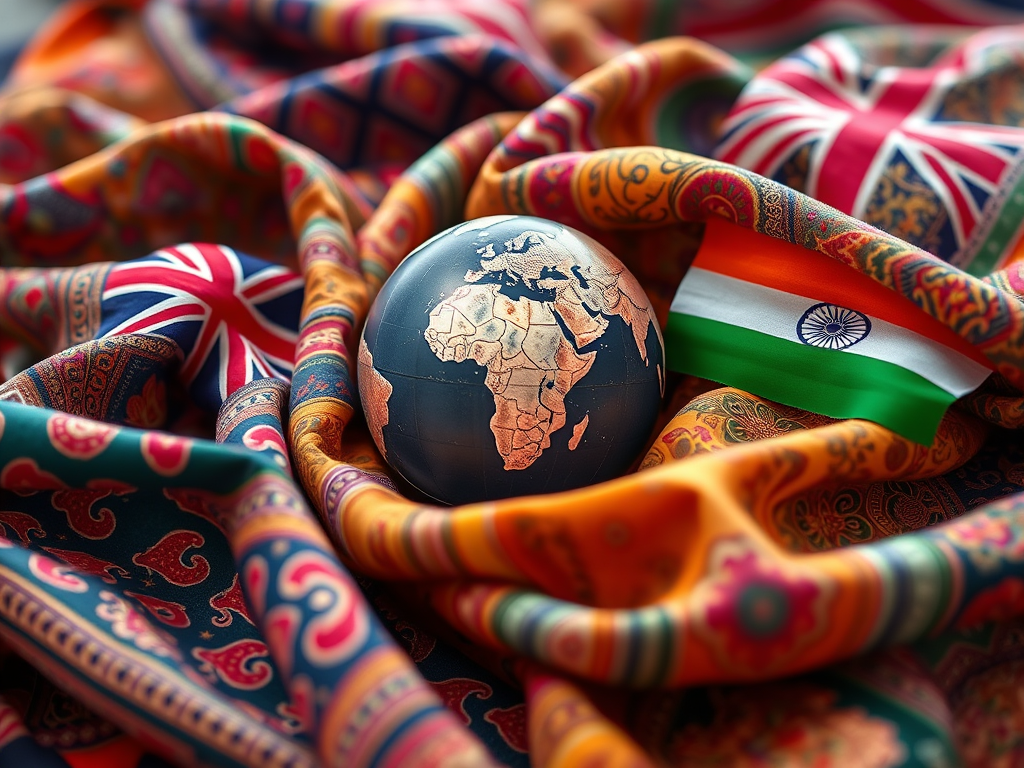
India’s textile and apparel industry is set to witness a major transformation with the anticipated India–United Kingdom Free Trade Agreement (FTA), expected to come into effect in 2026. One of the most impactful outcomes of this agreement will be the elimination of 8–12% import duties currently levied on Indian textile and home furnishing exports to the UK.
This move is strategically significant, not only in enhancing bilateral trade but also in boosting India’s global textile competitiveness.
Key Advantages for Indian Textile Exporters
- Zero Tariffs:
The FTA will eliminate current duties on Indian textiles, making exports more cost-effective and attractive for UK retailers. - Export Volume Growth:
Experts project a doubling of Indian textile exports to the UK over the next 5–6 years, driven by increased demand and competitive pricing. - Improved Competitive Positioning:
With duty-free access, India will compete more effectively against countries like Bangladesh and Vietnam, and is poised to overtake Pakistan and Turkey to become the third-largest textile supplier to the UK. - Level Playing Field:
The removal of tariffs puts Indian manufacturers on par with other major textile-exporting nations already enjoying preferential access to the UK. - Need for Capacity Expansion:
To capitalize on this opportunity, Indian exporters will need to scale up production capabilities and ensure quality compliance with UK standards. - Broader Trade Impact:
The agreement goes beyond textiles—99% of Indian goods will enjoy zero tariffs, reinforcing India-UK trade ties across sectors.
Retail Price Impact in the UK
UK retailers and consumers stand to benefit from the FTA as well. Here’s how:
- Reduced Import Costs: With duties removed, sourcing from India becomes cheaper for UK businesses.
- Lower Retail Prices: Cost savings could be passed on to consumers, lowering the price of apparel and home textiles.
- Greater Variety: Indian textiles offer vast design and material diversity, improving consumer choices.
- Stable Supply Chains: Increased Indian production capacity may lead to more reliable supply flows.
- Short-Term Price Volatility: A demand spike might create temporary inflationary pressure if supply doesn’t keep pace.
Summary Table: Impact of India–UK FTA on Textile Trade and Retail Prices
| Factor | Impact |
|---|---|
| Import Duty Elimination | 8–12% duty removed, reducing cost for UK importers |
| Export Growth (India to UK) | Projected to double in 5–6 years |
| Competitive Advantage | India to potentially surpass Pakistan and Turkey in UK textile market |
| Market Access Equity | Level playing field with Bangladesh, Vietnam (existing duty-free access) |
| Production Requirements | Indian firms must expand capacity to meet increased demand |
| Retail Price in UK | Likely to decrease due to reduced costs and increased competition |
| Product Variety for UK Consumers | More Indian textile options and competitive pricing |
| Short-Term Volatility Risk | Potential short-term price increase if supply lags behind demand |
Conclusion
The India–UK Free Trade Agreement marks a pivotal step in redefining India’s textile trade landscape. It not only opens the door for export growth and economic opportunity but also promises enhanced retail affordability and product diversity for UK consumers. Indian textile exporters should begin preparing now—upgrading capacity, streamlining logistics, and aligning with compliance standards—to fully leverage this upcoming trade advantage.




 Glottis Limited
Leave a comment