
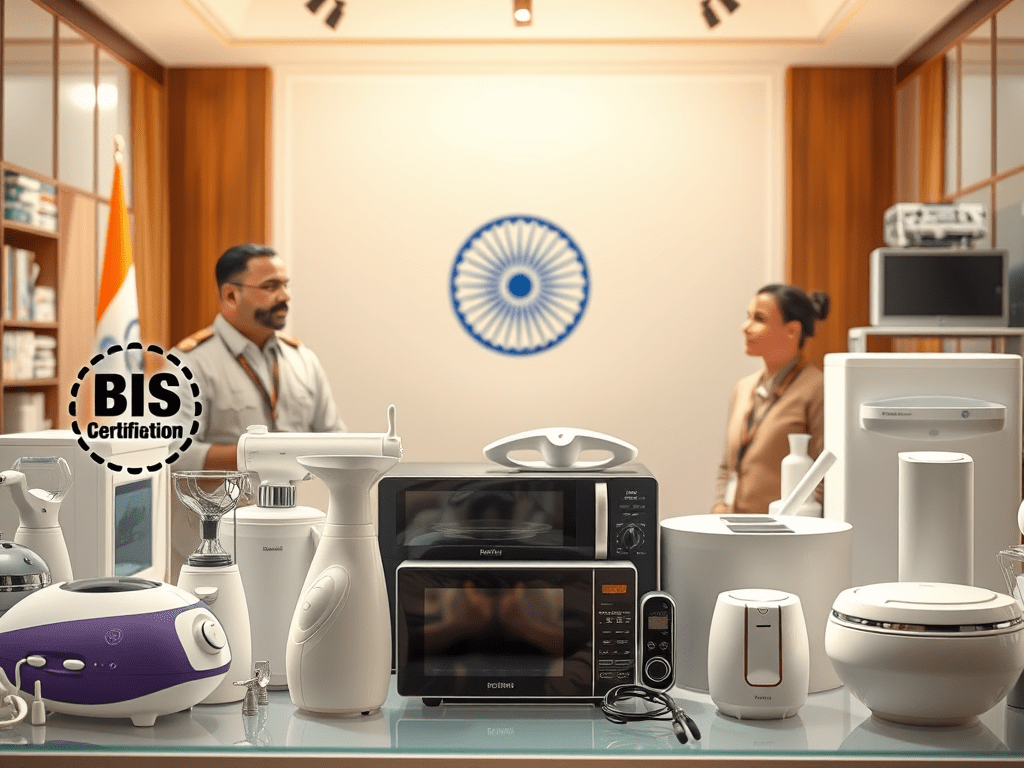
In a major policy shift aimed at curbing the influx of substandard electrical appliances, India has introduced stricter import regulations for household electronics, particularly those imported from China. The move seeks to ensure consumer safety, boost local manufacturing, and elevate product quality across the country.
The government’s directive mandates that several categories of electrical appliances and devices must comply with Bureau of Indian Standards (BIS) norms starting March 2026, with non-compliant imports prohibited from entering the Indian market.
Key Regulatory Changes at a Glance
| Aspect | Details |
|---|---|
| Effective Date | March 2026 |
| Certification Mandate | BIS certification required for specified electrical and battery-operated products |
| Targeted Products | Recliners, whirlpool baths, spa equipment, beauty appliances, etc. |
| Primary Target | Imports from China (due to past concerns about substandard quality) |
| Regulatory Body | Bureau of Indian Standards (BIS) |
| Enforcement Agency | Department for Promotion of Industry and Internal Trade (DPIIT) |
| Policy Goal | Enhance product safety, reduce reliance on imports, boost local production |
| Industry Response | Widely welcomed as a positive step toward quality assurance and investment growth |
Background and Rationale
The regulation follows a series of inspections by BIS, which revealed a significant presence of non-compliant and substandard appliances in major online retailers’ inventories and warehouses. These products often lacked safety features, posing risks to consumers.
By tightening import controls and mandating certification, the Indian government is taking proactive steps to safeguard consumers while providing a level playing field for domestic manufacturers.
Boosting ‘Make in India’
The certification mandate is expected to stimulate local manufacturing, aligning with India’s broader ‘Make in India’ initiative. Industry experts believe the move will attract investment in homegrown production units, develop supply chain ecosystems, and encourage innovation within the electrical appliances segment.
Understanding the BIS Certification Process
To comply with the upcoming requirements, importers and manufacturers must obtain BIS certification. Here’s a summary of the BIS process:
BIS Certification Workflow
| Step | Description |
|---|---|
| 1. Application | Submit application with product details and pay the requisite fee |
| 2. Document Review | BIS assesses submitted technical and quality documents |
| 3. Product Testing | Samples are tested at BIS-approved labs to verify compliance with Indian Standards |
| 4. Factory Inspection | BIS officials inspect the manufacturing site for quality control measures |
| 5. Decision Making | BIS evaluates findings and grants or denies certification |
| 6. License Grant | Upon approval, license is issued allowing use of the BIS mark |
| 7. Surveillance | Regular audits ensure continued compliance |
| 8. Renewal | Certification must be renewed before expiry |
Products that pass this process can carry the BIS mark, offering assurance of safety and performance to Indian consumers.
What It Means for Stakeholders
- Importers must align their supply chains and sourcing strategies to ensure compliance.
- Manufacturers in India have a unique opportunity to scale up production and meet growing domestic demand.
- Consumers stand to benefit the most from higher-quality, safer products backed by a credible certification system.
Conclusion
India’s new regulatory framework reflects a broader policy goal: to elevate product standards, enhance consumer trust, and position India as a reliable manufacturing base. The BIS certification, backed by rigorous testing and oversight, will play a critical role in shaping the future of electrical appliance trade in the country—one that emphasizes quality, safety, and self-reliance.




 Glottis Limited
Leave a comment