
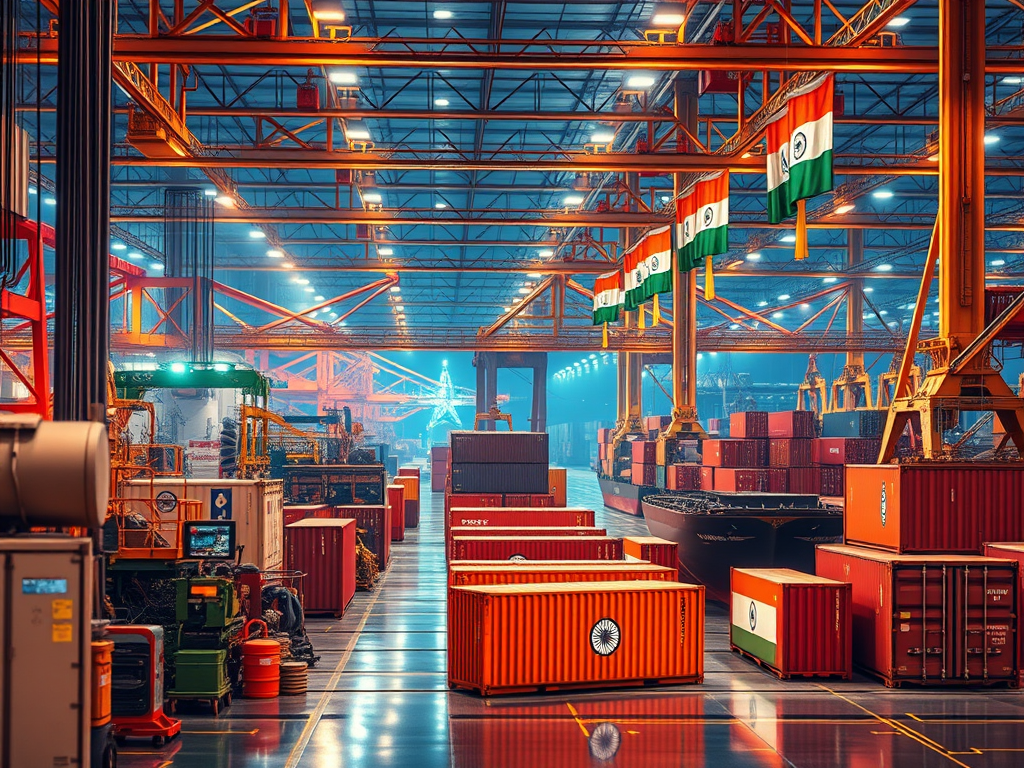
As the Trump administration intensifies its trade measures against China, Indian firms are finding themselves in a sweet spot. The shift in U.S. trade policy, particularly the tariff regime on Chinese imports, has created substantial new opportunities for Indian exporters, especially in sectors like electronics, textiles, consumer goods, and home appliances.
🔑 Key Developments Driving Indian Advantage
| Aspect | Details | Implication |
|---|---|---|
| Trump’s Tariffs on China | Tariffs were reduced from 145% to 30% for select goods from China | Still makes Chinese goods costly; U.S. looks for alternative suppliers |
| Tariff on Indian Goods | Currently suspended 26% tariff; expected to resume by July 2025; U.S. tariff only 10% | India maintains a competitive cost advantage |
| Growth in Export Orders | Surge in U.S. inquiries and confirmed orders for electronics, garments, and appliances | Indian firms expanding capacity to meet demand |
| Firms Benefiting | Dixon Technologies, Tata Consumer Products, Arvind, Gokaldas Exports, Havells | These firms are seeing significant revenue growth and capacity expansion |
| Local U.S. Production Pressure | U.S. contemplating 25% tariffs on foreign manufacturers of mobile phones | India still seen as cost-effective vs. domestic U.S. production |
| Strategic Client Ties | Long-term orders from U.S. buyers shifting away from China and Bangladesh | Strengthens India’s positioning in global supply chains |
| New Export Products | Mobile phones, air conditioners, processed food | Broadens India’s export basket to the U.S. |
| Business Sentiment | Optimistic outlook for FY25 despite margin pressures | Indian industry expects strong U.S. demand-led growth |
📊 Sector-Wise Impact Analysis
1. 📱 Electronics
- Impact: Dixon Technologies reported a sharp rise in orders from U.S.-based electronics brands.
- Trend: Outsourcing mobile phone and gadget assembly to India as costs rise in China.
- Outlook: High growth in exports expected due to scalability and government production-linked incentives (PLI).
2. 👕 Textiles & Garments
- Key Players: Arvind Ltd, Gokaldas Exports.
- Impact: Higher inquiries and long-term contracts from U.S. buyers.
- Insight: India’s quality and price advantage over China and Bangladesh makes it an attractive option.
3. 🛍️ Consumer Goods
- Notable Firm: Tata Consumer Products.
- Impact: Increased shipments of food, beverages, and household essentials to U.S. retailers.
- Trend: U.S. retailers diversifying supply chains beyond China for staples and packaged goods.
4. ❄️ Home Appliances
- Example: Havells India exporting air conditioners to the U.S.
- Insight: Tariff shifts have made Indian-made home appliances more cost-effective.
- Benefit: Firms are scaling up capacity and export logistics to the U.S.
📈 What It Means for Indian Exporters
- Short-term: Surge in U.S. orders will stretch capacity but improve margins due to better realization.
- Medium-term: Strong potential for permanent trade realignment favoring India.
- Long-term: Scope for a potential India–U.S. trade deal that locks in these gains.
📣 “We are seeing a structural shift, not just a seasonal spike. U.S. buyers are actively moving their sourcing to India due to trust and tariff insulation.” – Senior Executive, Gokaldas Exports
🌐 Conclusion: India’s Moment to Shine
The ripple effects of Donald Trump’s trade war with China are clearly being felt across global supply chains — and India is emerging as a major beneficiary. While tariff uncertainties remain, especially post-July 2025, Indian manufacturers and exporters are investing aggressively to secure their place as the next global factory floor.




 Glottis Limited
Leave a comment