
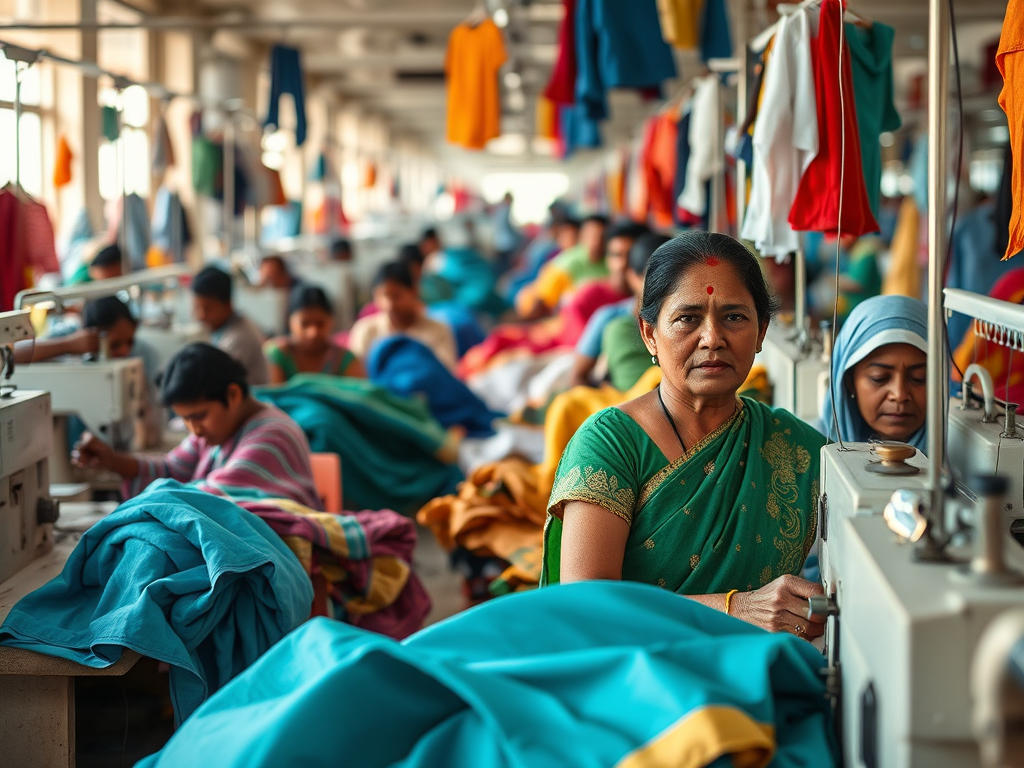
India’s garment industry, a vital part of its economy, stands at a strategic inflection point. With 45 million people employed and a 2.3% contribution to national GDP, the sector holds immense potential for growth. Yet, its share in global apparel trade remains a modest 4.2%, and just 3% in clothing exports, underscoring the need for transformative reforms to stay globally competitive.
Despite government aspirations to hit $40 billion in apparel exports by 2030, recent trends show an annual average growth rate (AAGR) of -2%, suggesting that without proactive policy shifts, the target may remain elusive.
📊 Key Data Snapshot: India’s Garment Sector
| Category | Details |
|---|---|
| Employment | 45 million people |
| GDP Contribution | 2.3% |
| Share in Global Apparel Trade | 4.2% overall apparel; 3% in clothing exports |
| Export Target (2030) | $40 billion |
| Current Export Trend | -2% AAGR over recent years |
| MSME Share | Over 80% of apparel units |
| Industry Characteristic | Highly fragmented, low scale, limited integration |
🚧 Challenges Facing the Sector
- Fragmented Structure: Over 80% of apparel manufacturing units are MSMEs, making scalability difficult.
- Lack of Integration: Unlike China and Vietnam, India lacks vertically integrated, large-scale factories that can meet high-volume, fast-delivery demands.
- Stagnant Export Growth: Exports have barely grown in the last two decades, partly due to limited global buyer engagement and high input costs.
🌟 Model Example: Shahi Exports
Founded in 1974, Shahi Exports stands as a beacon of success in India’s apparel industry. By focusing on:
- Professional operations
- Vertical integration
- Sustainable practices
Shahi has proven that Indian manufacturers can scale while staying globally relevant.
🧩 Suggested Policy Reforms to Accelerate Growth
| Policy Area | Recommended Action |
|---|---|
| Capital Accessibility | Introduce 25–30% capital subsidies tied to scale; offer tax holidays |
| Labor Reforms | Make labor laws more flexible; link MGNREGA funds to support formal sector wages |
| Garment Hubs | Establish production hubs in low-labor-cost states with infrastructure support |
| Export Incentives | Shift to export-linked incentives that reward global competitiveness, not just output |
🌍 Global Competitive Landscape
| Country | Key Competitive Advantages |
|---|---|
| China | Integrated production, cost efficiency, logistics, strong buyer ties |
| Bangladesh | Low-cost labor, export-focused units, established supply chain |
| Vietnam | Low labor costs, FTA-driven trade advantages, sustainability focus |
| Turkey | Close to Europe, hybrid manufacturing, skilled workforce |
| Sri Lanka | Niche in high-quality, ethical apparel, known for compliance and quality |
🔚 Conclusion: A Strategic Pivot Needed
India’s garment sector has the capacity to drive job creation and elevate exports, but only if it embraces bold reforms. With rising demand for sustainable and large-scale apparel production, India must:
- Enable ease of doing business for MSMEs,
- Foster scalable clusters, and
- Strengthen trade linkages with global markets.
By replicating models like Shahi Exports and focusing on efficiency, integration, and incentives, India can aim to not only meet the $40B export target by 2030 but also position itself as a global leader in ethical, high-volume garment manufacturing.




 Glottis Limited
Leave a comment