
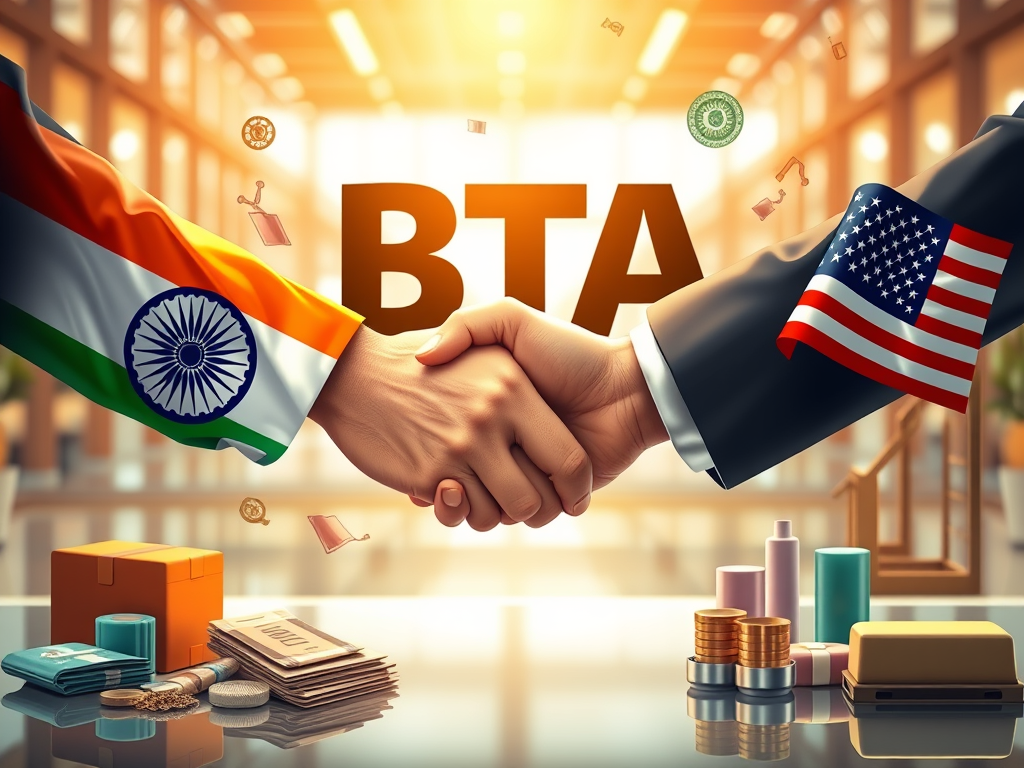
As India and the United States approach the final stage of negotiations for a landmark Bilateral Trade Agreement (BTA), both countries are working to align strategic interests, reduce trade friction, and boost bilateral commerce. With a July 9, 2025 deadline looming, India is pushing for tariff stability, sectoral concessions, and long-term safeguards against future policy reversals.
Key Developments in India–US BTA Negotiations
| Key Issue | Details |
|---|---|
| Tariff Assurance Sought | India wants a commitment that no new tariffs will be introduced post-agreement. |
| Deal Status | Negotiations in final stages; both sides pushing for conclusion by July 9, 2025. |
| Concessions Requested | India seeks lower tariffs for labor-intensive sectors like textiles and leather. |
| Clawback Mechanism Proposed | India wants a safeguard to counter any future US tariff hikes post-deal. |
| Existing Tariffs | US currently imposes up to 26% on Indian goods, with a 10% baseline. |
| Trade Expansion Goal | Both nations aim to double bilateral trade to $500 billion by 2030. |
| Concerns Raised by Experts | US’s past withdrawal from trade deals (e.g., TPP) raises credibility concerns. |
| Time Sensitivity | India urges timely finalization for meaningful tariff reductions before July 9. |
| Sectoral Impact Monitoring | India tracking tariff effects on steel, aluminum, and auto parts. |
India’s Strategic Objectives
India’s priorities in the BTA reflect both long-term vision and near-term sectoral protection. The focus is on:
- Securing tariff predictability to ensure business confidence and investment planning.
- Promoting exports from MSMEs and labor-intensive industries.
- Establishing a clawback mechanism, a rare provision in such agreements, to protect against trade policy reversals by future U.S. administrations.
Aiming for $500 Billion Trade by 2030
India and the U.S. are targeting a doubling of bilateral trade within five years. Achieving this requires:
- Reduction of reciprocal tariffs
- Lowering regulatory hurdles
- Expanding market access across manufacturing, agriculture, and digital services
📌 The United States is one of India’s top trading partners, and this agreement could mark a new chapter in economic diplomacy if both sides deliver on promises.
Concerns and Watch Points
While progress is evident, Indian policymakers remain cautious:
- Previous U.S. trade policy rollbacks, such as the withdrawal from the Trans-Pacific Partnership (TPP), have made India wary of future commitment breaches.
- Ongoing U.S. tariffs on Indian steel and aluminum are being monitored for their economic impact.
The Road Ahead
The early harvest deal or full BTA is expected to be finalized by July 9, 2025. Whether this deadline sees a comprehensive pact or a phased approach remains to be seen, but both governments are keen on projecting this as a win for economic cooperation in an increasingly fragmented global trade environment.
If successful, the India–US BTA could set a precedent for strategic bilateral agreements amid multilateral uncertainty.


 Glottis Limited
Leave a comment