
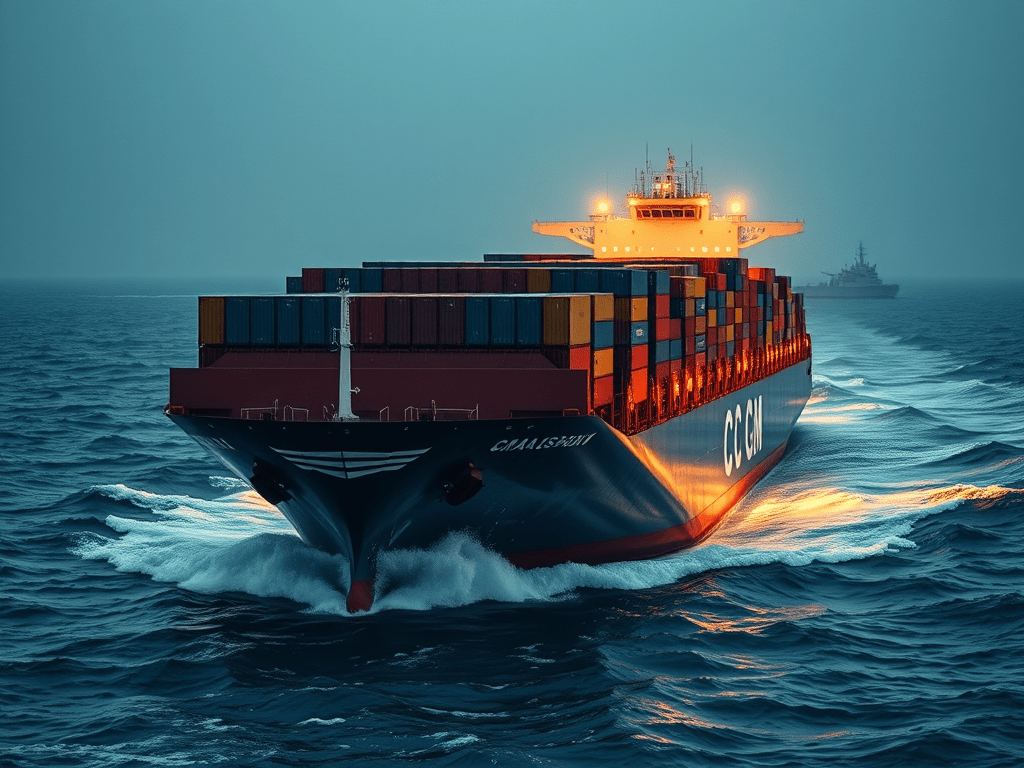
The recent geopolitical friction between Israel and Iran has once again underscored the vulnerability of global trade routes—particularly in the Red Sea and Suez Canal corridor. Amid rising concerns, French shipping giant CMA CGM has demonstrated resilience and adaptability by maintaining operations while enacting precautionary strategies. Here’s a comprehensive look into CMA CGM’s response and the broader implications for the container shipping industry.
CMA CGM’s Key Strategic Responses
| Key Development | Details |
|---|---|
| Service Adjustments | CMA CGM has reshuffled some Red Sea services but continues via Suez Canal. |
| Capacity Status | The company denies increasing capacity despite route adjustments. |
| Security Measures | Monitored by a French frigate under EU’s EUNAVFOR ASPIDES initiative. |
| Conflict Impact | Israel-Iran tensions haven’t yet caused major disruption to container flow. |
| Shipping Traffic Reports | Data suggests media-exaggerated shipping traffic increase in Red Sea. |
Navigating Geopolitical Turbulence: Shipping Industry Impacts
The container shipping industry is uniquely sensitive to geopolitical developments. The ongoing Israel-Iran conflict provides a real-time example of how tension can shape operations, costs, and market behavior.
1. Geopolitical Tensions
- Trade Route Disruptions: Carriers may reroute or restructure services due to conflict zones.
- Security Escalation: Naval protection, such as the EU’s EUNAVFOR ASPIDES, adds a layer of defense but also complexity.
2. Supply Chain Disruptions
- Delays & Capacity Issues: Even minor adjustments to routes can trigger cascading delays and reduce available capacity.
- Route Diversification: Importers/exporters may pivot to alternative routes or suppliers to hedge risks.
3. Fluctuating Trade Volumes
- Shift in Demand: Tensions may shift demand to safer markets or routes.
- Sanctions Impact: Countries under sanctions (or indirectly involved) may see plummeting shipping volumes.
4. Market Demand and Freight Rates
- Rate Increases: Insurance and risk premiums can cause freight rates to rise.
- Container Scarcity: A sudden change in route demand can affect container availability in key markets.
5. External Monitoring Effects
- Operational Adjustments: Military protection improves safety but requires coordination and can extend transit times.
6. Perception Vs. Reality
- Influence of Data: Reports about increased Red Sea shipping traffic may not reflect actual volumes, yet they influence market sentiment and strategic decisions.
Summary Table: Impact of Geopolitical Tension on Container Shipping
| Factor | Impact |
|---|---|
| Geopolitical Tensions | Disruptions to trade routes, increased military monitoring |
| Supply Chain Disruptions | Shipping delays, temporary capacity reallocation |
| Trade Volume Fluctuations | Shifts in sourcing and trade flows, sanctions impacts |
| Market Demand and Rates | Higher freight rates, volatility in container availability |
| External Monitoring | Operational complexity, improved vessel safety |
| Data Perception | Strategic decisions shaped by possibly skewed third-party data |
Conclusion: Strategic Vigilance in Uncertain Waters
CMA CGM’s measured approach to the Israel-Iran conflict—keeping Suez Canal routes open, denying speculative capacity hikes, and integrating naval protection—illustrates the importance of operational agility in today’s volatile geopolitical landscape. While the current crisis hasn’t yet significantly disrupted global container shipping, the broader industry remains on alert.
For logistics planners, importers/exporters, and freight forwarders, the key takeaway is clear: stay data-informed, flexible, and risk-conscious as global dynamics continue to evolve.




 Glottis Limited
Leave a comment