
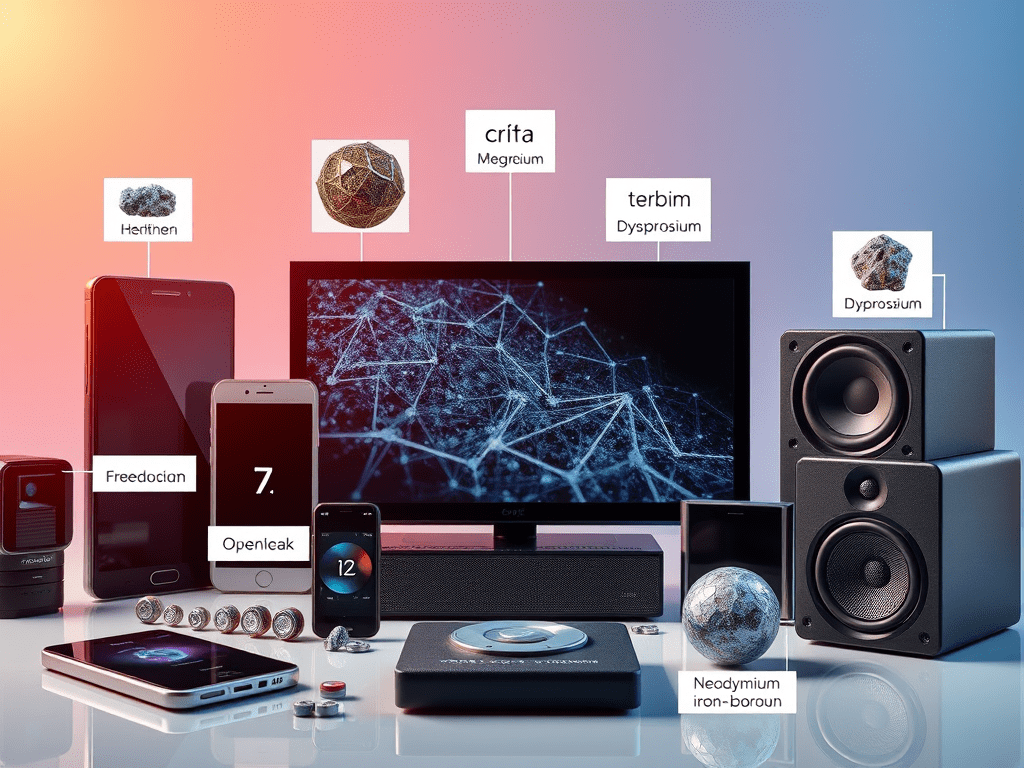
In a move that has sparked concern across the global technology and manufacturing sectors, China has tightened export licensing on key rare earth elements (REEs), including terbium and dysprosium—materials critical for producing neodymium-iron-boron (NdFeB) magnets. These magnets are foundational to the electronics industry, affecting a range of consumer technologies.
India, which heavily depends on imports of rare earth-based components, is already feeling the strain. The Electronics Industries Association of India (ELCINA) has sounded the alarm on potential job losses, rising costs, and the threat to local manufacturing, especially in the speaker and audio device segment.
Key Developments at a Glance
| Key Aspect | Details |
|---|---|
| Export Restrictions | China imposed export licensing on 7 rare earths including terbium and dysprosium |
| Critical Components Affected | Neodymium-iron-boron (NdFeB) magnets used in electronics |
| Electronics at Risk | Smartphones, TVs, speakers, microphones, wearables, camera modules |
| Job Impact (India) | 5,000–6,000 direct and ~15,000 indirect jobs under threat, notably in Noida and South India |
| Industry Reaction | Shift to importing fully assembled modules to counter local component shortages |
| Long-Term Concerns | Increased input costs, reduced product quality, risk to India’s electronics export potential |
| Call to Action | Focus on REE alternatives, recycling, domestic mining and magnet production |
Why Rare Earths Matter in Electronics
Rare earth elements, despite the name, are not exceptionally rare in the Earth’s crust—but their processing and refinement are highly specialized and environmentally intensive. These materials, particularly terbium and dysprosium, are essential to making NdFeB magnets, which are prized for their strength and efficiency in compact devices.
Common Electronics That Rely on REEs:
- Smartphones & Tablets: For vibration motors, speakers, and camera autofocus
- Televisions & Audio Systems: High-quality sound components
- Wearables & Hearables: Including TWS earbuds and fitness trackers
India’s Exposure and Economic Implications
The Indian electronics ecosystem, especially in clusters like Noida, Tamil Nadu, and Karnataka, is highly exposed to Chinese rare earth supply chains. The sudden disruption is forcing manufacturers to import finished speaker modules from China, undermining India’s “Make in India” vision.
With India’s wearables and audio market expected to grow exponentially, this dependency poses significant challenges. Manufacturers are also reporting that even small magnets used per unit can snowball into major production deficits when scaled across millions of devices.
The Urgent Need for Alternatives
Industry leaders and policymakers are now urging swift action on multiple fronts:
- Exploration & Mining: Accelerate domestic exploration of rare earth reserves (India has identified reserves in Andhra Pradesh and Odisha).
- Recycling Programs: Encourage e-waste recycling to extract usable rare earths.
- Strategic Partnerships: Collaborate with nations like Australia, Vietnam, and the U.S. for non-Chinese sources.
- Technology Transfers: Invest in domestic R&D to manufacture NdFeB magnets locally.
Understanding Rare Earth Elements
| Element | Symbol | Common Uses |
|---|---|---|
| Scandium | Sc | Aerospace components |
| Yttrium | Y | LEDs, superconductors |
| Lanthanum | La | Camera lenses, batteries |
| Cerium | Ce | Glass polishing, catalytic converters |
| Neodymium | Nd | High-performance magnets for electronics |
| Terbium | Tb | Green phosphors, magnet strength enhancement |
| Dysprosium | Dy | Heat-resistant magnets for motors |
| Others (11 REEs) | – | Include Samarium, Europium, Gadolinium, etc. with niche uses |
Conclusion
China’s strategic move to curb rare earth exports is a wake-up call for global electronics manufacturing, with India standing particularly vulnerable. The disruptions could delay product launches, inflate costs, and hamper job growth in emerging tech sectors. It underscores the need for India to secure its supply chains—through innovation, diversification, and international cooperation—to reduce overreliance on any single source of critical materials.




 Glottis Limited
Leave a comment