
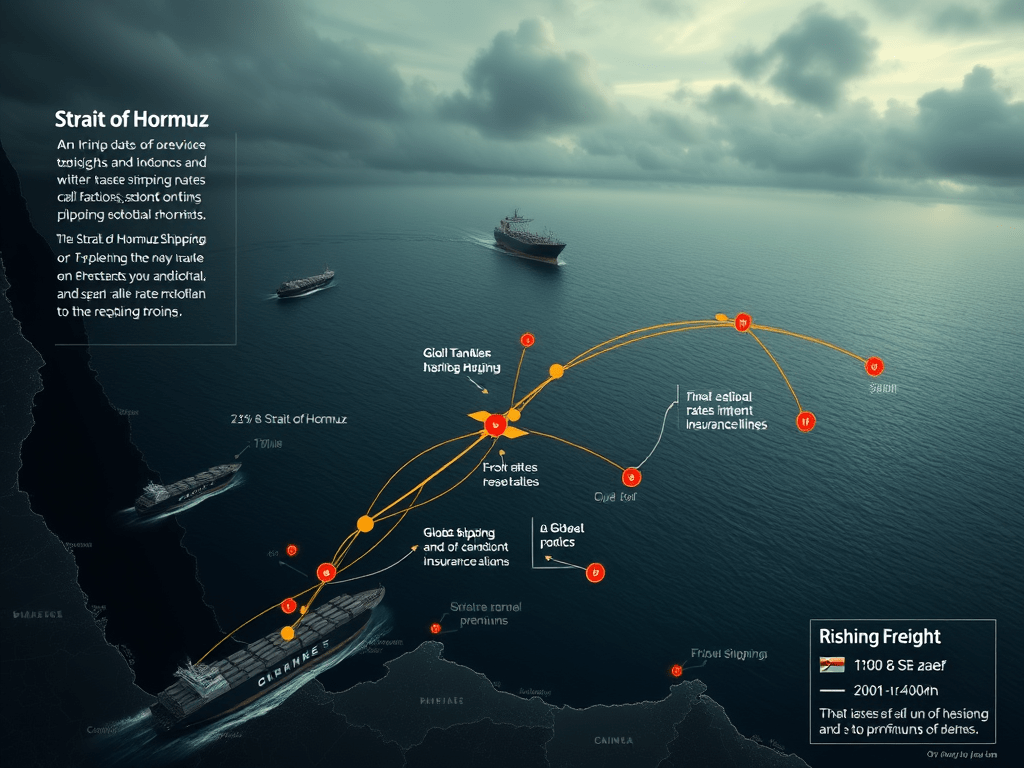
As of June 2025, the escalating tensions between Iran and Israel are sending shockwaves through global shipping routes, freight markets, and logistics networks. With mounting hostilities, market volatility, and concerns over the Strait of Hormuz, stakeholders across the supply chain are preparing for uncertain times ahead.
Freight Market Under Pressure
One of the most immediate impacts of the conflict has been the surge in freight rates, primarily driven by:
- Increased risk premiums
- Rerouting of vessels to avoid high-risk zones
- Anticipated delays and insurance hikes
Market & Index Movements: Key Data Snapshot
| Indicator | Data/Movement | Interpretation |
|---|---|---|
| Freight Rates | Rising sharply | Risk of disrupted trade lanes driving prices up |
| Shipping Corporation of India | ↑ 4% | Investor confidence in short-term gains amid crisis |
| Great Eastern Shipping | ↑ 2% | Reflects optimism for bulk carrier revenue |
| Allcargo, Gati, CCI | Flat to ↑ 1% | Logistics firms face rising costs, muted stock response |
| Baltic Dry Index (BDI) | ↓ 3.5% (to 1,689) | Hit lowest since June 10; indicates softening dry bulk demand |
| BDI One-week Change | ↓ 13.5% (from 1,952 on June 16) | Volatility driven by geopolitical uncertainty |
Strategic Risk: The Strait of Hormuz
A potential flashpoint in this conflict is the Strait of Hormuz, one of the most critical maritime chokepoints for the global energy trade.
| Aspect | Detail |
|---|---|
| Width | 33 km at narrowest point |
| Oil Flow (2024) | ~20 million barrels/day |
| Share of Global Seaborne Oil | >25% |
| Trade Type | Crude oil, LNG, petrochemicals |
| Disruption Scenarios | Naval blockades, missile threats, cyberattacks, ship detentions |
A blockade or disruption in the strait would trigger global energy price surges, affecting everything from fuel to manufacturing costs—especially in energy-dependent nations like India and China.
Geopolitical and Economic Ramifications
| Impact Area | Effect |
|---|---|
| Shipping Costs | Rising due to re-routing and risk surcharges |
| Insurance Premiums | Elevated for vessels transiting through conflict zones |
| Commodity Prices | Likely to spike due to increased logistics and fuel costs |
| Investor Sentiment | Cautious; shipping stocks volatile, logistics firms mixed |
| Supply Chain Reliability | Uncertainty over transit times and delivery schedules |
Outlook and Strategic Considerations
While Iran has not yet fully blocked the Strait of Hormuz, the threat remains real. Given the region’s strategic and economic importance, any escalation could:
- Severely strain global supply chains
- Re-route maritime flows towards longer, costlier alternatives
- Shift focus towards air and rail logistics where viable
Conclusion
The Iran-Israel conflict is a stark reminder of how geopolitics can disrupt global trade at scale. For the shipping and logistics sector, this is a moment to stay agile, reassess risk strategies, and prepare for contingency routing. With the Strait of Hormuz at the heart of global energy flows, even a brief disruption could send ripple effects across economies and sectors.




 Glottis Limited
Leave a comment