
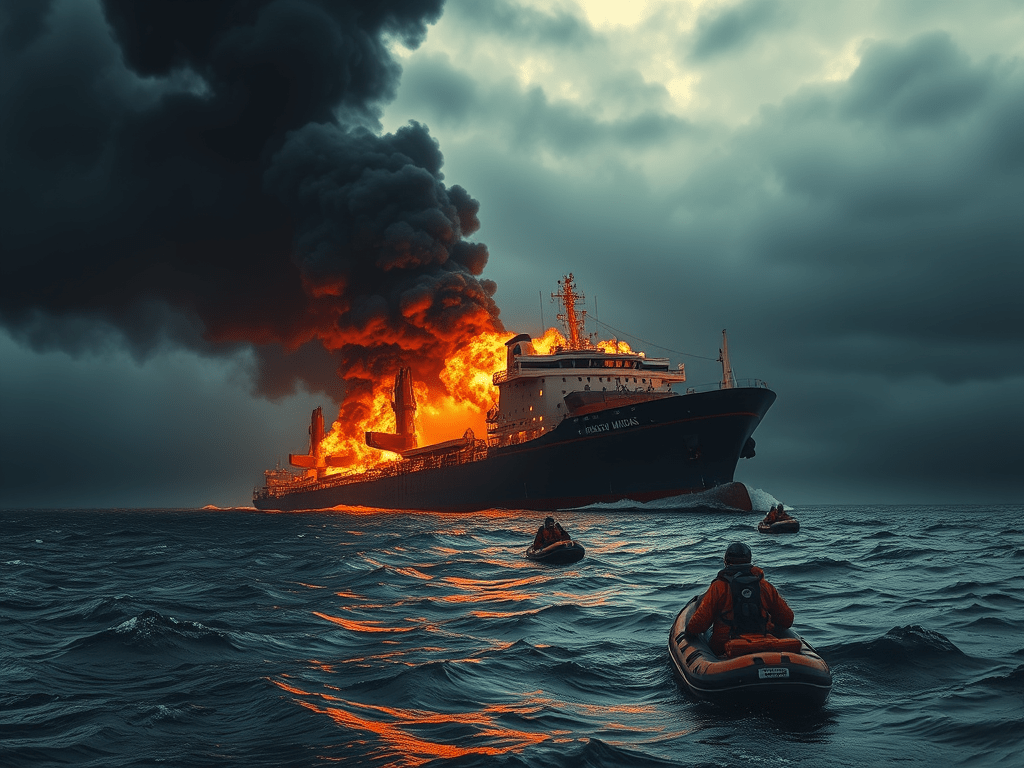
On June 3, 2025, the cargo ship Morning Midas—a car and truck carrier transporting around 3,000 vehicles, including 800 electric vehicles (EVs)—caught fire in the Pacific Ocean. Despite rescue efforts and emergency response measures, the vessel sank on June 23 due to cumulative fire damage and worsening sea conditions. The incident has raised fresh concerns about fire risks involving EV batteries on RoRo (roll-on/roll-off) vessels and has prompted renewed attention to international maritime safety protocols.
Incident Overview
The timeline of the Morning Midas incident illustrates the sequence of fire ignition, crew evacuation, and the eventual sinking. Key facts are summarized in the table below:
| Key Details | Information |
|---|---|
| Incident Date (Fire) | June 3, 2025 |
| Evacuation | 22 crew members rescued after abandoning ship |
| Sinking Date | June 23, 2025 |
| Cargo Onboard | ~3,000 vehicles, including 800 electric vehicles (EVs) |
| Cause of Sinking | Fire damage combined with heavy weather leading to water ingress |
| Ship Location | ~360 nautical miles offshore in waters ~5,000 meters deep |
| Vessel Specs | 183 meters long, built in 2006, flying the Liberian flag |
| Departure & Destination | Departed Yantai, China (May 26); en route to Lazaro Cardenas, Mexico |
| Operator | Zodiac Maritime |
| Fire Risk Source | Lithium-ion EV batteries suspected as fire accelerant |
EV Battery Fire Risks
Electric vehicles onboard presented an elevated fire hazard due to the lithium-ion battery systems. These batteries are known to overheat or ignite when damaged, and controlling such fires at sea remains a challenge due to their high re-ignition potential and the limitations of conventional firefighting systems.
Regulations Governing Ship Fires and Safety
The Morning Midas tragedy falls under the purview of a range of international maritime safety frameworks. These frameworks aim to minimize the risk of such catastrophic events and to ensure robust emergency response systems onboard commercial vessels.
| Regulation/Standard | Description |
|---|---|
| SOLAS (Safety of Life at Sea) | Core IMO treaty focused on ship fire detection, prevention, and firefighting. |
| MARPOL | Pollution control treaty, includes safe handling of hazardous cargo like EVs. |
| Flag State Regulations | Vessels must follow fire safety rules of their country of registration. |
| Classification Society Standards | E.g., DNV, ABS set shipbuilding/fireproofing norms & certify vessels. |
| Port State Control (PSC) | Ports can detain or fine non-compliant ships during routine inspections. |
| National Regulations | Country-specific laws on fire control, especially during port stays. |
| Industry Guidelines | ICS, ISSA offer protocols for handling EVs and other high-risk cargo. |
| Safety Management Systems (ISM Code) | Requires documented safety procedures and fire plans by the ship’s operator. |
| Crew Training & Emergency Drills | Mandatory periodic fire drills and evacuation simulations for seafarers. |
Industry Implications
This incident reiterates the urgent need for the maritime industry to reassess fire safety strategies, particularly concerning the transportation of EVs. Enhanced detection systems, thermal monitoring of lithium batteries, and upgraded fire suppression infrastructure on car carriers are likely to become key discussion points in global shipping forums.
Conclusion
The sinking of Morning Midas not only underscores the dangers posed by onboard fires involving EVs but also places a spotlight on the importance of compliance with international maritime safety regulations. As vessel operators adapt to the evolving cargo mix, especially with the surge in EV transport, a collaborative approach among flag states, classification societies, and maritime authorities will be critical in preventing future tragedies at sea.

 Glottis Limited
Leave a comment