
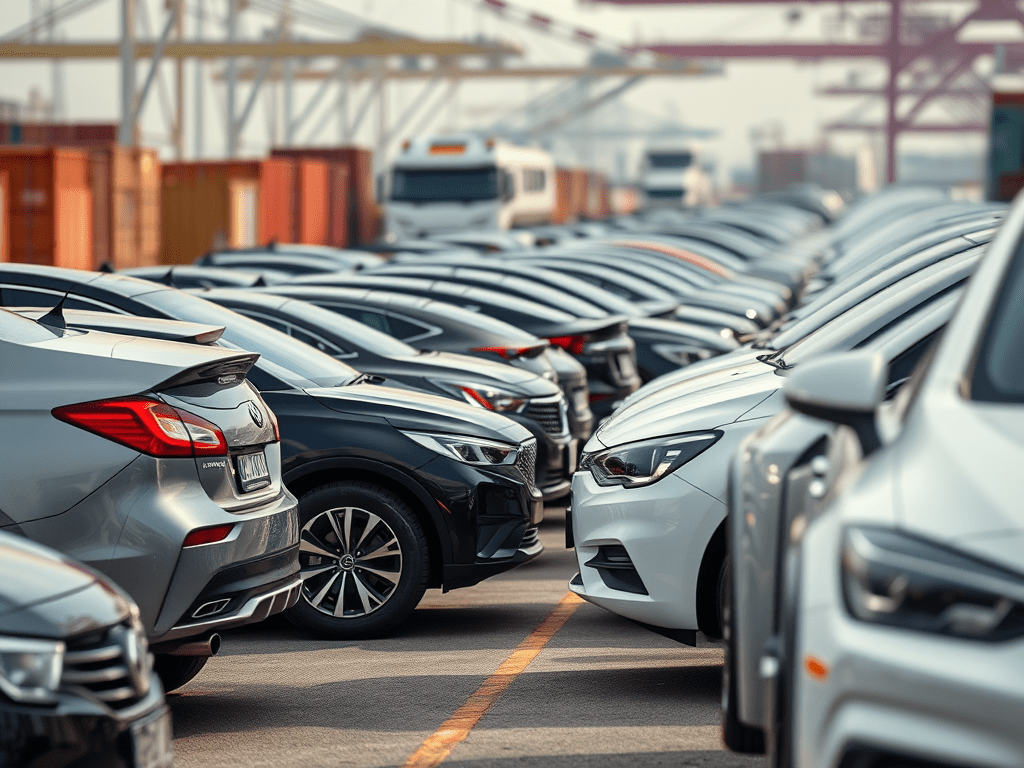
Since 2019, China has been engaging in a grey-area automotive export strategy—exporting brand-new, undriven vehicles under the classification of “used” cars. These so-called “zero-mileage” cars have become a unique export product aimed at supporting China’s local economies, automakers, and overall GDP figures. However, this strategy is increasingly drawing scrutiny both within China and in the receiving markets.
What Are Zero-Mileage Used Cars?
Zero-mileage used cars are vehicles that have never been driven but are technically classified as used, often for bureaucratic or export policy reasons. These vehicles are shipped mainly to markets such as Russia, Central Asia, and the Middle East, where demand for affordable vehicles remains strong and regulatory environments are more lenient.
Key Data Summary
| Aspect | Details |
|---|---|
| Practice Origin | Began in 2019 |
| Vehicle Type | Zero-mileage used cars (brand new, undriven but exported as used) |
| Main Export Destinations | Russia, Central Asia, Middle East |
| Purpose | Boost GDP figures and automaker sales by booking revenue on cars shipped but not sold to local consumers |
| Local Government Role | Simplifying paperwork, facilitating logistics, setting quotas |
| Impact on Domestic Market | Price wars and overproduction, raising alarms among local manufacturers |
| Export Market Share (2024) | Around 90% of China’s exported “used cars” were zero-mileage |
| Criticism | Seen as “dumping” in foreign markets, potentially damaging China’s automotive brand reputation |
| Regulatory Backlash | Some countries are tightening rules to protect local industries |
| Industry Response | Calls from automakers and associations for stricter regulation to maintain credibility in international markets |
Economic Motivations
This practice is heavily encouraged by local Chinese governments, as it allows provinces to:
- Report higher automotive production and sales.
- Generate tax revenue.
- Meet economic growth targets dictated by Beijing.
Automakers also benefit by being able to recognize revenue immediately after production, even if the vehicles never reach Chinese consumers. This artificially inflates sales figures, which helps in meeting shareholder expectations and short-term performance benchmarks.
Global Implications and Backlash
As China pushes its zero-mileage used cars into international markets, some recipient countries are beginning to push back. Concerns include:
- Market saturation with artificially cheap vehicles.
- Regulatory evasion, as “used” cars often face lower scrutiny than new imports.
- Distortion of local vehicle markets, undercutting domestic auto industries.
In response, governments in Central Asia and the Middle East have started introducing tighter controls on vehicle imports, while automotive associations in China warn about the long-term damage to brand perception.
Balancing Growth with Sustainability
While this strategy has helped bolster China’s short-term growth numbers and expanded the global presence of Chinese vehicles, it also raises fundamental concerns about sustainability, market fairness, and regulatory integrity. The Chinese auto industry now finds itself at a crossroads—caught between rapid expansion and the need to preserve credibility and brand value in the global market.
Conclusion
The export of zero-mileage used cars reveals the complexities of China’s economic planning and industrial support mechanisms. While it helps maintain factory output and support GDP targets, it also challenges the global automotive order, prompting both domestic reflection and international regulation. The future of this practice will likely depend on how China responds to both internal industry pushback and external regulatory tightening.




 Glottis Limited
Leave a comment