
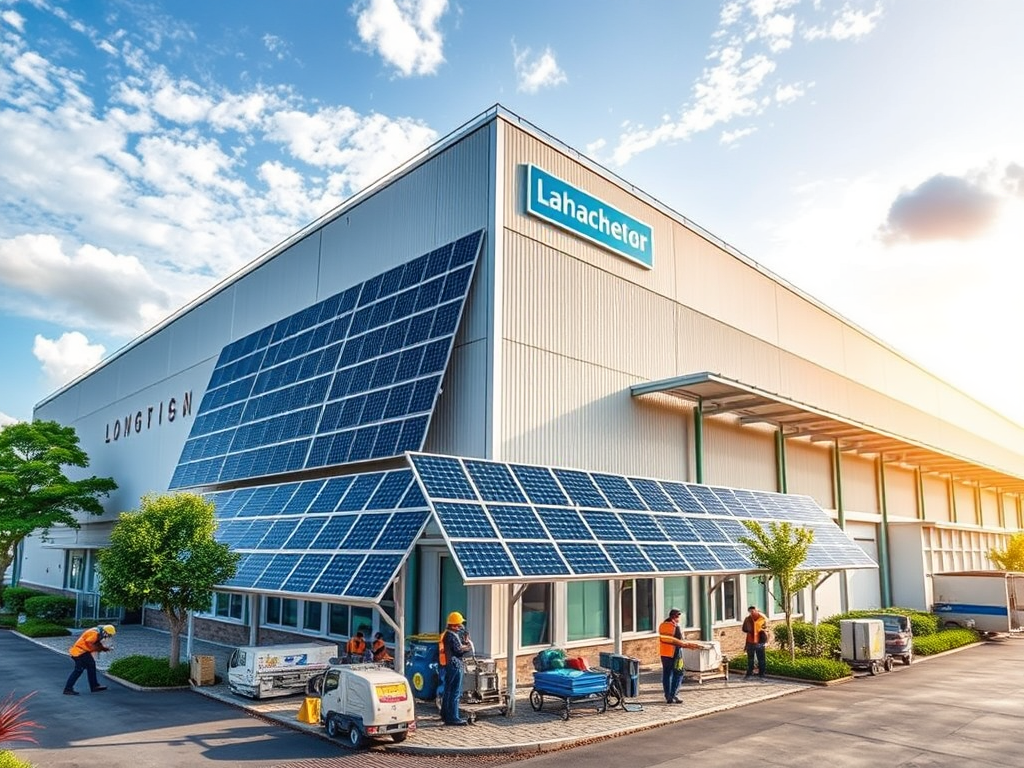
Indonesia’s clean energy ambitions are gaining significant momentum with the announcement of a new solar cell and module manufacturing plant in Deltamas, Cikarang, West Java. This transformative project is a result of a strategic partnership between China’s Longi, a global solar leader, and Pertamina New & Renewable Energy, a subsidiary of Indonesia’s state-owned energy giant Pertamina.
The collaboration marks a major milestone in Indonesia’s journey toward energy independence, enhanced manufacturing capabilities, and its long-term renewable energy targets.
Key Project Data
| Aspect | Details |
|---|---|
| Partnership | Longi (China) + Pertamina New & Renewable Energy (Indonesia) |
| Location | Deltamas, Cikarang, West Java, Indonesia |
| Production Capacity | 1.4 GW/year |
| Impact on National Capacity | Increases Indonesia’s solar panel capacity from 1.6 GW to 3 GW/year |
| Government Alignment | Supports Domestic Component Level (TKDN) regulation compliance and boosts local manufacturing |
| Indonesia’s 2060 RE Target | 300–400 GW renewable energy capacity by 2060 |
| Related Regional Projects | Joint solar industrial zone in the Riau Islands (Indonesia-Singapore cross-border clean energy corridor) |
| Competitors in Market | SEG Solar (USA) – Recently launched competing solar factory in Indonesia |
The Strategic Role of Longi
Longi, recognized as one of the world’s most influential solar technology firms, brings more than just investment. Its contributions to the Indonesian venture include:
1. Advanced Manufacturing Expertise
With years of global experience, Longi ensures the new plant utilizes cutting-edge technology and high-efficiency production methods that can match international quality standards.
2. Capacity and Scale
The 1.4 GW production capacity will nearly double Indonesia’s existing manufacturing capability, providing a major push toward domestic solar sufficiency.
3. Technical Innovation
Longi is expected to drive R&D and innovation, empowering the facility to not only meet local demand but also position Indonesia as a potential solar component exporter.
4. Support for Local Regulations (TKDN)
The project aligns with Indonesia’s push for greater domestic content in renewable energy infrastructure, helping meet TKDN (Tingkat Komponen Dalam Negeri) requirements and stimulate local industry.
5. Regional Leadership
This move solidifies Longi’s expansion strategy in Southeast Asia and reflects its commitment to sustainable energy partnerships in emerging markets.
Indonesia’s Renewable Energy Vision
Indonesia has committed to reaching 300–400 GW of renewable energy capacity by 2060, a target that necessitates deep investment in manufacturing, infrastructure, and cross-border cooperation.
This project complements other national and regional initiatives, such as the green industrial zone in the Riau Islands, developed in collaboration with Singapore, which aims to foster clean energy trade across Southeast Asia.
Market Competition & Growth
While Longi and Pertamina lead this major initiative, competition is heating up. SEG Solar, a US-based company, has also begun operations in Indonesia, and is expected to scale up soon—indicative of Indonesia’s growing attractiveness as a solar manufacturing hub.
Conclusion
The Longi–Pertamina solar manufacturing plant is more than a factory—it’s a symbol of Indonesia’s clean energy ambitions, a blueprint for regional cooperation, and a strategic bet on solar energy self-sufficiency.
With supportive government policy, international partnerships, and a rapidly evolving clean tech ecosystem, Indonesia is firmly placing itself on the global renewable energy map—and Longi is set to play a central role in that journey.




 Glottis Limited
Leave a comment