
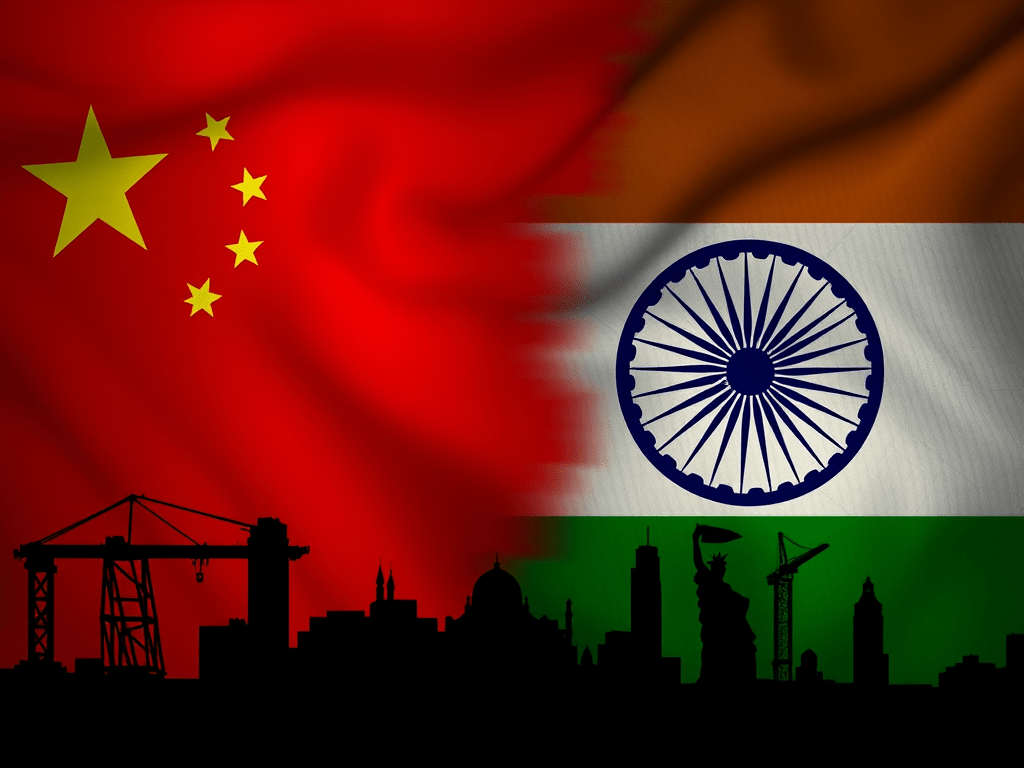
China’s trade relationship with India is undergoing a complex evolution, shaped by geopolitical tensions, economic dependencies, and strategic recalibrations. At the heart of this engagement lies a twin-track strategy: while Beijing continues diplomatic overtures to normalize relations, it also deploys trade as a lever of influence—and at times, coercion. This duality highlights the fragile balance of cooperation and competition between Asia’s two largest economies.
A Tale of Two Tracks
Even as border tensions remain unresolved, trade volumes between India and China continue to grow. Yet, behind the statistics lies a more nuanced story. China is increasingly using trade tactics—such as export halts on critical goods—to signal dissatisfaction with India’s assertive economic policies, including curbs on Chinese investments and tech firms.
These trade moves affect India’s strategic sectors, including renewable energy, electronics manufacturing, tunnel infrastructure, and fertilizer production—all key pillars of India’s self-reliance agenda under the ‘Make in India’ and PLI (Production-Linked Incentive) schemes.
Meanwhile, India is actively diversifying its supply chain dependencies, exploring partnerships with countries like Australia (for rare earths) and Russia (for fertilizers), while also nurturing its domestic industry.
Key Data Table: China’s Trade Strategy Towards India
| # | Theme | Details |
|---|---|---|
| 1 | Twin-Track Strategy | Diplomatic normalization on the surface; coercive trade practices underneath. |
| 2 | Export Halts | Delays or bans on rare earth magnets, tunnel boring machines, and specialty fertilizers. |
| 3 | Strategic Leverage | Pressure on India’s tech and agriculture sectors by controlling crucial supply chains. |
| 4 | Coercive Trade Tactics | Seen as retaliation for India’s curbs on Chinese FDI and app bans post-Galwan clashes. |
| 5 | Retaliation Measures | Targeted denials act as pushback to India’s economic protectionism. |
| 6 | Impact on India | Threatens timelines for ‘Make in India’ and PLI scheme targets due to stalled supplies. |
| 7 | Diversification Efforts | India seeking alternatives via Australia (rare earths), Russia (fertilizers), and domestic production capacity building. |
| 8 | Diplomatic Context | Talks ongoing; however, trade moves underscore persistent friction and strategic mistrust. |
| 9 | India’s Position | Balancing engagement and assertiveness—signals openness but firm on safeguarding national interests. |
| 10 | Testing Resilience | China likely gauging India’s capacity to respond to trade disruptions and re-engineer critical supply dependencies. |
Conclusion
The China-India trade dynamic exemplifies the new era of geo-economic rivalry, where diplomacy and trade are interwoven in a complex dance of influence, resistance, and recalibration. For India, this is both a challenge and an opportunity—to build strategic autonomy, strengthen alliances, and demonstrate resilience in the face of economic coercion.
As both nations navigate this fraught terrain, the future of bilateral trade will be shaped not just by policy, but by geopolitical intent and strategic foresight.


 Glottis Limited
Leave a comment