
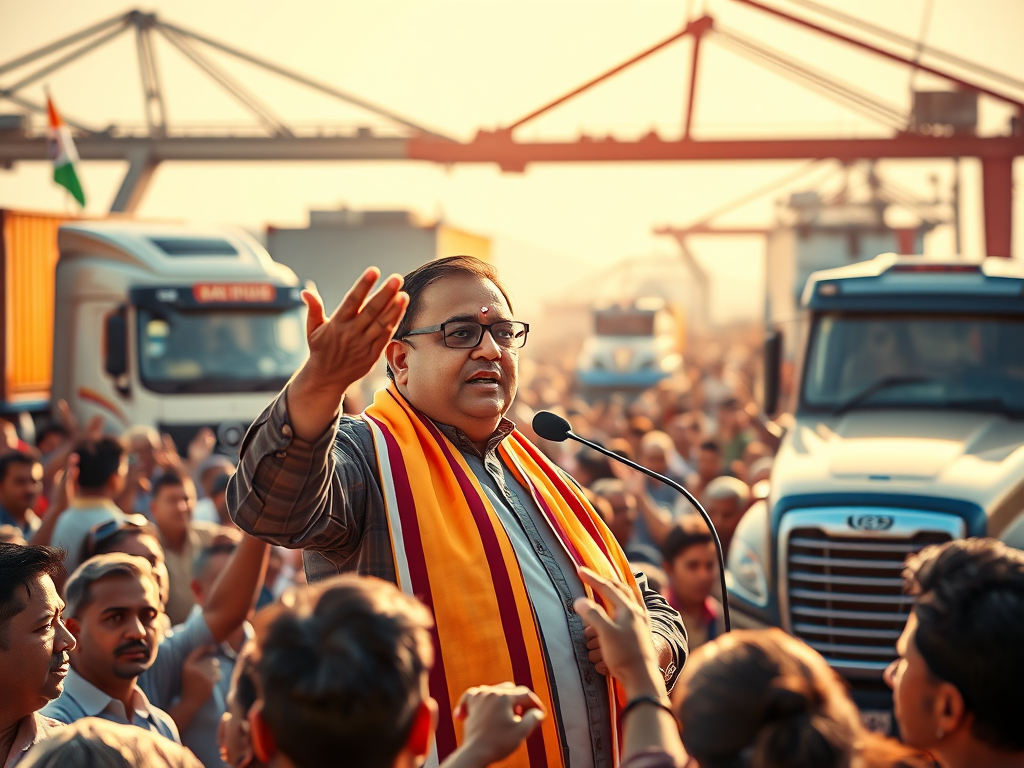
Union Minister Nitin Gadkari has outlined a bold vision for India’s logistics and infrastructure ecosystem—one that supports economic growth, empowers MSMEs, and makes India globally competitive in manufacturing and exports. His recent address highlighted major milestones already achieved and strategic goals on the horizon, particularly a sharp reduction in logistics costs and a sustained focus on clean, efficient, and digitally connected transportation systems.
Key Progress and Targets in Logistics and Infrastructure
| Parameter | Current Status | Previous / Target Status | % Change / Goal |
|---|---|---|---|
| Logistics Cost as % of GDP | 10% | 16% (Earlier) / 9% (Target) | ↓ 37.5% from previous, aiming for 9% |
| Port Turnaround Time | Reduced by 45% | Baseline not specified | Significant improvement |
| Transport Costs | Reduced by 25% | Baseline not specified | ↓ 25% |
| EV Market Size (Auto Industry) | ₹22 lakh crore (total) | 3rd largest globally | Growing export potential |
Strategic Infrastructure Initiatives
| Category | Initiative / Project | Impact |
|---|---|---|
| Digital Tolling | FASTag & digital toll systems | Reduces waiting time, fuel usage, and travel delays |
| Multimodal Hubs | PM Gati Shakti Yojana | Enhances interconnectivity across road, rail, air, and sea |
| Highway-Port Integration | Improved highway linkage with major ports | Enables smoother cargo movement and faster freight turnaround |
| Green Transport | Push for biofuels, electric vehicles, and green hydrogen | Lowers carbon footprint, aligns with clean energy goals |
| EV Exports | EVs as a key Atmanirbhar Bharat export product | Boosts India’s competitiveness in global EV market |
Benefits to MSMEs and Economy
- Global Competitiveness:
Lower logistics costs empower MSMEs and exporters, helping them compete in international markets. - Time & Cost Efficiency:
A 45% reduction in turnaround times at ports and 25% drop in transport costs make domestic movement more efficient. - Economic Growth Driver:
Infrastructure is termed as the “economic arteries” of the country—connecting production centers to consumption and export points. - Job Creation & Industrial Development:
Investment in roads, EVs, and clean energy logistics fosters industrial hubs, creating employment and attracting private investment.
Clean Energy and the Future of Mobility
India’s infrastructure strategy also has a green mandate:
- Adoption of biofuels, electric mobility, and green hydrogen will reduce oil imports.
- Integrated planning through Gati Shakti and digital infrastructure ensures sustainability and scalability.
Conclusion: A Logistics-Led Growth Model
The government’s mission to bring down logistics costs from 16% to 9% of GDP is not merely about numbers—it’s about creating an ecosystem of growth. With efficient infrastructure, digital transformation, and a clean energy agenda, India is positioning itself as a global manufacturing hub. The alignment between logistics efficiency and economic development is now central to India’s growth strategy under Atmanirbhar Bharat.

 Glottis Limited
Leave a comment