
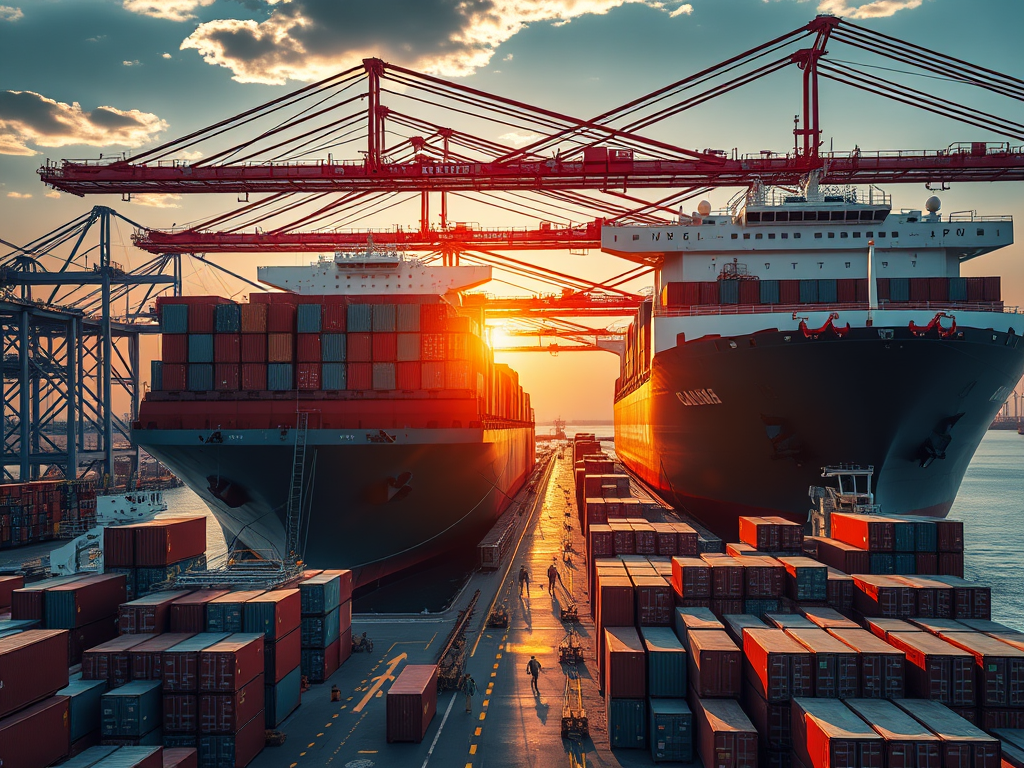
The transpacific container shipping market is experiencing a notable downturn, as freight rates fall sharply in response to shifting global trade dynamics. A combination of reduced consumer demand, lower US inventory levels, and the reintroduction of tariffs has disrupted typical seasonal patterns and left carriers scrambling to maintain profitability.
Sharp Rate Corrections Signal Market Weakness
Spot freight rates for containers moving from Asia to the US have witnessed a dramatic 40% drop in just two weeks, underscoring weakening demand and softening trade volumes.
| Route | Rate Change |
|---|---|
| Asia → US West Coast | ↓ 20% |
| Asia → US East Coast | ↓ 13% |
| Overall Transpacific Route | ↓ 40% (2 weeks) |
This decline is particularly concerning given that rates had seen a steady rise earlier this year due to congestion, early restocking, and trade uncertainty.
Factors Driving the Rate Collapse
| Factor | Impact |
|---|---|
| End of Peak Season Early | US inventory drawdowns and cautious import planning have shortened the peak season cycle. |
| Tariff Reintroduction | Reciprocal tariffs introduced in April led to a 13% YoY fall in US imports from Asia. |
| Decreased US Inventories | Lower inventory replenishment in the US reduced the need for Asian imports. |
| Blank Sailing Expectations | Carriers are likely to cancel scheduled sailings to mitigate overcapacity and stabilize rates. |
Tariff Impacts and Supply Chain Adjustments
The 13% year-on-year drop in US-bound container imports from Asia follows the reimplementation of trade tariffs. Many US retailers and manufacturers, wary of geopolitical risks and rising import duties, have cut back on forward orders.
This policy-driven shift is not only altering supply chain flows but also adding uncertainty to trade planning, especially for small and mid-sized shippers that rely on stable freight environments.
Potential Industry Responses
In response to weakening fundamentals, shipping lines are expected to:
- Increase blank sailings to match capacity with demand.
- Reconfigure vessel rotations to prioritize higher-yield markets.
- Offer aggressive pricing to maintain volume on eastbound transpacific routes.
However, these measures may only offer short-term relief unless demand rebounds or tariffs are lifted.
Conclusion: A New Reality for Transpacific Trade
The transpacific container shipping market, once buoyed by pandemic-era surges and restocking cycles, now faces a sobering reality. The combination of early peak season decline, falling rates, and macroeconomic headwinds signals a transitional period for the industry.
Shippers must now navigate this shifting environment by:
- Diversifying sourcing regions,
- Monitoring tariff policy developments,
- And leveraging carrier competition to negotiate better terms.
For carriers, maintaining profitability amidst declining volumes will require a careful balance of capacity control and strategic alliances. The coming months will reveal whether current trends are a short-term correction—or the beginning of a longer structural shift in global container shipping.




 Glottis Limited
Leave a comment