
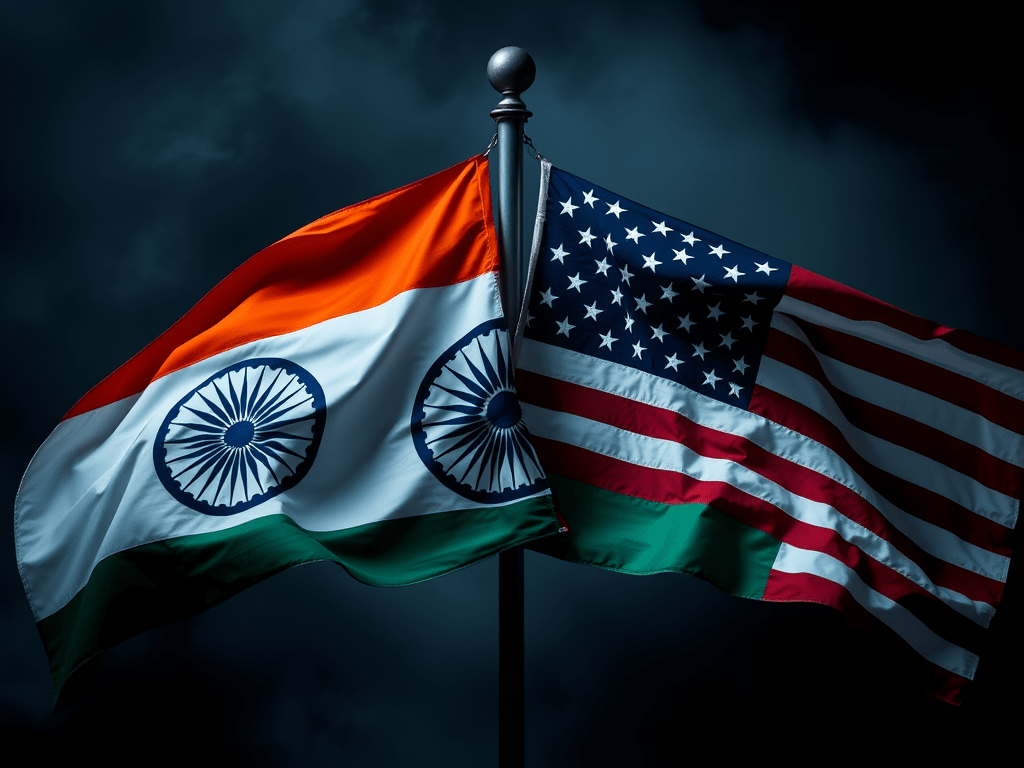
In a strong response to rising trade tensions, India has notified the World Trade Organization (WTO) of its intention to impose retaliatory tariffs on select U.S. products. This move comes in reaction to a recent decision by the United States to hike tariffs on Indian automobile components and light vehicles by 25%, a measure that India claims is in violation of global trade rules.
Background: U.S. Tariff Measures Spark Dispute
On March 26, 2025, the United States announced a 25% safeguard duty on certain Indian auto products, citing the need to protect its domestic industry. These tariffs took effect on May 3, 2025, impacting an estimated $2.89 billion worth of Indian exports annually. India, in response, has now proposed countermeasures targeting U.S. exports of equivalent value.
India submitted its official communication to the WTO on July 4, 2025, stating that the retaliatory tariffs would offset an estimated $723.75 million in losses due to the U.S. measures.
Key Developments: Summary Table
| Category | Details |
|---|---|
| India’s Action | Plans retaliatory tariffs on selected U.S. goods |
| Trigger | 25% tariff hike by the U.S. on Indian automobile parts and light vehicles |
| U.S. Tariff Timeline | Announced on March 26, 2025; Implemented on May 3, 2025 |
| Affected Indian Exports | Approx. $2.89 billion annually |
| India’s WTO Notification | Filed on July 4, 2025 |
| Retaliation Value | Up to $723.75 million, matching the U.S. duties on Indian goods |
| WTO Violation Claim | Breach of GATT 1994 and Agreement on Safeguards due to lack of notification |
| Past Precedents | India had earlier imposed retaliatory tariffs on U.S. steel and aluminum tariffs |
| Trade Negotiation Status | Ongoing discussions for an interim trade deal, now complicated by tariff row |
| India’s Position | Firm stance on enforcing WTO rules amid lack of progress in consultations |
India’s Legal and Diplomatic Strategy
India has strongly asserted that the U.S. tariffs violate WTO rules under both the General Agreement on Tariffs and Trade (GATT) 1994 and the Agreement on Safeguards, citing the U.S.’s failure to notify or justify these actions under WTO procedures.
This move reflects a broader shift in India’s trade policy—asserting rights under multilateral frameworks while continuing bilateral trade negotiations. Indian trade officials emphasized that they remain committed to negotiations, but not at the cost of compromising WTO principles.
Implications for India-U.S. Trade Relations
These escalating tensions come at a delicate time, as India and the United States are in the midst of negotiating an interim trade agreement aimed at resolving pending issues and boosting bilateral trade. However, the imposition of retaliatory tariffs may complicate talks, potentially delaying consensus.
India’s swift and proportionate response also signals that it will not hesitate to retaliate when global trade norms are undermined, especially when significant export volumes and key industrial sectors are at stake.
Conclusion
India’s decision to pursue retaliatory tariffs marks a decisive step in defending its trade interests and enforcing WTO rules. As the global trade landscape continues to evolve, this standoff could test the resilience of India-U.S. economic ties—either steering both countries toward a more balanced agreement or deepening trade frictions if not resolved diplomatically.




 Glottis Limited
Leave a comment