
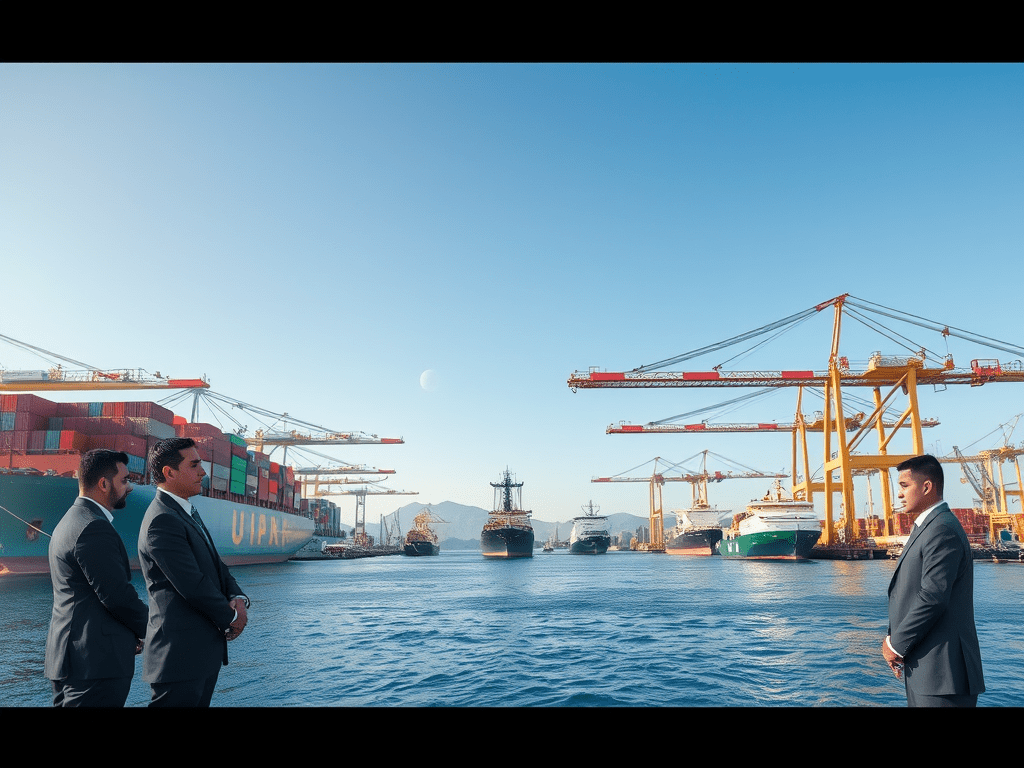
In a significant move signaling Syria’s push toward post-conflict reconstruction and economic revival, UAE-based global logistics giant DP World has signed an $800 million agreement with Syria to revamp the Tartus Port. This deal is not only a milestone in Syria’s reconstruction but also marks a renewed interest from international players in the country’s logistics and infrastructure sectors.
The agreement is part of a broader strategy to re-establish Syria’s connectivity with global trade networks and attract foreign investments despite ongoing sanctions and regional tensions.
Key Highlights of the Tartus Port Deal
| Aspect | Details |
|---|---|
| Deal Value | $800 Million |
| Parties Involved | Government of Syria & DP World (UAE-based global port operator) |
| Project Site | Tartus Port, Syria |
| Purpose | Infrastructure upgrade, logistics modernization, and port revitalization |
| Political Context | Comes under new Islamist administration post ousting of Bashar al-Assad |
| CEO Statement | Sultan Bin Sulayem emphasized Tartus’s potential as a trade and export hub |
| Strategic Goal | To revive Syria’s economy and improve export capacity of local industries |
| Related Projects | $7B energy deal with Qatari-Turkish-US consortium, CMA CGM to run Latakia Port |
DP World: Powering Global Trade
| Parameter | Details |
|---|---|
| Founded | 2005 |
| Headquarters | Dubai, United Arab Emirates |
| Global Presence | Operates in over 60 countries with 80+ marine terminals |
| Core Services | Container handling, port management, logistics, warehousing |
| Innovation Focus | Smart ports, digital logistics platforms, AI-driven operations |
| Sustainability Efforts | Emphasis on carbon footprint reduction and green port technologies |
| Partnership Model | Works with governments and private entities to develop trade infrastructure |
| Economic Role | Key enabler of international trade, enhancing supply chain resilience |
Strategic Implications
The Tartus port upgrade is not just a standalone infrastructure deal—it’s a symbol of Syria’s intent to rejoin global trade corridors and rebuild its war-torn economy. With DP World’s entry, the port is expected to benefit from modernized facilities, improved cargo handling, and a boost in regional logistics efficiency.
At the same time, DP World’s involvement reinforces its Middle East and Levant strategy, potentially creating a corridor between Europe, the Middle East, and Asia through Syria’s Mediterranean ports.
Conclusion
As geopolitical dynamics shift and reconstruction begins, this deal could pave the way for further international cooperation in Syria. For DP World, it reinforces their role as a critical player in global trade infrastructure, capable of transforming conflict-affected regions into viable economic zones.



 Glottis Limited
Leave a comment