
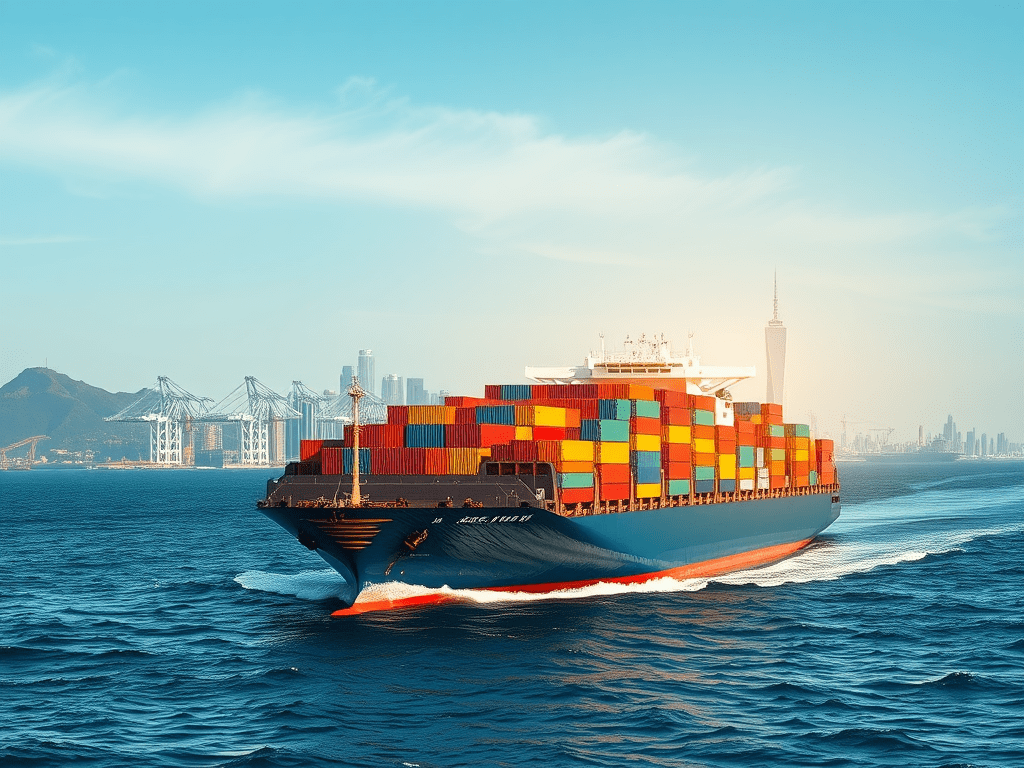
After months of volatility, trans-Pacific container shipping rates have shown signs of stabilization, providing temporary relief to global shippers and freight forwarders. However, deeper analysis reveals a complex landscape shaped by route-specific variability, labor disruptions, and strategic capacity management by carriers.
Amid uncertain tariff environments and shifting global trade patterns, rate differences between the U.S. West Coast and East Coast have become more pronounced, hinting at longer-term structural shifts in global logistics.
Key Trends in Trans-Pacific Freight Rates
| Indicator | Current Status / Trend |
|---|---|
| Rate Stabilization | Rates have stopped their steep fall but are unlikely to rise significantly in the near term. |
| Route Variability | West Coast rates hold steady; East Coast rates are still sliding, creating a widening price gap. |
| Capacity Adjustments | Carriers are reducing space to stabilize freight rates. |
| Far East–North Europe | Rates are increasing, driven by port congestion. |
| Far East–Mediterranean | Rates are declining, pointing to weaker demand and improved supply chain fluidity. |
| Far East–U.S. West Coast (mid-July) | $2,313 per FEU |
| Far East–U.S. East Coast (mid-July) | $4,314 per FEU |
| West vs. East Coast Gap | Price gap has widened, indicating demand-side economic shifts and route reconfigurations. |
| Shipper Behavior | Frontloading strategies are declining; shippers are unable to pre-book in large volumes ahead of cost hikes. |
| Market Pressures | Labor unrest, port congestion, and macroeconomic slowdown continue to pressure logistics networks. |
Sector Overview: What’s Driving the Divergence?
1. Rate Disparity by Coast
The current price gap of over $2,000 per FEU between East and West Coast shipments from Asia highlights demand rebalancing and port capacity differences. The East Coast’s congestion and longer transit times are making it less favorable despite its strategic importance.
2. Carrier Strategies
Shipping lines are actively blanking sailings and adjusting capacity to prevent further rate erosion. While effective in the short term, such measures are unsustainable without demand recovery.
3. Global Market Influences
- The Far East–North Europe route is experiencing rising prices due to port congestion, particularly in Northern Europe.
- Conversely, the Far East–Mediterranean corridor shows a weakening trend, indicating slowing economic activity.
Analyst Perspective: What Lies Ahead?
Logistics analysts warn that the current rate stability is temporary, especially as the peak shipping season remains tepid. The inability of shippers to continue frontloading — shipping early to avoid potential future tariffs or disruptions — signals weakened buying behavior and inventory surplus across sectors.
Furthermore, labor unrest in key port hubs and regulatory uncertainties in both the U.S. and Asia are clouding forecasts for Q3 and Q4 of 2025.
Conclusion
While trans-Pacific rates have found a short-term equilibrium, long-term challenges remain. Stakeholders across the supply chain must adapt to:
- Route-specific volatility
- Shifting port preferences
- Carrier-driven capacity control
- Global economic headwinds
Shippers and freight forwarders should brace for continued unpredictability in the ocean freight market, balancing cost optimization with strategic agility in their logistics planning.




 Glottis Limited
Leave a comment