
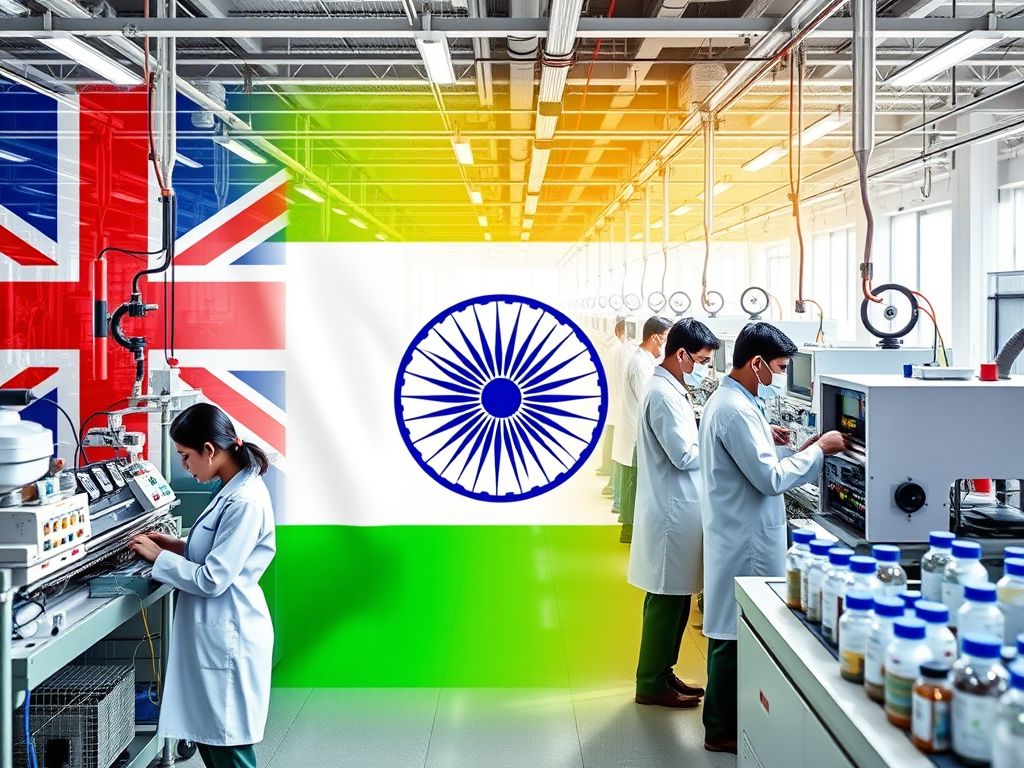
The India-UK Free Trade Agreement (FTA), under negotiation for years, is now poised to unlock substantial opportunities for Indian pharmaceutical and medical device industries. With tariff eliminations, regulatory easing, and enhanced market access, this bilateral deal could serve as a growth catalyst. However, it also brings challenges that must be navigated with precision.
Key Benefits of the India-UK FTA for Pharma & Medical Devices
| Area | Details |
|---|---|
| Tariff Relief | UK to impose zero tariffs on 99% of Indian pharmaceutical exports |
| Market Access | Easier entry for generics and biosimilars into the UK |
| Export Volume (FY24) | $910 million worth of Indian pharma exports to the UK |
| UK Market Growth | UK pharma market to grow from $45B (2024) to $73B (2033) |
| Competitiveness Boost | Indian generics to become more price-competitive |
| R&D Collaboration | Cross-border innovation encouraged, especially in bulk drugs and contract manufacturing |
| Medical Devices Scope | New opportunities opened for Indian medical device manufacturers |
| Long-Term Trade Clarity | Duty-free exports now formalized, ensuring predictability for exporters |
Strategic Gains for India
- Exports Stability: Formalization of duty-free access ends ad-hoc uncertainty.
- Sector Diversification: Medical devices gain a dedicated platform for growth.
- Innovation Push: Boosts incentives for collaborative R&D across borders.
- Patient Access: Competitive pricing improves healthcare accessibility in the UK.
Key Challenges for Indian Pharma Under the FTA
| Category | Potential Challenge |
|---|---|
| Regulatory Compliance | Complex UK standards and quality benchmarks could burden exporters |
| Market Competition | Higher rivalry from EU and global players; Indian brands lack visibility |
| Supply Chain Risks | Raw material dependency and high logistics costs can impact pricing and availability |
| IPR and Patent Barriers | Stringent patent norms may limit generic access; risk of litigation |
| Economic Factors | Currency fluctuations and potential UK economic slowdown pose revenue risks |
| Cultural Nuances | Adapting packaging, labeling, and marketing to UK preferences requires added effort |
| R&D Funding Pressure | Need for increased capital to sustain innovation and compliance |
| Political/Trade Shifts | FTA benefits vulnerable to policy or geopolitical changes |
Strategic Outlook for Indian Companies
To leverage the India-UK FTA, Indian pharmaceutical and medical device companies must:
- Strengthen Regulatory Readiness: Invest in compliance systems aligned with UK norms.
- Diversify Supply Chains: Reduce dependence on any single input source and enhance logistical resilience.
- Enhance Brand Visibility: Build reputation in UK markets through consistent quality and marketing.
- Form Joint Ventures: Collaborate with UK/EU partners for R&D and contract manufacturing.
- Leverage Data & Tech: Embrace digital health and AI to differentiate products in the UK’s advanced market.
Conclusion
The India-UK FTA represents a defining moment for India’s pharmaceutical and medical device industries. With the UK pharmaceutical market projected to grow over 60% in the next decade and the tariff wall dismantled, Indian players have a golden window to expand their global footprint. However, seizing this opportunity will require overcoming compliance, competitive, and infrastructural hurdles with strategic foresight.


 Glottis Limited
Leave a comment