
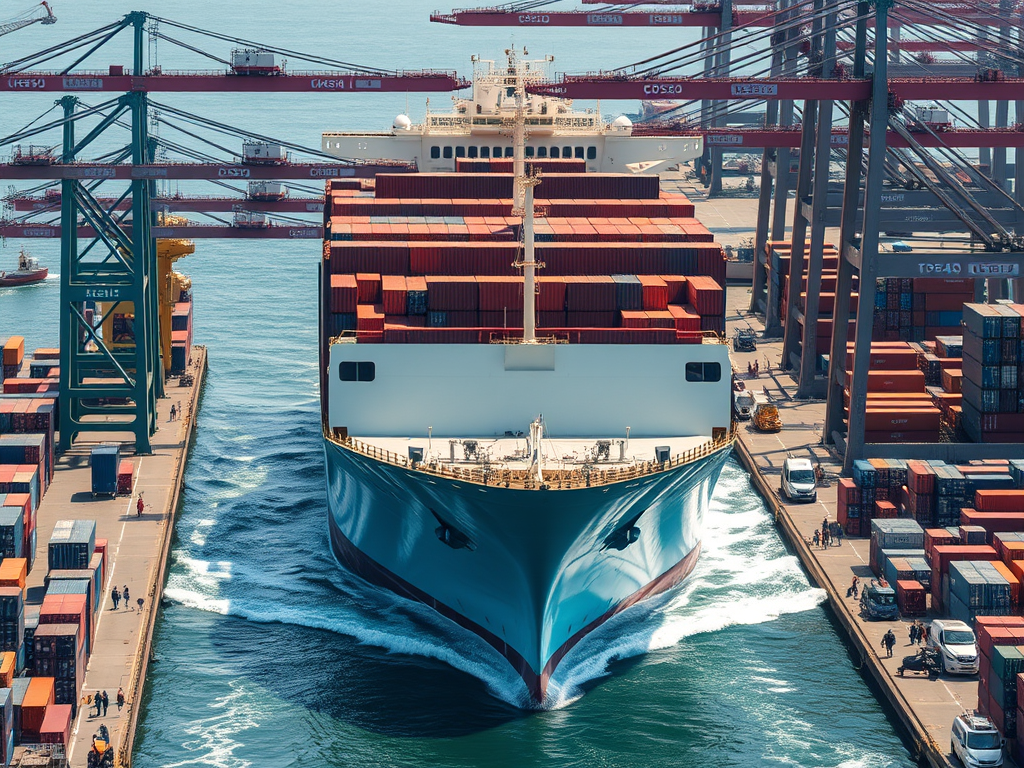
The global container shipping industry has entered a period of transformation, marked by fierce competition, shifting market share, and heightened strategic maneuvering among major players such as Maersk and Cosco. Recent industry analyses highlight a decade of evolving market dynamics, a surge in intra-Europe container shipping, and the impact of overcapacity on vessel alliances and freight rates.
Competitive Dynamics & Market Share Shifts
Between 2010 and 2020, the container shipping sector saw significant changes in carrier market shares. While giants like Maersk and Cosco remain dominant, both are hitting headwinds with organic growth as competition from both established operators and new entrants intensifies. Notably, the intra-Europe trade has emerged as a particular bright spot for Maersk, which considerably boosted its capacity and sharpened its market presence within the region, outpacing some rivals.
Market Pressure and Operational Challenges
The industry faces mounting competitive pressure, with carriers jostling for position in key global trades. Operational hurdles, such as congestion at major ports, have tested the resilience of shipping lines and terminals. Reports indicate that while ports are handling escalating container volumes, delays and logistical challenges persist, forcing shipping companies to invest in operational efficiencies and digitalization.
Recent Developments: Investments, Negotiations, and Barriers
The landscape continues to evolve with ongoing negotiations like those between Cosco and HPH Port Terminals, which could shape the future structure of certain strategic hubs. Simultaneously, Maersk is confronting regulatory and competitive barriers, notably in Brazil, where the company is currently restricted from bidding for crucial port contracts—a development that could limit its growth prospects in South America.
Market Trends: Overcapacity and Rate Volatility
Another focal point is the issue of overcapacity on major trade corridors such as Asia–South America. The deployment of too many ships has created downward pressure on freight rates, prompting carriers to reassess vessel deployments, reshape alliances, and manage supply more tightly to maintain profitability.
Key Data Table: Global Container Shipping Trends (2010–2025)
| Factor | Key Details / Trends | Notes |
|---|---|---|
| Market Share (2010–2020) | Maersk and Cosco saw shifts in global share; facing organic growth barriers | Market now more fragmented, new competitors gaining ground |
| Intra-Europe Capacity | Maersk experienced outsized growth in capacity and market share | Outperformed major competitors, focused on regional strength |
| Competition | Intensifying among top ocean carriers | More aggressive rate tactics and alliance reshuffling |
| Port Operations | Significant congestion, yet increased throughput at major hubs | Investments in digitalization and efficiency ongoing |
| Major Deals | Cosco–HPH Port Terminals negotiations ongoing | Could reshape regional terminal control and influence |
| Regulatory Barriers | Maersk barred from bidding for key Brazilian port contracts | Stifles expansion in Latin America |
| Overcapacity Issues | Notable on Asia–South America routes leading to lower freight rates | Driving ongoing vessel deployment and alliance adjustments |
Industry Outlook
The next phase for global container shipping will be heavily influenced by how carriers adapt to heightened competition and market fragmentation. Growth opportunities may hinge on tackling regulatory hurdles, building alliances, and navigating port congestion and overcapacity. Strategic investments, digital solutions, and operational agility are set to be the defining traits of the upcoming competitive era in ocean shipping.



 Glottis Limited
Leave a comment