

India is ramping up its export strategy in response to the United States’ decision to double tariffs on certain Indian imports from 25% to 50%. The move, which directly impacts major export sectors such as marine products, textiles, leather, and gems and jewelry, has prompted the government to diversify trade relationships with a broader set of markets.
Shifting Focus Beyond the US
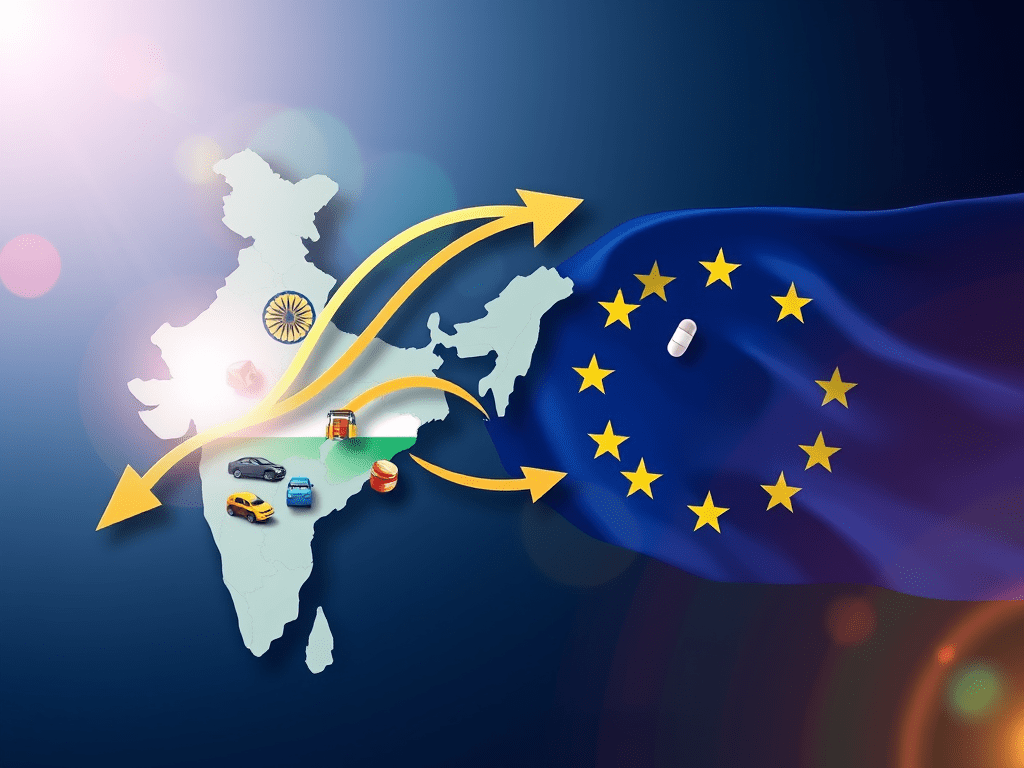
The Ministry of Commerce is spearheading an expansion plan targeting 50 countries, with a particular focus on West Asia and Africa. This diversification aims to reduce India’s reliance on the US, which remains the largest market for high-value segments like gems and jewelry.
By mapping product competitiveness in these new markets and tailoring strategies for each, the government seeks to minimize the economic fallout from the US tariff hike.
Key Data on India’s Export Diversification Plan
| Factor | Details |
|---|---|
| Number of Target Markets | 50 countries (focus on West Asia & Africa) |
| Trigger | US doubled tariffs on imports from India to 50% |
| Sectors Most Affected | Marine products, textiles, leather, gems & jewelry |
| Largest Vulnerable Sector | Gems & jewelry (US is top market) |
| Competitor Advantage | Turkey, Vietnam, Thailand enjoy lower tariffs |
| Government Measures | Export promotion missions, sector-specific schemes, alternative market mapping |
| Domestic Market Plan | Redirect products facing export declines |
| Trade Risks | Rerouting via Mexico, UAE could undermine legitimate trade |
Tariffs’ Direct Impact on Indian Exports
- Increased Costs
Higher tariffs mean Indian products become less price-competitive in the US, giving rival nations with lower duties a market edge. - Market Diversification
By expanding to 50 new countries, India aims to spread export risks and build sustainable trade partnerships beyond a single dominant market. - Sectoral Impact
The gems and jewelry industry is particularly exposed, with the US accounting for a large share of its exports. - Competitive Disadvantage
Countries like Turkey, Vietnam, and Thailand have tariff advantages, making it harder for Indian exporters to compete in the US market. - Revenue Concerns
Reduced demand from the US could directly impact export revenues and the sustainability of small and medium exporters. - Government Action
Initiatives such as targeted promotion campaigns and sector-specific relief programs are being rolled out to counter the effect of higher tariffs. - Domestic Demand Utilization
Products with declining export orders may be diverted to meet domestic needs, minimizing wastage and maintaining production cycles. - Trade Legitimacy Challenges
Authorities are alert to the risk of exporters rerouting goods via low-tariff countries, which could compromise trade compliance.
In conclusion, India’s strategic expansion into 50 new markets is a proactive step to protect its export economy from the fallout of US tariff hikes. While the short-term pain for affected sectors is inevitable, the long-term outlook depends on how effectively India can build competitive, sustainable trade relationships beyond its traditional markets.


 Glottis Limited
Leave a comment