
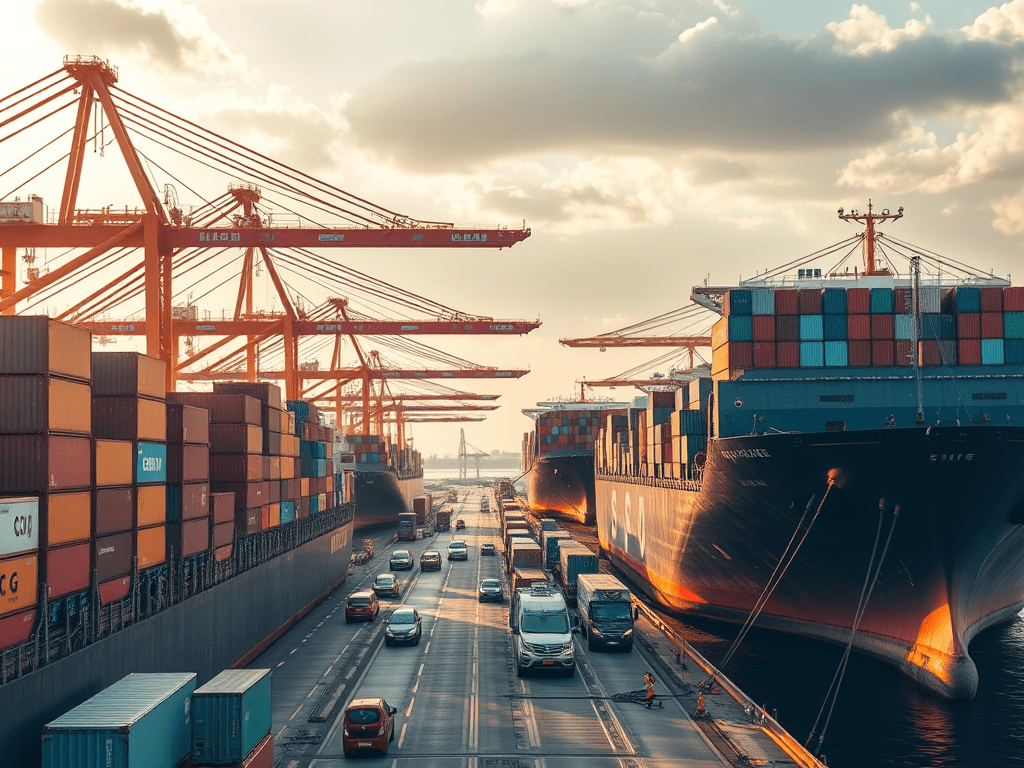
The year 2024 marked a strong rebound in global trade activity, with container throughput worldwide climbing to 937 million TEU, representing a 7% annual growth. This surge reflects the resilience of global supply chains, continued consumer demand, and ongoing port infrastructure improvements.
Notably, “millionaire ports”—those handling more than one million TEU annually—accounted for 88% of the global total, underscoring the concentration of trade in major hubs.
Top 10 Container Ports – 2024 Rankings
| Rank | Port | Location | Throughput (TEU) | Growth Rate (vs. 2023) |
|---|---|---|---|---|
| 1 | Shanghai | China | 51.5M | +5% |
| 2 | Singapore | Singapore | 41.1M | +5% |
| 3 | Ningbo | China | 39.3M | +11% |
| 4 | Shenzhen | China | 33.4M | +12% |
| 5 | Qingdao | China | 30.9M | +7% |
| 6 | Guangzhou | China | 26.1M | +4% |
| 7 | Busan | South Korea | 24.4M | +6% |
| 8 | Tianjin | China | 23.3M | +5% |
| 9 | Jebel Ali | UAE | 15.5M | +7% |
| 10 | Port Klang | Malaysia | 14.6M | +4% |
Key Observations
- Asia’s Dominance: Six of the top ten container ports are located in China, highlighting the country’s role as the central hub of global manufacturing and exports.
- Steady Growth: All ports in the list registered positive growth, with Shenzhen (+12%) and Ningbo (+11%) showing the fastest expansion rates.
- Strategic Newcomers: Djibouti entered the “millionaire” port category, signaling Africa’s increasing role in global trade routes.
- Technology & Sustainability: Ports are investing in automation, AI-based logistics systems, and green infrastructure to remain competitive.
Drivers of Port Throughput Growth
1. Economic Conditions
- Global Trade Trends: Strong demand in major economies is driving shipping volumes.
- Consumer Spending: High consumption patterns have boosted imports, especially in manufacturing-heavy regions.
2. Port Infrastructure
- Capacity Expansion: New terminals and upgraded cranes increase handling capability.
- Connectivity: Strong rail, road, and inland waterway links enhance cargo flow efficiency.
3. Geopolitical Factors
- Trade Agreements: Reduced tariffs and expanded trade partnerships improve cargo movement.
- Stability Risks: Regional tensions may temporarily disrupt operations.
4. Shipping Industry Dynamics
- Bigger Ships: Ultra-large container vessels increase volume per call.
- Alliances: Carrier partnerships optimize route utilization and frequency.
5. Technological Advances
- Automation: AI and robotics reduce turnaround time.
- Digital Tracking: Real-time cargo monitoring improves supply chain visibility.
6. Environmental Regulations
- Green Initiatives: Compliance with stricter emission norms is reshaping port operations.
7. Seasonal Variations
- Peak Cycles: Holiday seasons and harvest periods create throughput spikes.
8. Market Competition
- Hub Rivalry: Strategic positioning against nearby ports influences market share.
Outlook for 2025
With global trade expected to maintain steady momentum, the world’s top ports are likely to continue investing in technology, sustainability, and expanded capacity. Asia is set to retain its dominance, but emerging hubs in Africa and the Middle East could increasingly capture market share as trade routes diversify.



 Glottis Limited
Leave a comment