
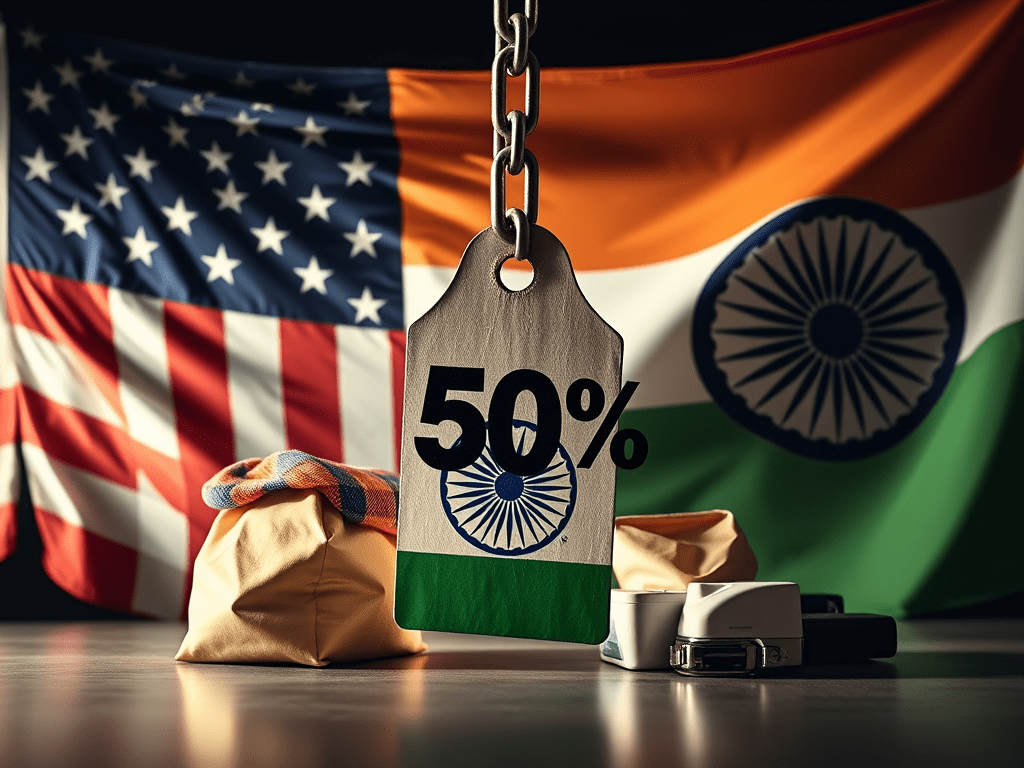
The recent escalation of tariffs on Indian exports to the United States has raised serious concerns for exporters, businesses, and policymakers. With a combined 50% tariff now in place, the trade dynamics between India and the U.S. are witnessing significant disruptions that could reshape bilateral relations and global market responses.
Key Developments
The tariff structure consists of two components:
- A 25% tariff imposed earlier during President Donald Trump’s administration.
- An additional 25% tariff, effective August 27, linked to India’s economic dealings with Russia.
Together, these have doubled the cost burden on Indian exports to the U.S., reducing competitiveness and threatening overall demand.
Major Impacts
- Sharp Decline in Demand
- The combined 50% tariff is projected to reduce demand for Indian goods in the U.S. “very substantially,” hurting sales volumes across sectors.
- Financial Strain on Exporters
- Firms may resort to lowering prices to retain U.S. buyers, but this would result in narrower profit margins, reduced wages, and constrained investments.
- Strained Economic Relations
- The tariffs have fueled a notable decline in diplomatic and economic relations between India and the U.S., adding complexity to future negotiations.
- Growth and Investment Slowdown
- Long-term growth projections for India are negatively impacted, with exports and foreign investments expected to be particularly vulnerable.
- Ripple Effects on Global Partners
- Since the U.S. is a major trading partner for Europe and Asia-Pacific nations, the tariff shock could spill over into other economies, leading to weaker global sales and performance.
- Market Reactions
- Companies are likely to adjust pricing strategies, risking wage pressures and weakened financial stability over time.
- Long-Term Outlook
- With the tariffs expected to remain in force throughout Trump’s presidency, sustained disruptions to trade and investment flows are anticipated.
Key Data Table
| Aspect | Details |
|---|---|
| Total Tariff | 50% (25% Trump-era tariff + 25% Russia-related tariff effective Aug 27) |
| Impact on Demand | Substantial reduction in U.S. demand for Indian goods |
| Effect on Firms | Lower prices to retain buyers → reduced profit margins, wages, investments |
| India-U.S. Relations | Significant deterioration in diplomatic and trade relations |
| Economic Growth | Negative impact on India’s growth, exports, and investment |
| Global Ripple Effect | Europe and Asia-Pacific economies also face reduced sales |
| Market Adjustments | Price cuts, wage pressures, financial instability |
| Duration of Tariffs | Expected to remain for the rest of Trump’s presidency |
Conclusion
The imposition of a 50% tariff on Indian exports to the U.S. has created a multi-dimensional challenge for exporters, firms, and the broader economy. With trade relations strained and market strategies under pressure, Indian businesses may need to diversify export markets, enhance competitiveness, and reassess global supply chain strategies to navigate the turbulent trade environment.




 Glottis Limited
Leave a comment