
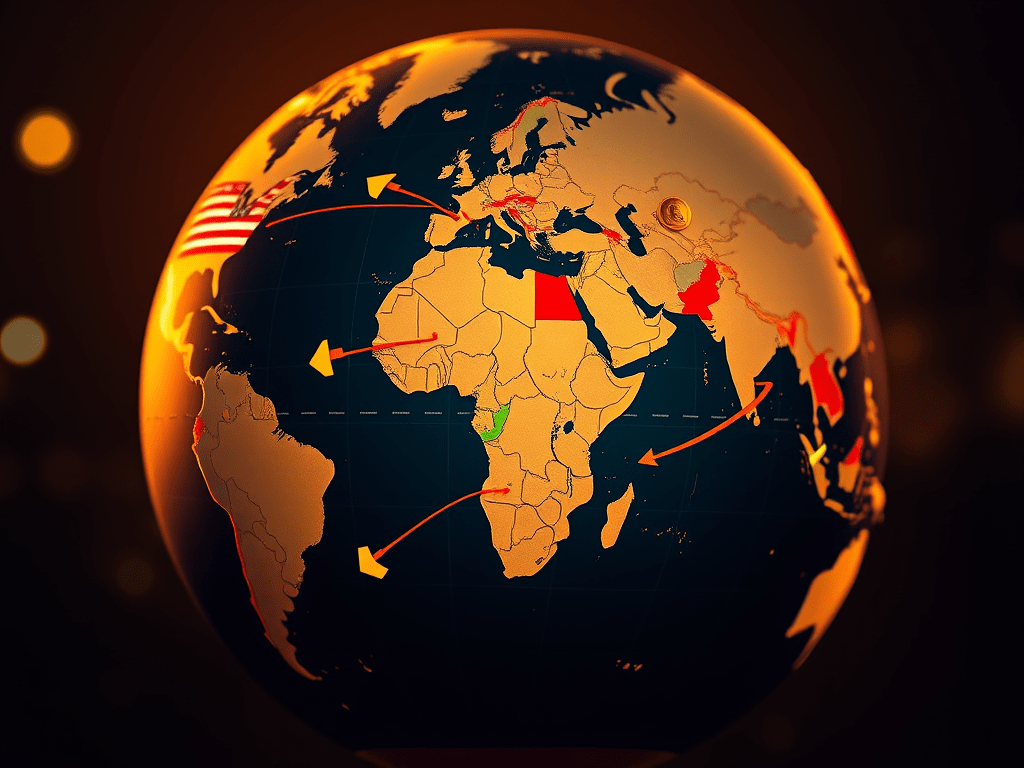
The reintroduction of steep tariffs by former U.S. President Donald Trump has triggered a wave of geopolitical and economic recalibration. Set at 50%, these tariffs are reshaping alliances, prompting resistance from countries in the Global South, and forcing major economies to rethink trade dependencies.
Global Shifts and Political Reactions
- Reshaping Alliances: Nations such as Brazil and India are exploring collective resistance strategies to mitigate the impact of U.S. tariffs.
- Historical Context: Analysts draw parallels between Trump’s tariff policies and Joseph Chamberlain’s economic nationalism, noting significant contrasts in execution and objectives.
- BRICS Cohesion: Leaders from Brazil, Russia, India, and China see these tariffs as an affront to sovereignty and an opportunity to strengthen the BRICS bloc as a counterweight to U.S. economic power.
- Dollar Dependency Debate: Brazilian President Luiz Inácio Lula da Silva has called for reducing reliance on the U.S. dollar in BRICS trade, exploring alternative currencies to enhance economic independence.
Country-Level Responses
- Brazil: Lula has emphasized diversifying trade partners to reduce U.S. market reliance. While tariffs will redirect some exports, the economic impact is expected to be manageable.
- India: Facing heightened tariffs, India is focusing on domestic protection and strategic diplomacy. It aims to safeguard small farmers and industries, while exploring stronger trade ties with China and other partners.
- Global Implications: Experts warn that while the U.S. may enjoy short-term gains, longer-term isolation could occur as economies look for alternative trade arrangements and alliances.
Key Data at a Glance
| Focus Area | Details |
|---|---|
| Tariff Rate | 50% |
| Countries Leading Resistance | Brazil, India, China, Russia |
| Brazil’s Position | Diversify trade, reduce U.S. reliance, explore alternative currencies |
| India’s Focus | Economic independence, protect domestic producers, explore China ties, upgrade alliances |
| Impact on Exports | Brazil: manageable redirection; India: pressure on farmers and industries |
| Shift in Alliances | Stronger BRICS cohesion; reduced U.S. dollar dominance |
| Historical Context | Compared with Joseph Chamberlain’s policies, highlighting nationalist trade strategies |
| India’s Trade Realignment | Exploring CPTPP participation, restoring China trade routes, easing FDI rules |
| Long-term Global Impact | Potential U.S. economic isolation, changes to TPP and other trade agreements |
India’s Strategic Pivot
India’s approach reflects a multi-dimensional strategy:
- Economic Independence: Leveraging its domestic market strength to resist U.S. pressure.
- Protective Policies: Easing foreign direct investment rules and shielding small producers.
- Regional and Global Outreach: Re-engaging with China and evaluating participation in new trade blocs like CPTPP.
- Resilience and Adaptation: Balancing domestic priorities with the need to maintain global competitiveness.
Conclusion
Trump’s tariffs have set in motion a series of political and economic reactions worldwide. For India, the challenge lies in balancing protective measures with strategic engagement, ensuring resilience while reshaping trade partnerships. The current scenario could accelerate the rise of alternative trade networks, potentially reducing U.S. influence over time.




 Glottis Limited
Leave a comment