
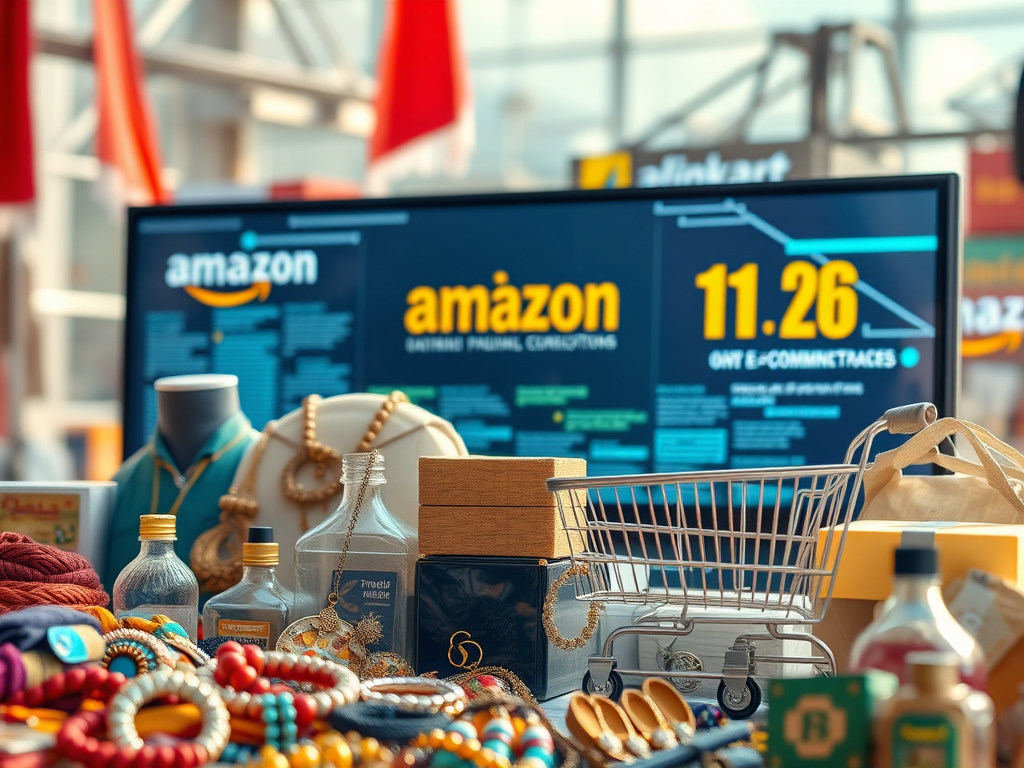
India is at a critical juncture in shaping its e-commerce export ecosystem. With the US imposing higher tariffs on Indian goods, the government has intensified efforts to strengthen outbound trade through digital platforms. The Commerce and Industry Ministry is spearheading consultations with major e-commerce players, micro, small, and medium enterprises (MSMEs), and other stakeholders to identify sustainable models for boosting e-commerce exports.
Stakeholder Consultations
Government agencies, including the Department for Promotion of Industry and Internal Trade (DPIIT), have invited e-commerce giants such as Amazon and Walmart-owned Flipkart, alongside MSME representatives, for in-depth discussions. The aim is to ease compliance challenges while unlocking growth potential for exporters in sectors like handicrafts, garments, and jewelry—categories that dominate India’s e-commerce export basket.
The Inventory-Based Model Debate
A key point of contention is whether to allow Foreign Direct Investment (FDI) in the inventory-based e-commerce model. Currently, 100% FDI is permitted only in the marketplace model, where platforms act as intermediaries. MSMEs argue that opening the inventory-based model to FDI could significantly reduce compliance burdens and improve competitiveness. However, large retailers strongly oppose this, fearing heightened competition from foreign-funded entities.
Growth Potential and Policy Needs
At present, India’s e-commerce exports stand at just $5 billion, far behind China’s $300 billion benchmark. Projections suggest that with the right policies, India could scale this figure to $350 billion by 2030. Experts, including think tanks like GTRI, have stressed the urgent need for a separate e-commerce export policy to streamline compliance and offer targeted support to MSMEs.
Key Data Snapshot
| Category | Key Details |
|---|---|
| Current Export Value | ~$5 billion |
| Potential by 2030 | $350 billion |
| China’s Benchmark | $300 billion |
| Key Export Products | Handicrafts, garments, jewelry |
| Typical Product Value Range | $25 – $1,000 |
| Current FDI Policy | 100% FDI allowed in marketplace model; not in inventory-based model |
| Stakeholder Divide | MSMEs support FDI in inventory model; large retailers oppose |
| Government Agencies Involved | Commerce & Industry Ministry, DPIIT |
| Major E-Commerce Players | Amazon, Walmart-owned Flipkart |
| Policy Need | Separate e-commerce export policy to address compliance and MSME challenges |
This debate underscores the balancing act between regulatory safeguards and growth potential. While MSMEs push for greater flexibility to compete globally, large retailers demand a level playing field. The coming months will be crucial as the government navigates these differences to unlock India’s e-commerce export potential.

 Glottis Limited
Leave a comment