
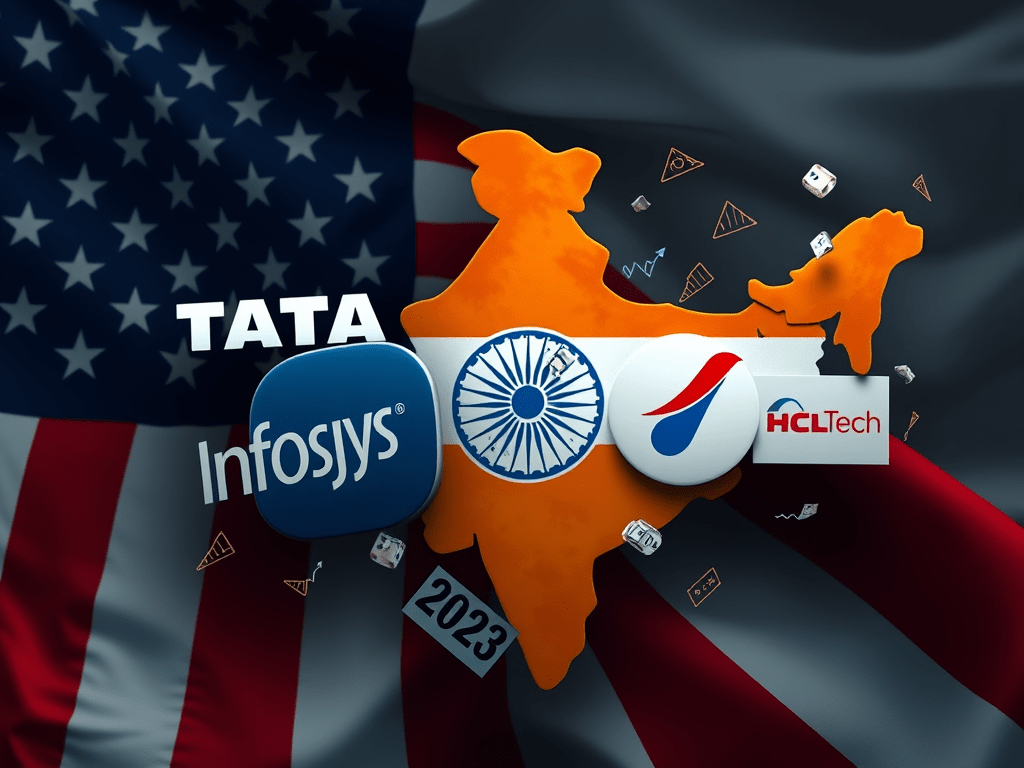
India’s information technology sector, a global leader in outsourcing and digital services, faces a looming challenge with the possibility of U.S. tariffs on software exports. Given that the United States is the largest market for Indian IT services, such a move could ripple across revenues, profitability, and talent mobility.
Key Concerns and Implications
1. Heavy Dependence on U.S. Market
Over 60% of India’s $283 billion technology services outsourcing industry revenue originates from the U.S., with major players like Tata Consultancy Services, Infosys, HCLTech, and Wipro leading the charge. Tariffs would therefore directly impact core earnings.
2. Risk of Double Taxation
Indian IT firms already pay significant taxes in the U.S. Additional tariffs would effectively amount to double taxation, further eroding margins.
3. Higher Delivery Costs
Tariffs and visa restrictions could push companies to expand U.S.-based hiring, raising costs and reducing the cost advantage that Indian IT firms currently enjoy.
4. Pressure on Profitability
With increased compliance costs and client reluctance to absorb tariff-related expenses, margins are likely to come under sustained pressure.
5. Political and Regulatory Uncertainty
The move is tied to a broader “America-first” stance in U.S. politics. Tariffs on digital labor are more complex than those on physical goods, making implementation difficult but not impossible.
6. Market Diversification
To reduce reliance on the U.S., Indian IT firms are accelerating diversification into Europe, Asia-Pacific, and emerging markets. However, these efforts require time, investment, and client acquisition.
7. Talent Mobility and Visa Restrictions
Stricter visa rules, particularly for H-1B visas, may limit Indian firms’ ability to deploy skilled engineers to the U.S. This could force companies to increase local hiring at higher costs.
8. Influence of U.S. Tech Leaders
Many U.S. technology giants have expressed support for continued access to Indian engineering talent, underlining its critical role in the American tech ecosystem.
Key Data Table: Potential Impacts of U.S. Tariffs on Indian Software Exports
| Factor | Current Situation | Potential Impact of Tariffs |
|---|---|---|
| Revenue Dependence | 60%+ of $283B industry revenue comes from U.S. | Decline in revenues due to reduced demand and competitiveness. |
| Taxation | Indian IT firms already pay significant U.S. taxes. | Tariffs could create double taxation, squeezing profitability. |
| Delivery Costs | Offshore delivery model keeps costs low. | More U.S.-based hiring required, increasing operating costs. |
| Visa Regulations | Reliance on H-1B visas for skilled Indian engineers. | Stricter rules raise costs, reduce worker mobility, and complicate service delivery. |
| Profit Margins | Healthy margins sustained by cost arbitrage. | Increased costs from tariffs and compliance compress margins. |
| Political Climate | “America-first” policies shaping trade and immigration. | Uncertainty and unpredictability in long-term planning. |
| Market Diversification | U.S. is the dominant market; diversification ongoing. | Accelerated push into Europe, Asia-Pacific, and new geographies. |
| Talent Pool Access | India supplies a large share of global IT engineering talent. | Restrictions on visas limit access to U.S. market; reliance on local hires increases. |
| Client Pricing | Competitive pricing model underpins outsourcing attractiveness. | Higher prices may make Indian IT firms less competitive globally. |
| Industry Stability | Growth steady despite global headwinds. | Short-term uncertainty and rising delivery costs may destabilize operations. |
Conclusion
The potential imposition of U.S. tariffs on Indian software exports poses a multifaceted challenge to India’s IT industry. With risks spanning revenue decline, higher operating costs, visa-related hurdles, and political uncertainty, companies may face significant short-term disruptions. In the long run, however, the situation could accelerate strategic diversification and push Indian firms to strengthen global footprints beyond the U.S. market, ensuring resilience in a shifting trade environment.


 Glottis Limited
Leave a comment